ACTIVISM:
Living Christianity
Animals & Religion is designed for those who believe that sacred writings have moral authority and are the best way to understand how we ought to live. This website is for those who, with fresh eyes, would like to explore core sacred texts to better understand rightful relations between humankind and anymals.
Christianity is a path of grace, a journey that offers new opportunities and new insights with the passing of each day. Visitors to the Animals & Religion Website are invited to engage with the material thoughtfully and prayerfully, to return to Scripture, to recall how certain sacred texts have been read, taught, and lived in your religious community, and to ponder how these ancient, holy writings might speak anew in contemporary times.
Micah 6:8…what does the Lord require of you but to do justice…?
In Animals and World Religions, Dr. Kemmerer writes, “Imagine Jesus walking through a slaughterhouse, a vivisection lab, or a poultry farm: How would the Prince of Peace feel about contemporary exploitation of pigs, mice, and hens? Would he justify these institutions as readily as we do?” Scriptures suggest that Jesus would likely display righteous anger if faced with such cruelty and indifference to God’s creatures.
Christianity is lived. Living Christianity can take a wide variety of forms, such as leading a prayer circle, helping with technology for services, visiting those who are elderly or ill, cleaning up after fellowship time, providing pastoral care, or helping out at a local soup kitchen or anymal shelter. Some might be called to work for political and social change, and to establish greater justice, whether for children, the poor, immigrants, the elderly, or anymals. If you think that anymal activism might be your calling, then this page is for you. (To first read about core Christian teachings and anymals, see Sacred Texts.)
Romans 12:1
…present your bodies as a living sacrifice, holy and acceptable to God, which is your reasonable act of worship.

An all-female anti-poaching force in South Africa works to protect critically endangered wildlife with boots on the ground, through teaching, and by setting an example in local communities. (We Animals Media)
Jesus as Liberationist
1 John 3:18
Let us love, not in word or speech, but in deed and truth.
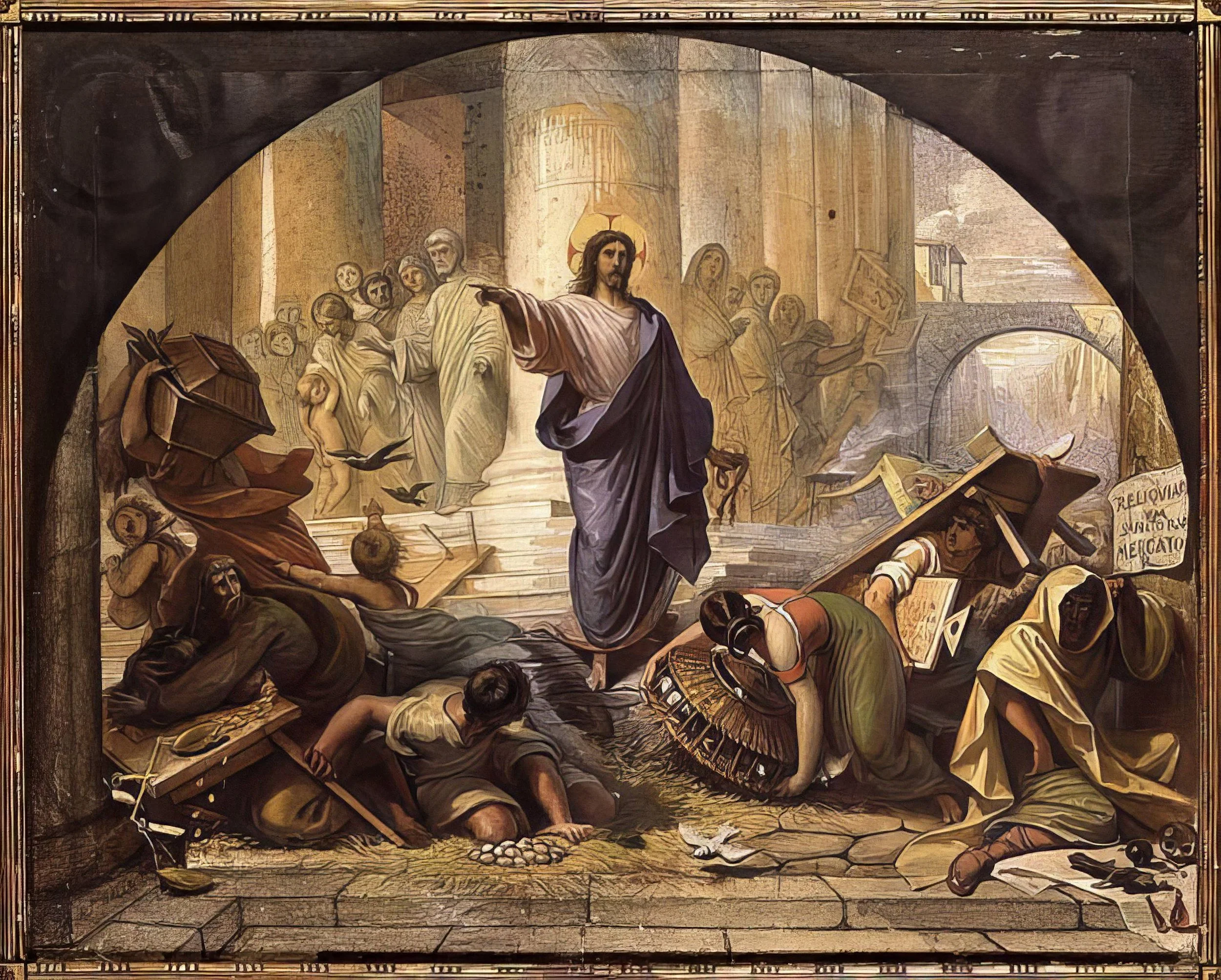
Activists work for social or political change. While the Gospels tell us that Jesus was peace-loving, they also tell us that he spoke for change. Born to bring a new era, Jesus worked to champion justice for the marginalized and downtrodden, the maligned and condemned, the disabused, disempowered, and dispossessed. He disavowed oppression and worked toward justice for “the least of these” (Matthew 25:40). Jesus spoke against hypocrisy, iniquity, and economic corruption, including anymal enterprises: In all four Gospels, Jesus drives anymal enterprises out of the temple; in three of the Gospels, in righteous anger at anymal enterprises in the temple, he also overturns chairs and/or tables. Jesus defied social norms and the expectations of those in power. On behalf of God, Jesus worked on Earth to bring change: Jesus was an activist.
John 2: 14-15
In the temple he found people selling cattle, sheep, and doves and the money changers seated at their tables. Making a whip of cords, he drove all of them out of the temple, with the sheep and the cattle. He also poured out the coins of money changers and overturned their tables.
Matthew 21: 12-13
Then Jesus entered the temple and drove out all who were selling and buying in the temple, and he overturned the tables of the money changers and the seats of those who sold doves. He said to them, “It is written, ‘My house shall be called a house of prayer,’ but you are making it a den of robbers.”

Jesus drove profiteers and their exploited anymals out of the temple. (“Christ Driving the Money Changers from the Temple,” Dirck van Baburen, Netherlands, 17th century, Wikimedia Commons)
Scripture reminds the faithful that the Earth is God’s and that anymals are God’s. All life and all of creation is God’s alone. As humble creatures of God, and as God’s servants, all that has been made is worthy of our respect and protection. It is unpleasant to face cruelty, but it is our responsibility to know what we finance with our purchases: Anymal enterprises (fishing, laboratories, agriculture, clothing, leather, and entertainment) trade life for profit, exploiting anymals from forced impregnation and tight confinement to premature death.
In the Summa Theologica, theologian Thomas Aquinas quotes early church leader John Chrysostom (4th century): “He who is not angry, whereas he has cause to be, sins.” He speaks to the faithful: Where injustice is concerned, a “lack of anger is a sin.” Core ethics call Christian activists to righteous anger against the desecration of God’s creatures for profit. If there was ever a cry for mercy and righteous rebellion, it comes from the dark corners of anymal exploitation.
James 1:22
But be doers of the word and not merely hearers who deceive themselves.
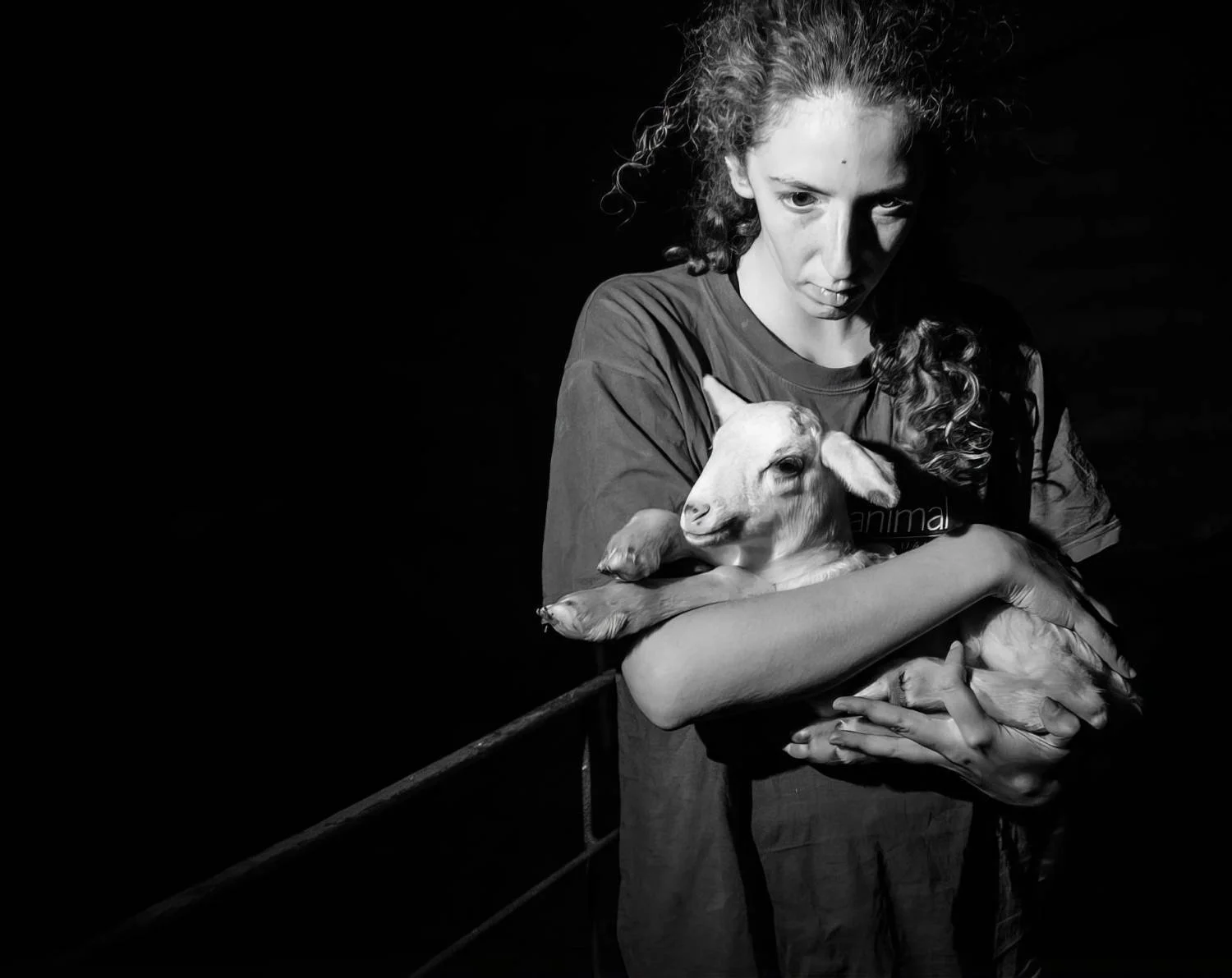
An activist rescues a lamb from dairy, meat, and hide industries. (We Animals Media)

The Prophets
Numbers 11:29
Would that all the Lord’s people were prophets….
It is difficult to change behaviors, let alone inspire deep, spiritual change, but this was the hope and labor of the biblical prophets, who remind readers that we are to practice our faith in daily life. The prophets railed against injustice, hypocrisy, and common, everyday indifference as they worked to turn minds, hearts, and lives back to Go, sometimes using extraordinary methods.
The prophets, much maligned by the larger culture, modeled both religious commitment and spiritual courage. According to the Hebrew Bible, the prophets knew what many contemporary activists have come to understand: Shock cuts through the sleepy indifference of the masses. Prophetic eccentricities startled people from their routine stupor, raised awareness, and inspired change. The prophets worked to draw people back to God, to recommit to faith and core teachings such as compassion, mercy, justice, and humility. Under divine instruction, Jeremiah harnessed himself to a yoke (Jeremiah 27:2), for which he was labeled a “madman” (Jeremiah 29:26). Isaiah wandered “naked and barefoot for three years” (Isaiah 20:3). Micah vowed to “lament and wail,” and “go stripped and naked” (Micah 1:8). When Saul “stripped off his clothes” and “lay naked” for a day and a night, people asked, “Is Saul also among the prophets?” (1 Samuel 19:24). These perceived eccentricities of the prophets had one goal: Call humankind to live the teachings and allow God and Scripture to shape daily life.
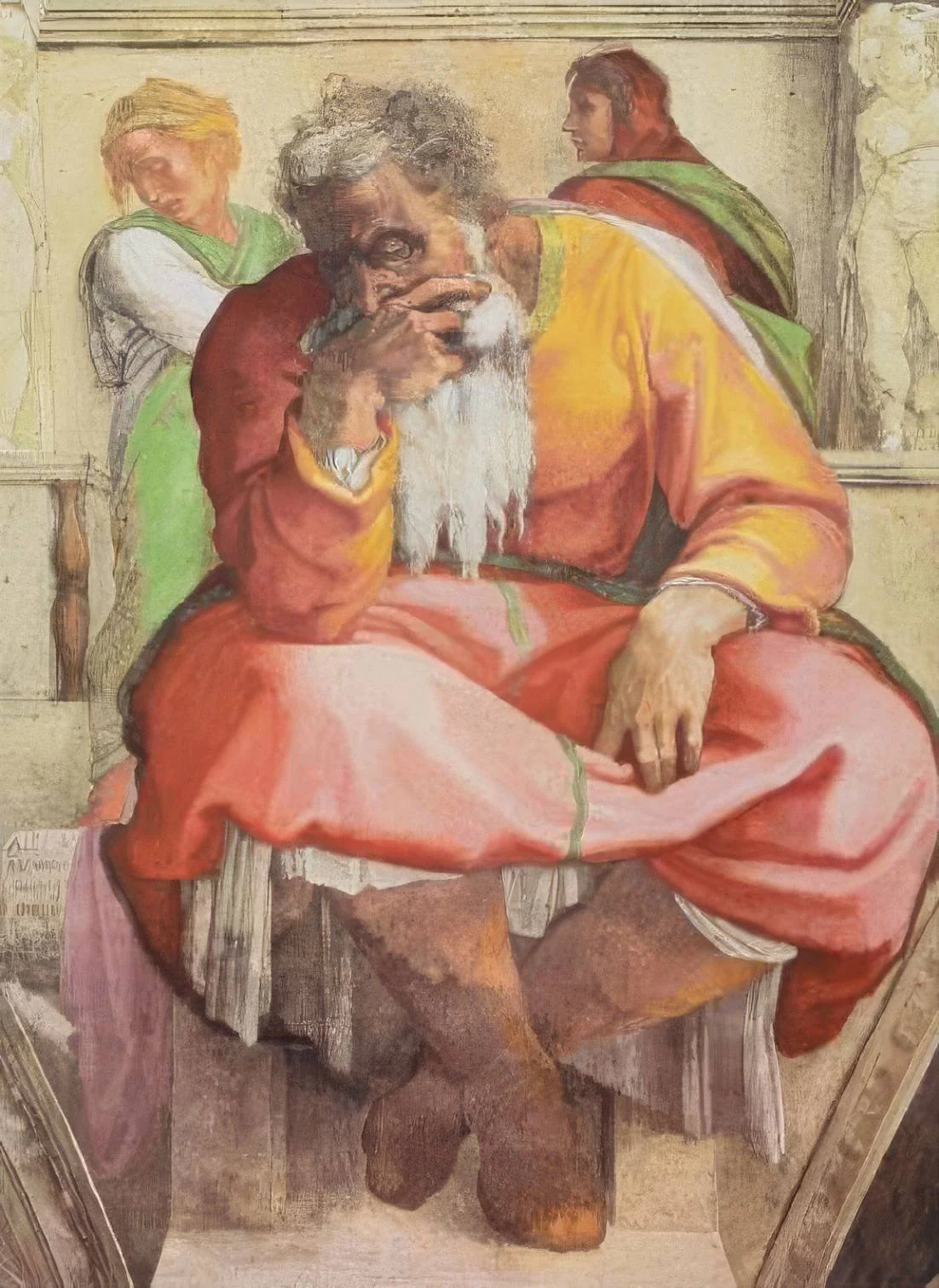
The prophets figured out that shock cuts through, and they used unconventional means in their work to turn people back to God.
(detail from “The Prophet Jeremiah,” Michelangelo Buonarroti, Italy, Sistine Chapel, 1511)
Proverbs 29:18
Where there is no prophecy, the people cast off restraint.
Modern Era Christian Activism
Today’s anymal enterprises exhibit a brazen disrespect for God and God’s good creation, through their perpetual indifference to anymal suffering and their destruction of uncounted numbers of God’s creatures. For some, when they become aware of the unfathomable numbers of innocent and helpless lives destroyed now, and now, and now, it is not enough to align religious knowledge with daily practice in their personal lives. Some feel compelled not only to boycott anymal industries personally, but to become part of righteous mobilization for deep and lasting change, to become part of a struggle for justice that has been ongoing among Christians for hundreds of years.
Dr. Humphrey Primatt
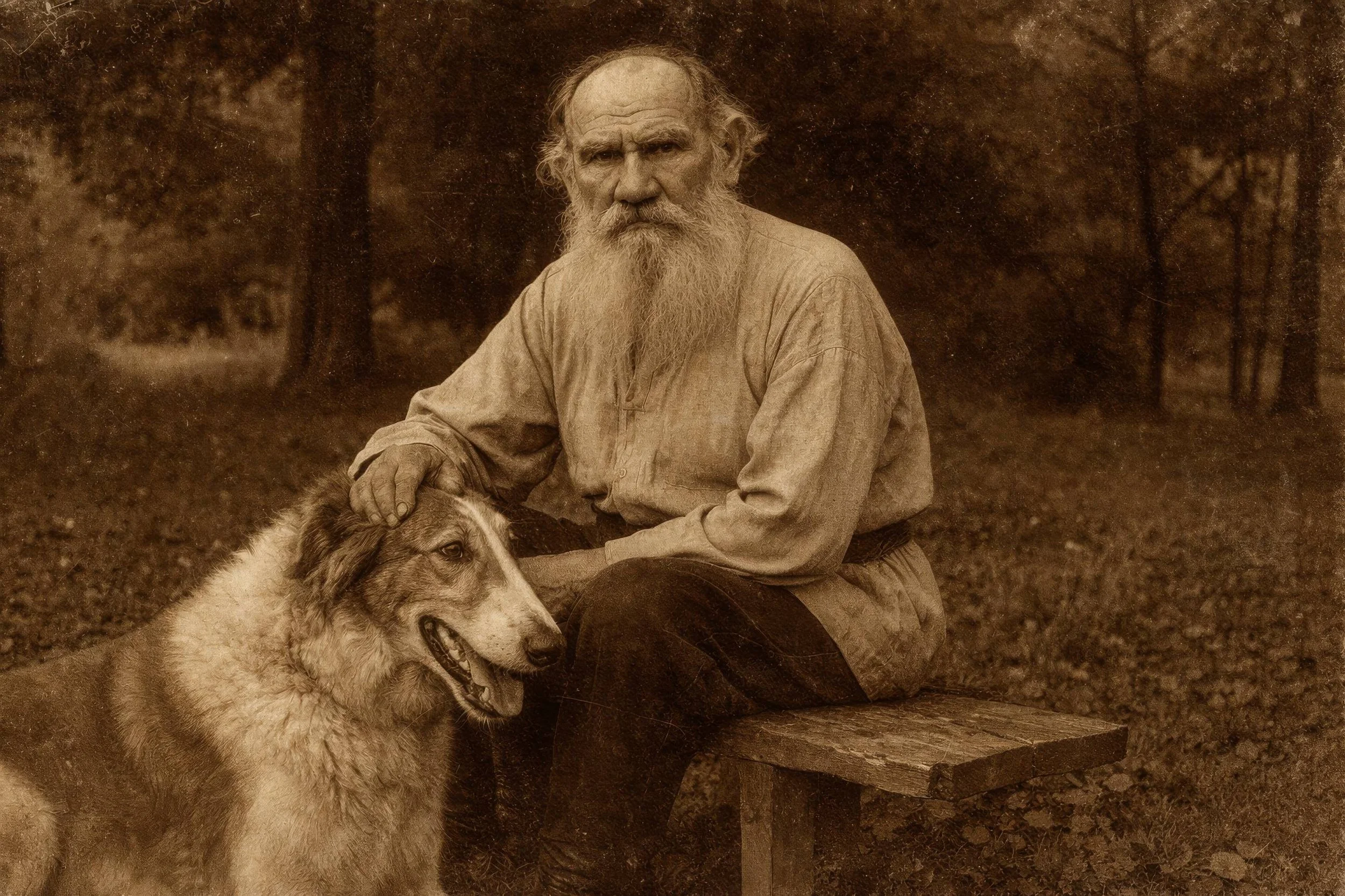
Christianity fosters a way of life that encourages not only kindness to anymals in personal life, but anymal activism. Therefore, it should be no surprise that there are many Christian anymal activists and anymal advocacy organizations, or that Christian activists have shined among those who choose a vegan life. This fertile ground was prepared across time, by Scriptures, through the life of Christ, and by people like Dr. Humphrey Primatt and John Wesley in the 18th century; William Wilberforce, Reverend Arthur Broome, and Leo Tolstoy in the 19th century, and by people like you and me.
Dr. Humphrey Primatt’s “A Dissertation on the Duty of Mercy and the Sin of Cruelty to Brute Animals,” completed in 1776, offers an astonishing theological argument for extending justice to anymals, a very early and strong Christian argument for anymal liberation. Primatt argues that differences between species are irrelevant to the primary Christian commandment to love, to the requirement that we care: “pain is pain, whether it be inflicted on man or on beast; and the creature that suffers it... suffers evil.” Primatt comes straight to the point—“cruelty is atheism.” Though written some 250 years ago, Primatt’s writing is an inspiration for today’s Christian anymal activists.
“We may pretend to what religion we please, but Cruelty is Atheism. We may make our boast of Christianity; but Cruelty is Infidelity. We may trust to our Orthodoxy, but Cruelty is the worst of Heresies. The Religion of Christ Jesus originated in the Mercy of God and it was the gracious design of it to promote Peace to every creature upon Earth.... For, indeed, a Cruel Christian is a Monster of Ingratitude, a Scandal to his Profession and Beareth the name of Christ in vain.”
- -
“Now, if amongst men, the differences of their powers of the mind, and of their complexion, stature, and accidents of fortune, do not give any one man a right to abuse or insult any other man on account of these differences; for the same reason, a man can have no natural right to abuse and torment a beast, merely because a beast has not the mental powers of a man. For, such as the man is, he is but as God made him; and the very same is true of the beast.... And being such, neither more nor less than God made them, there is no more demerit in a beast being a beast, than there is merit in a man being a man.”
- -
“The cruelty of men to brutes is more heinous (in point of injustice) than the cruelty of Men to Men…. what Court of judicature does now exist in which the suffering Brute may bring his action against the wanton cruelty of barbarous man?”
- -
“Christian love is without partiality and without hypocrisy:... let us examine ourselves well, and if we find that we hold any doctrine or tenant that explicitly or consequently represents the Supreme Being as partial or injurious to any of his creatures, such doctrine is a contracted misrepresentation of divine goodness.”
- -
“Whether we walk upon two legs or four, whether our heads are prone or erect, whether we are naked or covered with hair, whether we have tails or no tails, horns or no horns, long ears or round ears, or, whether we bray like an ass, speak like a man, whistle like a bird, or are mute as a fish; nature never intended these distinctions as foundations for right of tyranny and oppression.”
- -
“Mercy to brutes is a duty commanded and cruelty to them is a sin forbidden.”
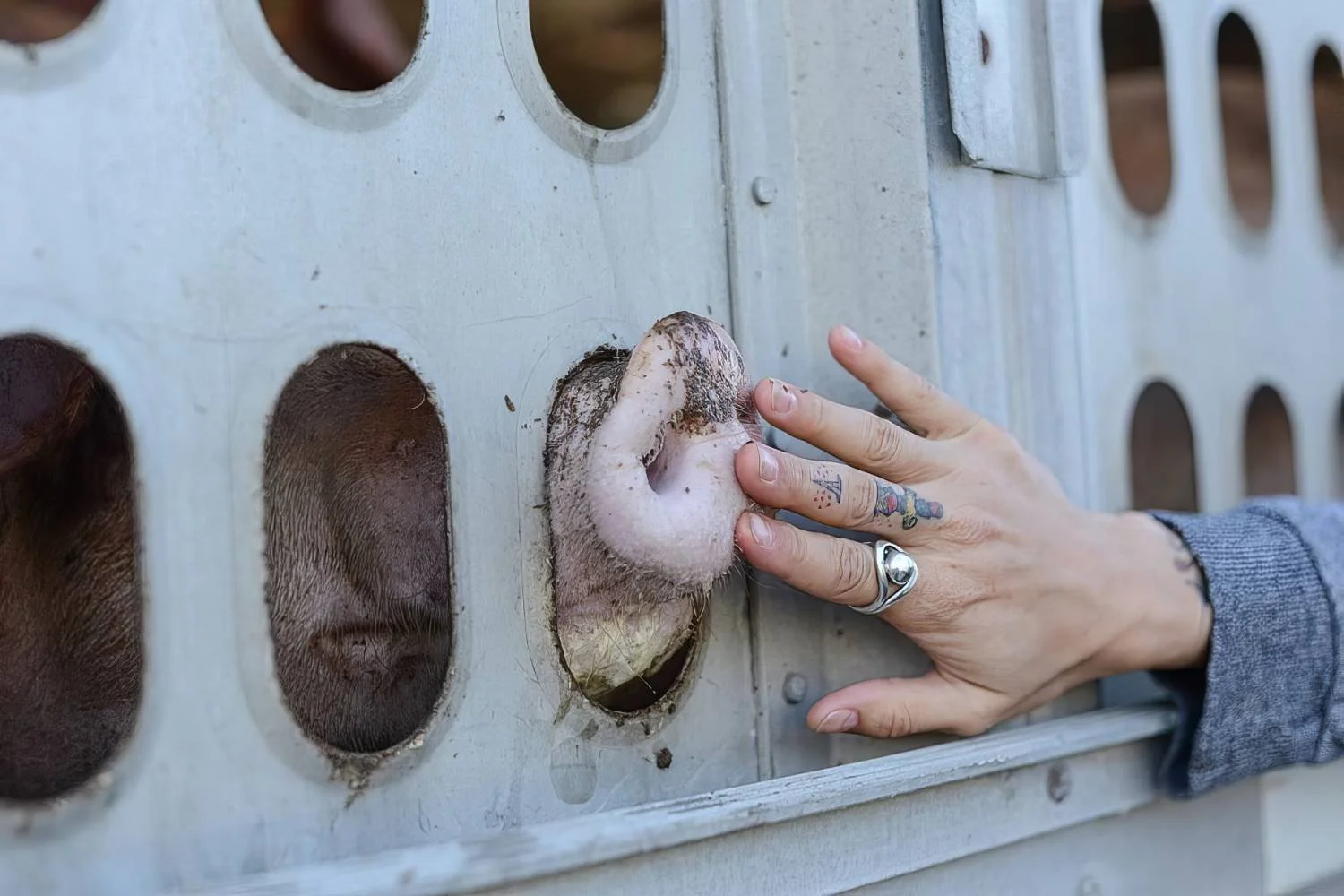
A human hand touches the nose of a pig in a truck bound for slaughter. (We Animals Media)
Leo Tolstoy
“She cannot avoid causing suffering to animals—for she eats them.”
— Leo Tolstoy
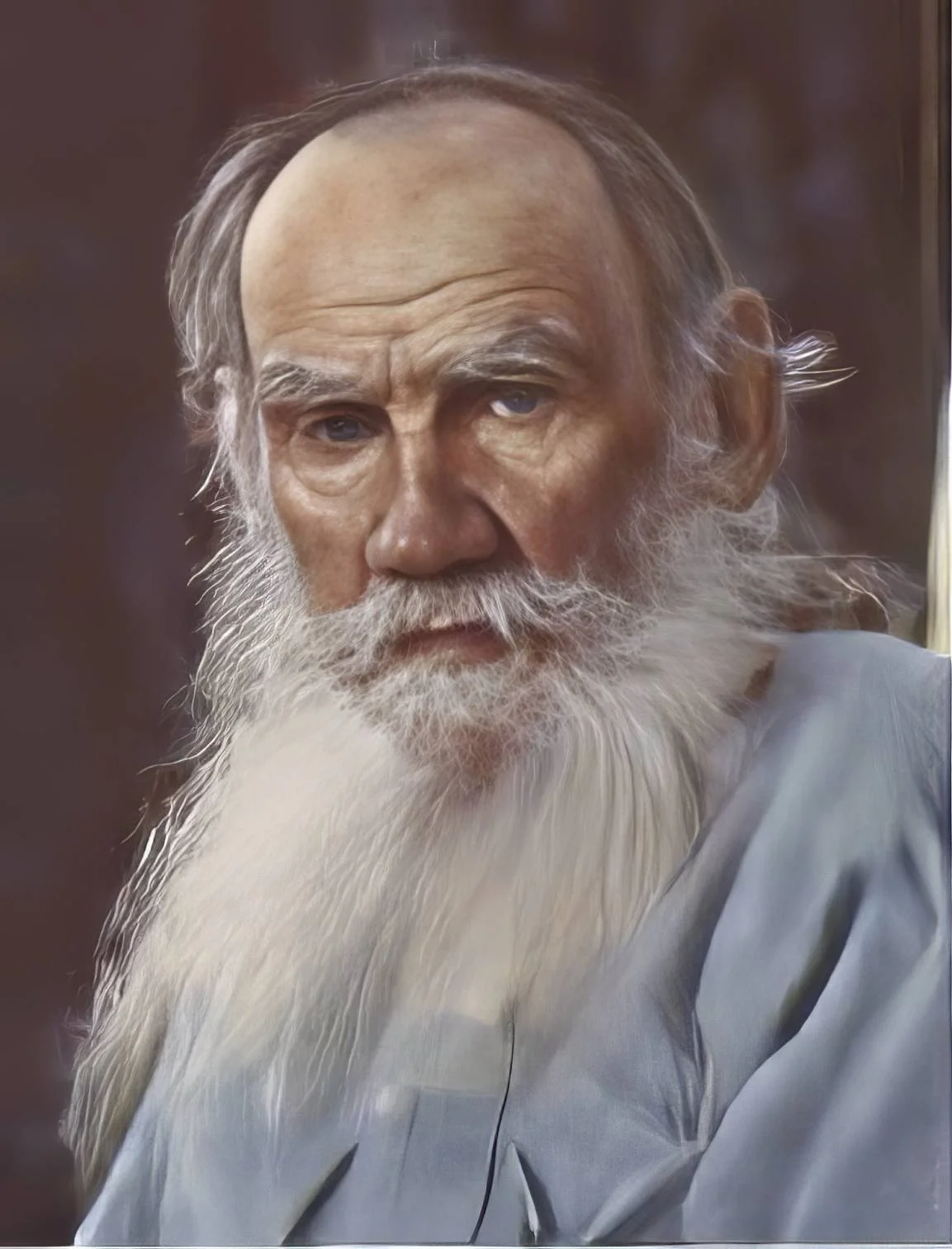
The Christian writings of Leo Tolstoy (1828–1910) helped shape the thinking and activism of some of the world’s most renowned moral giants. When Mahatma Gandhi was in Africa, just beginning to organize against injustice, he read Tolstoy’s writings. The two men exchanged a handful of letters, through which Tolstoy helped to shape Gandhi’s philosophy of peaceful resistance. Gandhi, in turn, influenced Christian activist Martin Luther King Jr., whose son and wife eventually chose a vegan life, aligning their food choices with their faith.
In early life, Tolstoy was a hunter, but as his faith grew, he could no longer justify such unnecessary killing. Tolstoy visited a slaughterhouse and wrote about it in The First Step (1900), calling for compassion and justice for anymals, beginning with a change of diet.
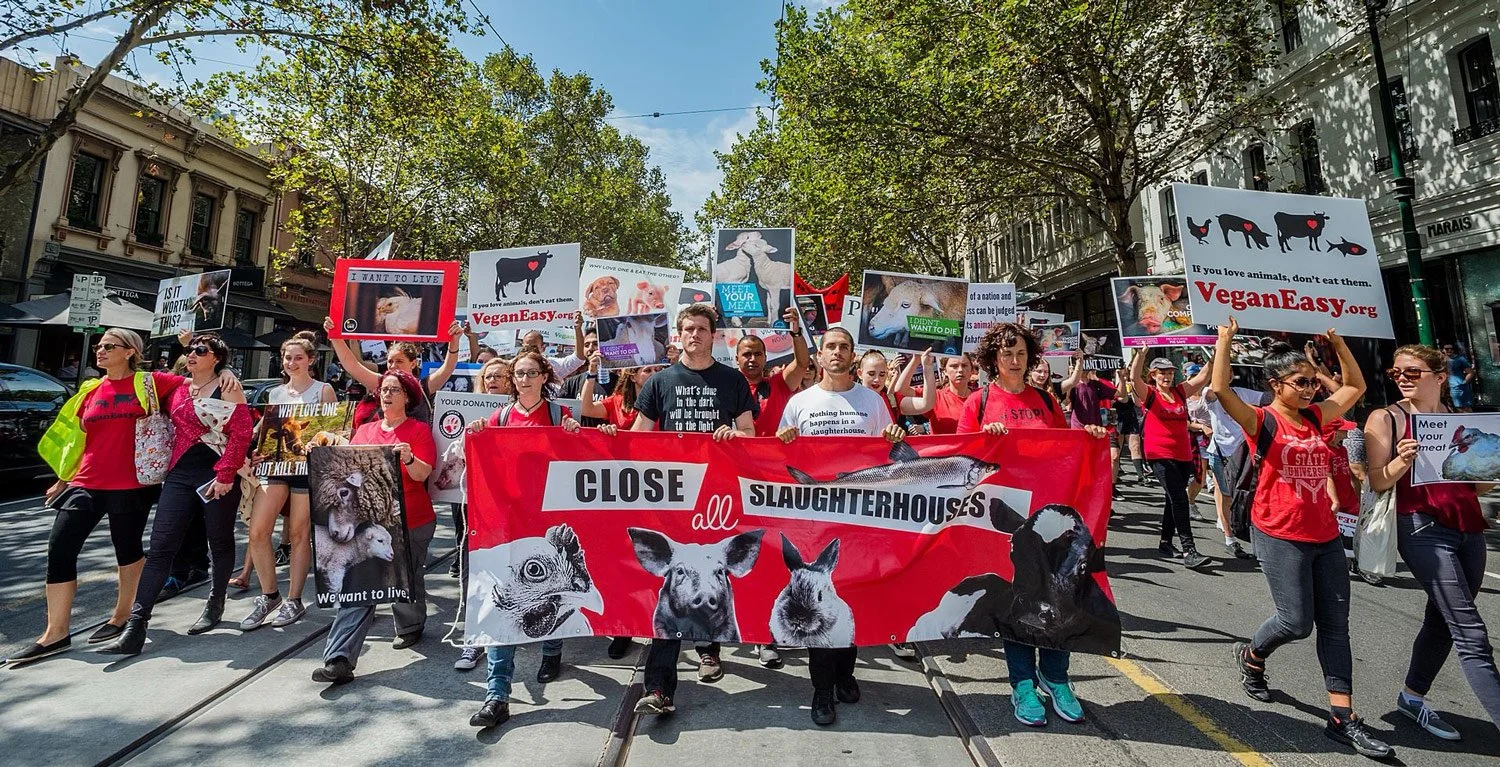
Animal activists in Australia working to restore the Peaceable Kingdom by speaking out against slaughter, as did Tolstoy. (We Animals Media)
Quotes from Leo Tolstoy’s The First Step (1900)
“We… cannot believe that if we refuse to look at what we do not wish to see, it will not exist. This is especially the case when what we do not wish to see is what we wish to eat.”
- -
“If he be really and seriously seeking to live a good life, the first thing from which he will abstain will always be the use of animal food, because... its use is simply immoral, as it involves the performance of an act which is contrary to the moral feeling—killing.”
- -
“She cannot avoid causing suffering to animals—for she eats them.”
- -
“I had wished to visit a slaughterhouse, in order to see with my own eyes the reality of the question raised when vegetarianism is discussed. But at first I felt ashamed to do so, as one is always ashamed of going to look at suffering... and so I kept putting off my visit.”
- -
“If he seriously and sincerely seeks a good life, the first from which a man will abstain will always be the use of animal food.”
Near the end of his life, Tolstoy noted that leaving anymals off his plate cost him nothing. Today, this is even more true: Innumerable markets offer a plethora of vegan options. In fact, vegans today are likely to report that shifting to a vegan life expanded and enriched their food options. And even more noteworthy, vegans today can add that choosing vegan food helps anymals and the environment, is an act of sharing with hungry human beings, and pays back tenfold in health benefits. And Christians can add that choosing a vegan life aligns core teachings with praxis. The relationship between Christian faith and food choice is explored more fully in Food Ethics.
“I am not ashamed as a Christian to testify my utter abhorrence of every instance of cruelty.”
— Humphrey Primatt
Quotes from Dr. Humphrey Primatt’s
“A Dissertation on the Duty of Mercy and the Sin of Cruelty to Brute Animals” (1776)
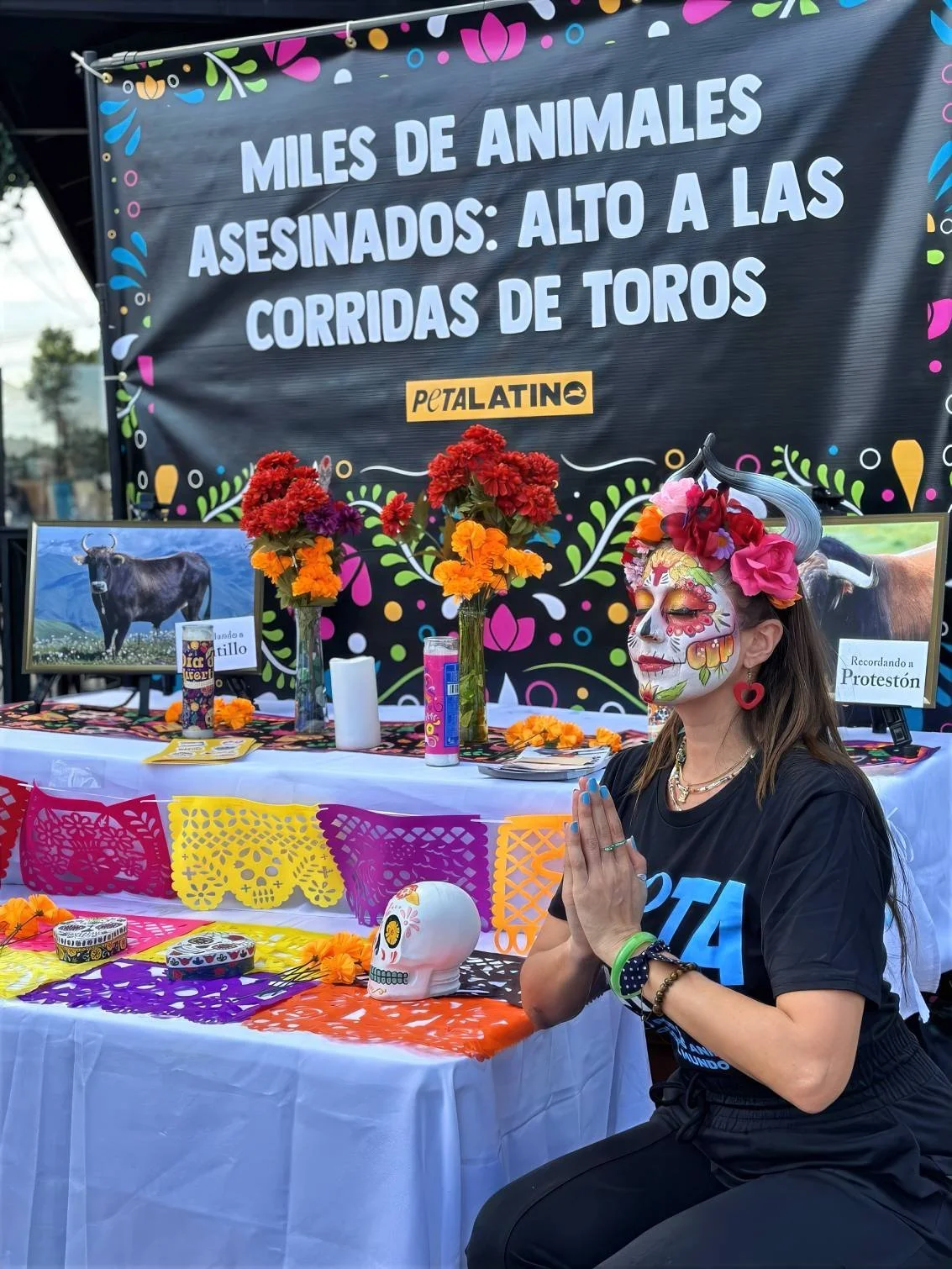
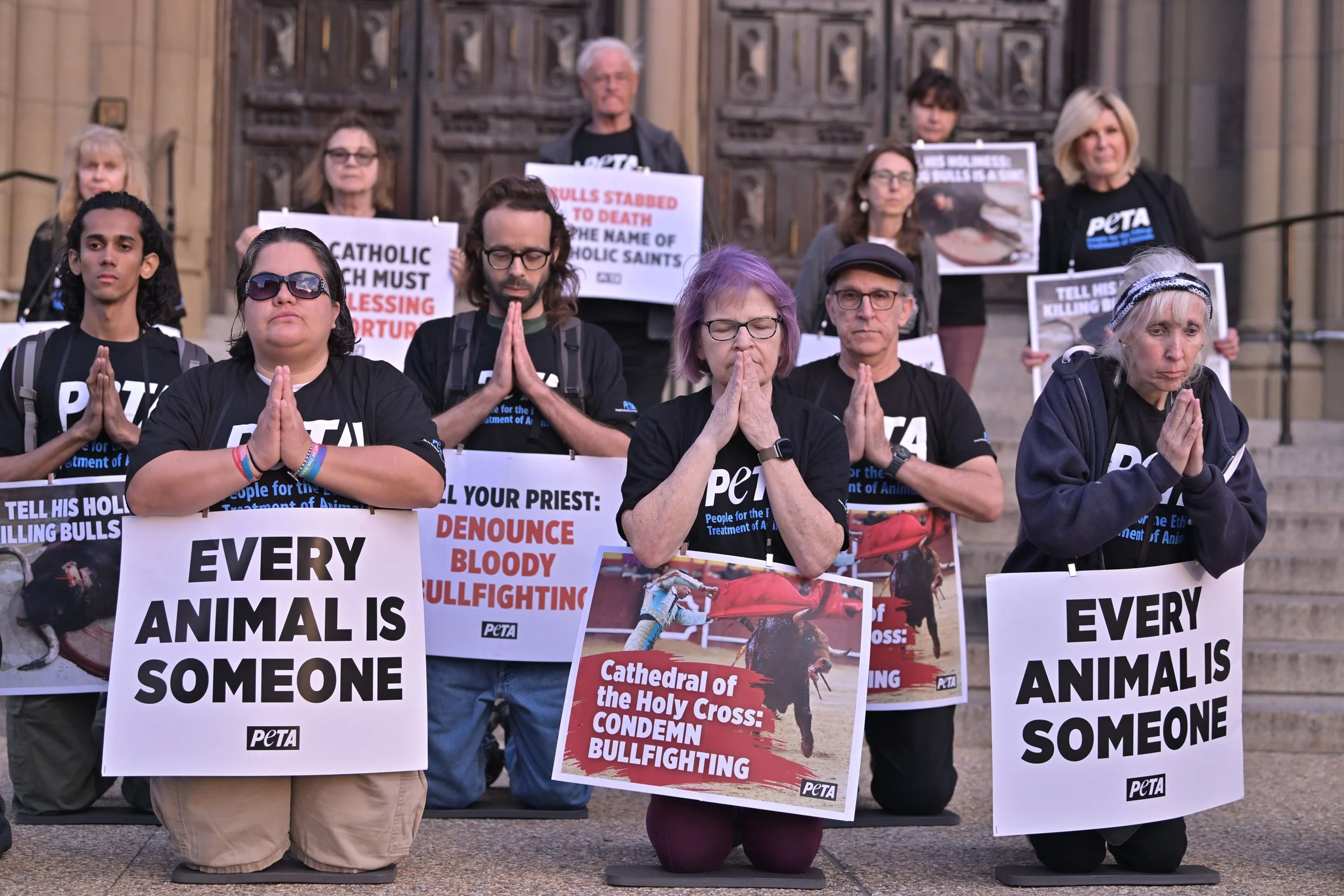
Demonstration against bullfighting on the Day of the Dead.
(Mexico, PETA)
Contemporary Activism
Primatt and Tolstoy may seem ahead of their time, but Christianity’s 2000-year-old Scripture provides a solid moral base for anymal liberation. It is a joy to see the warmhearted responses of contemporary Christians to the cruelty and indifference of anymal industries. Some congregations provide food for companion anymals in their church pantries, protect and provide for wildlife on church grounds, offer sermons that focus on anymal concerns, openly support legislation that relieves anymal suffering, and include services that bless anymals or allow for grieving closure with lost companion anymals. Some churches have anymal action groups that hold film screenings, book discussions, Bible studies, or engage in activism online or in their communities. Christian anymal activists might work to assure that vegan foods are offered in their community, whether in their local hospitals, schools, or restaurants.
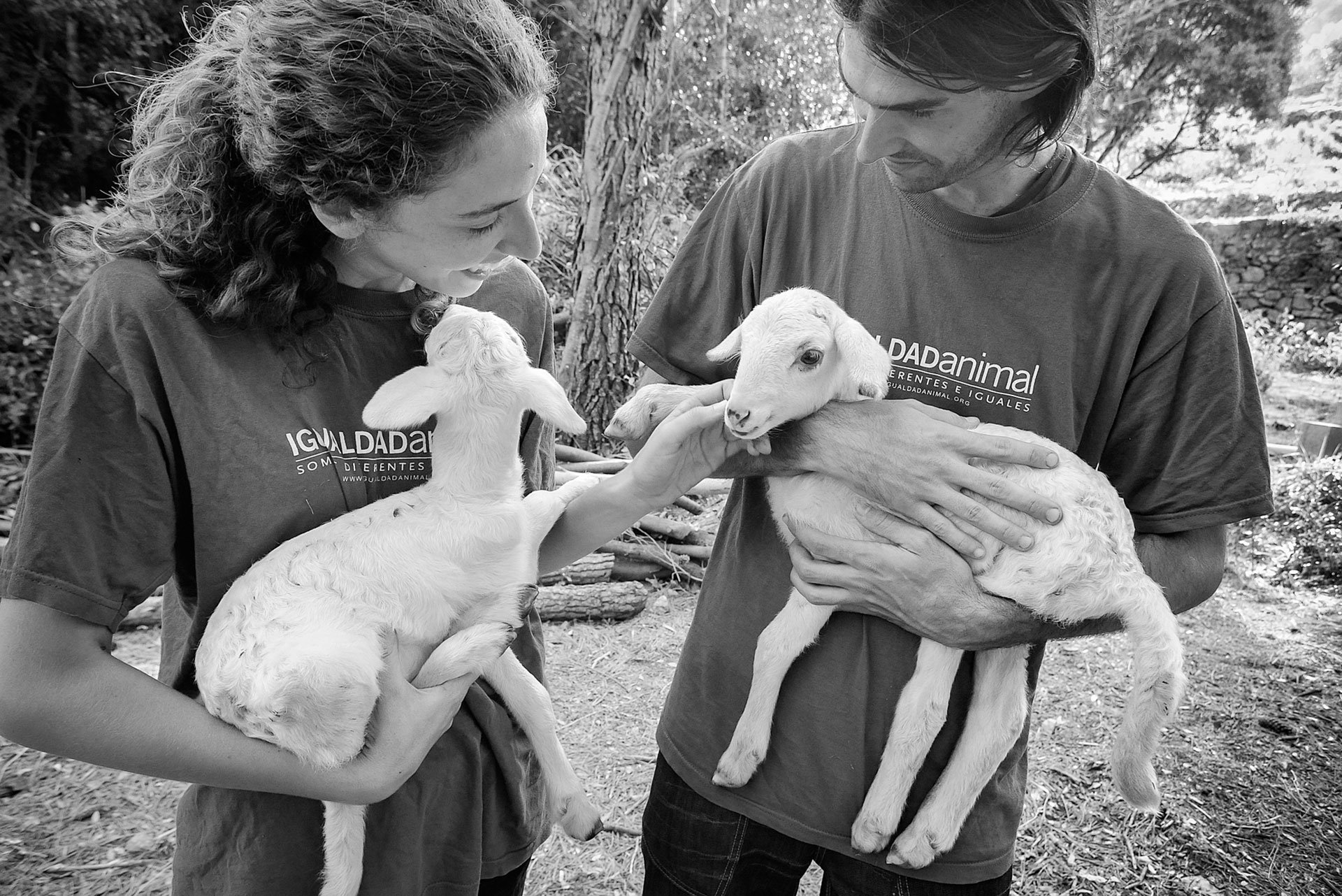
Our job is to share glimpses of the difference Christ makes. Our job is to demonstrate the radically impractical conviction that one lamb’s rescue is worth any cost.
— Theologian
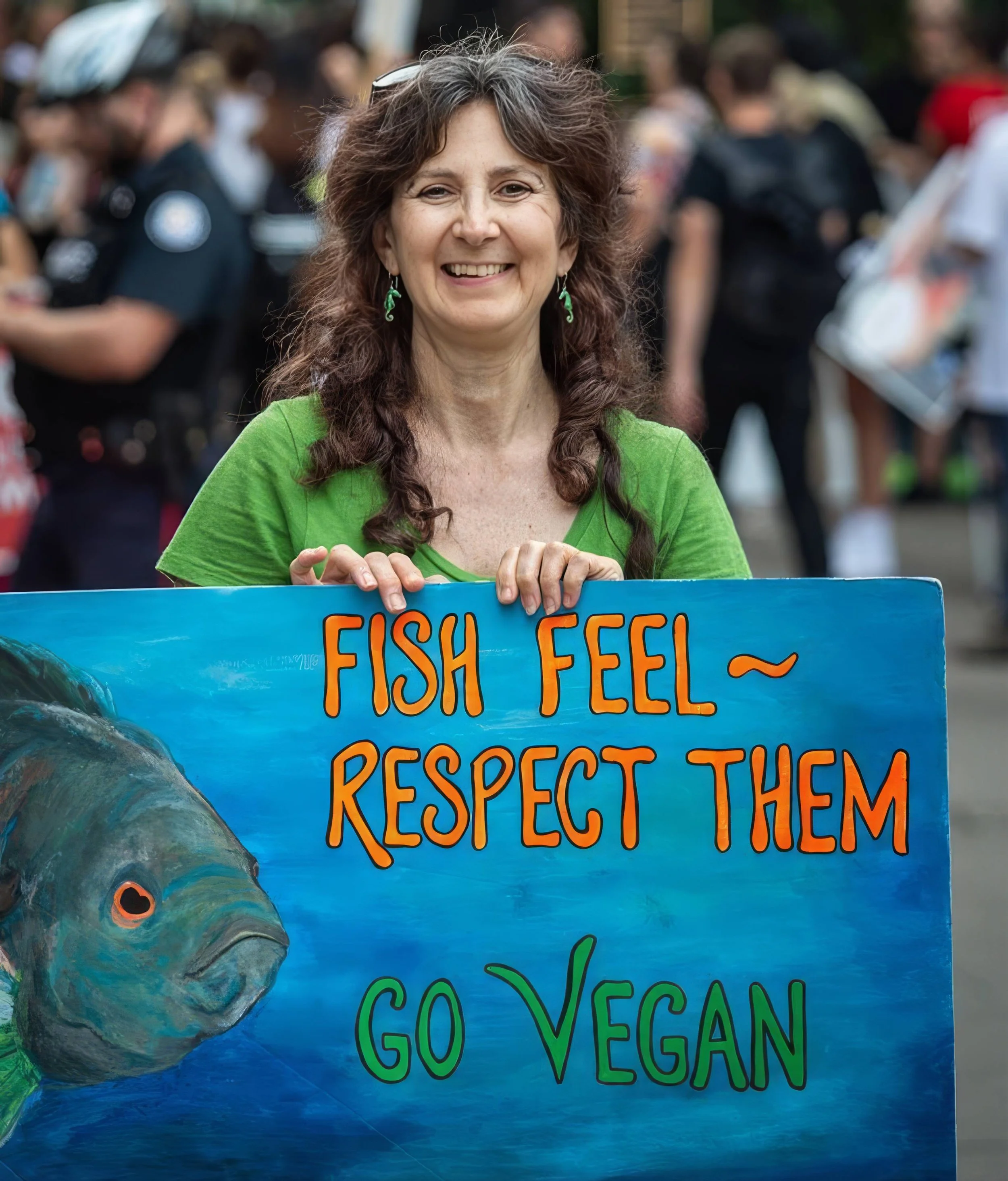
An activist takes a stand for fishes. (We Animals Media)
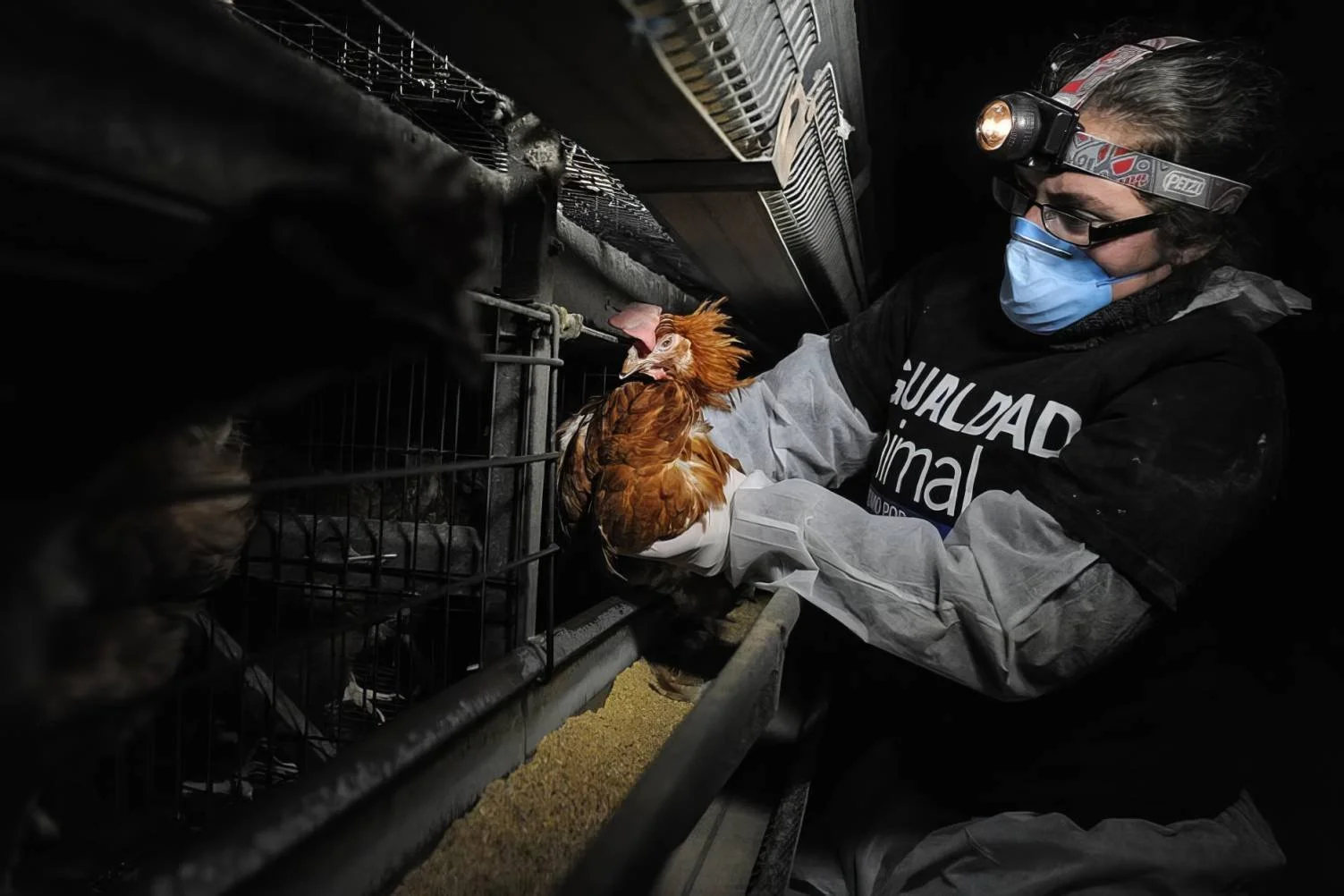
In Spain, an anymal activist rescues God’s hens from suffering and premature death in the egg industry—serving God amid creation. (We Animals Media)
One of the single most effective things that Christians can do to steward God’s creation is to adopt a vegan diet.
— Christian anymal activist
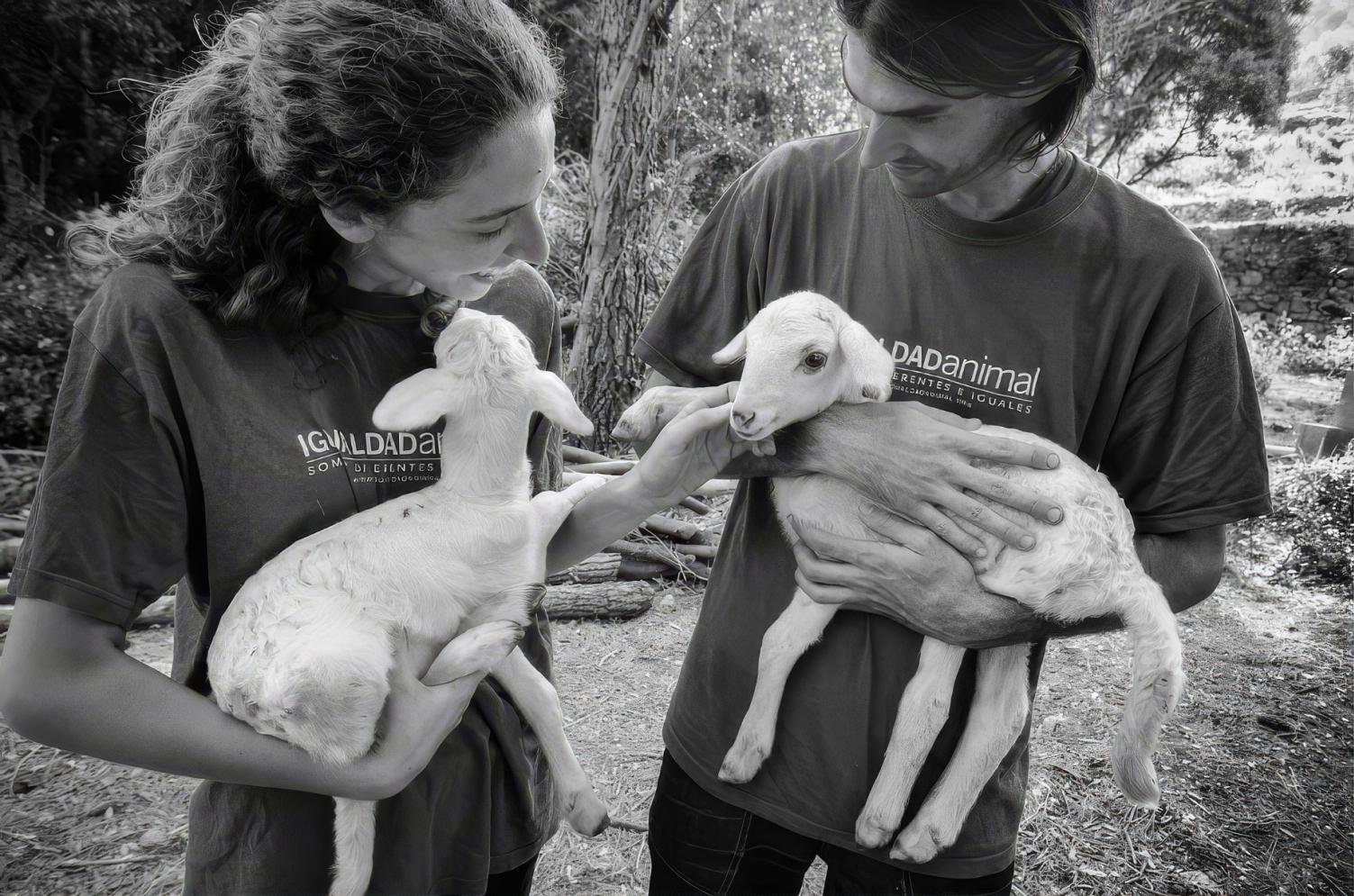
Living up to core Christian ethics, following the example of Jesus, honoring what Scriptures tell us about creation, two activists in Spain celebrate rescuing two goats from the milk and meat industries before delivering them safely to a vegan anymal sanctuary. (We Animals Media)
[Give] churches no peace until they take up the cause of animal welfare as a normal and essential part of their work.
— Retired Bishop
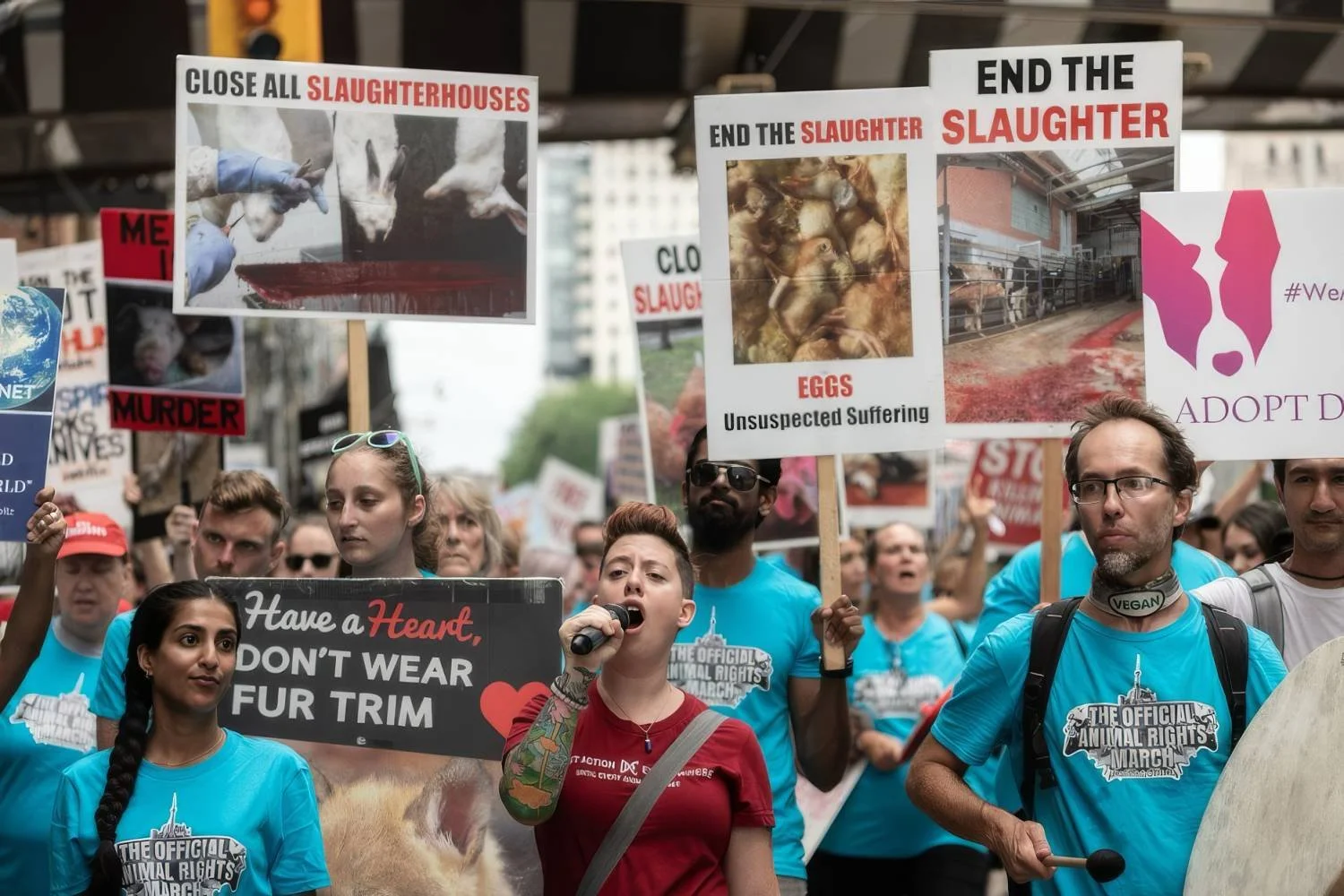
Animal activists speaking up on behalf of anymals. (Canada, We Animals Media)
We lifted the freed hens out of the box and set them in the hay. They took small steps and looked around at their new home.... When animals are set free and slaughterhouse equipment is rendered useless, the iniquitous violence against animals is made visible, while our utopia—a society that takes hens and pigs seriously—is rendered clear and concrete, albeit on a small scale. When we act in this way, our means and our ends coincide.
— Christian activist rescuing hens from the food industry
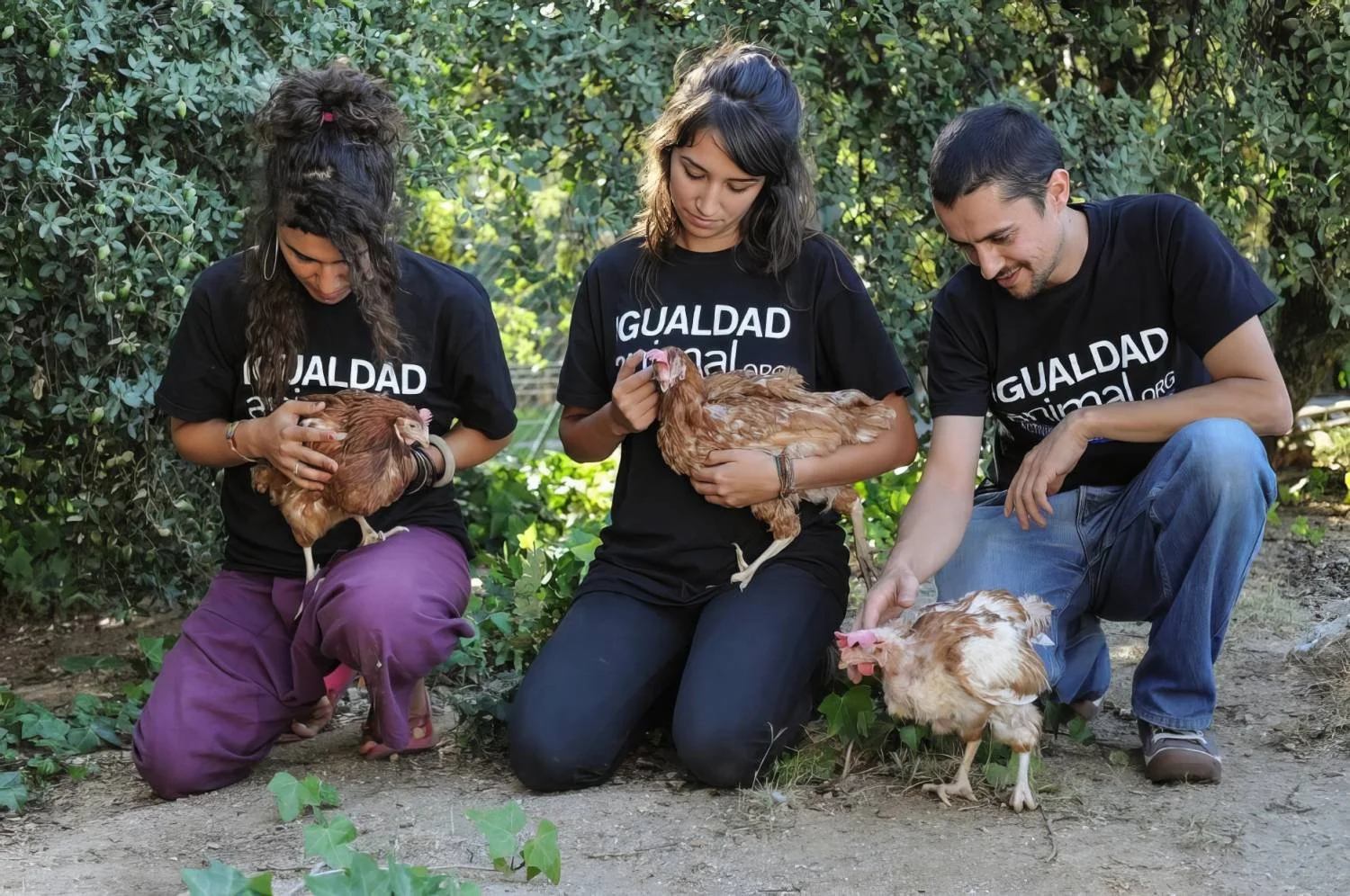
Three activists with hens freshly rescued from an egg industry in Spain. (We Animals Media)
Summary:
Following Jesus in Public Action
1 John 3:18
Love not in word or speech but in deed and truth.
Some feel called to follow in the footsteps of Jesus and the prophets by working for political and social change, to reduce worldly sufferings, and to draw people back to God. Humphrey Primatt, Leo Tolstoy, and innumerable contemporary Christian anymal activists have chosen this path, standing with and for God by protecting anymals, and in so doing, these activists have also protected humankind and the planet. (For more on the connection between the sufferings of anymals and the sufferings of humankind and environmental destruction, see this book, Vegan Ethics: AMORE, or to learn about dietary choice and feeding the hungry, see Sacred Texts, New Testament, Core Christian Ethics, Sharing.)
Everybody thinks of changing humanity, and nobody thinks of changing himself.
— Leo Tolstoy
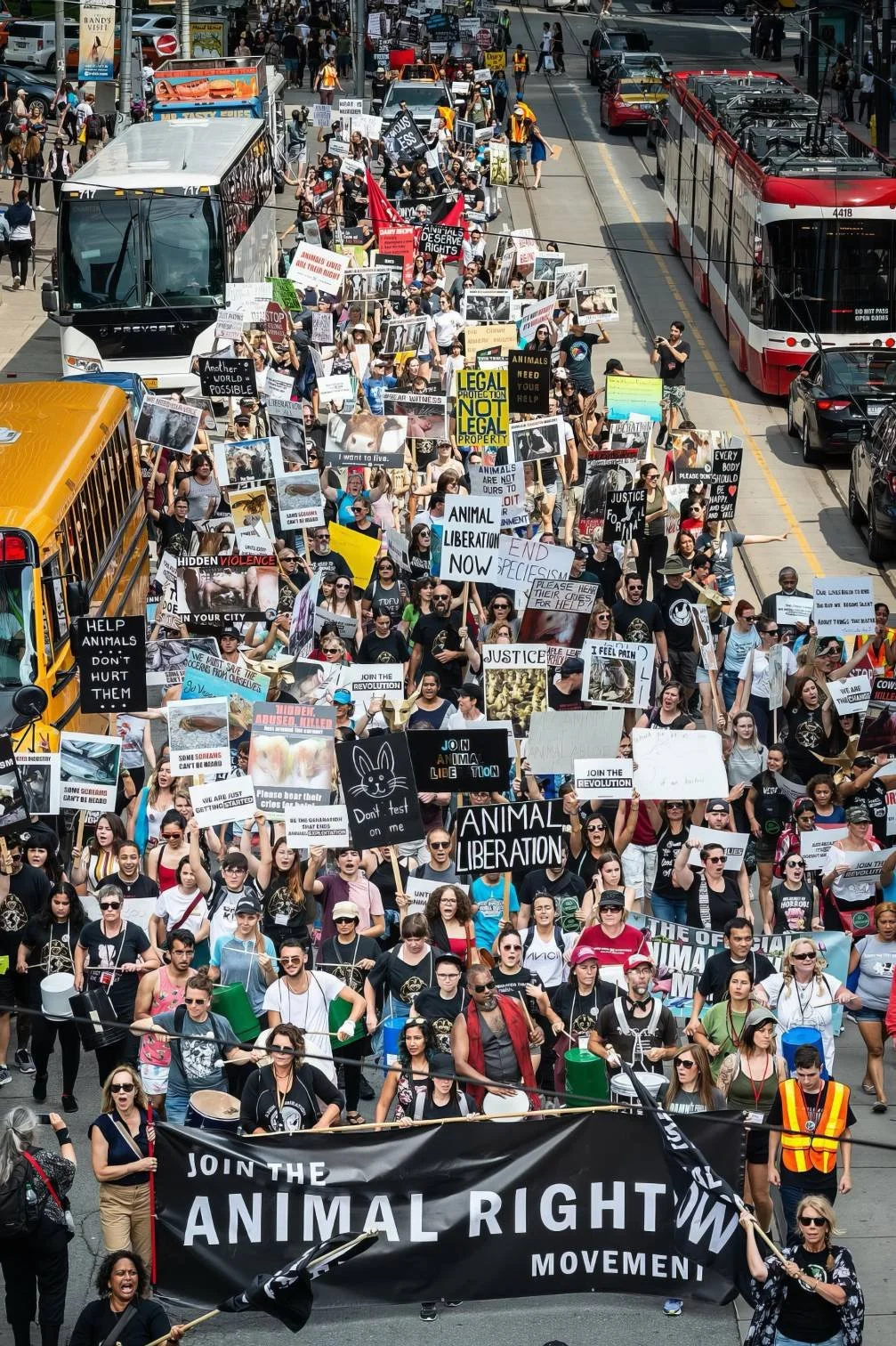
Animal activists in Canada. (We Animals Media)