Lack of Humility
Proverbs 11:2
When pride comes, then comes disgrace,
but wisdom is with the humble.
Perhaps above all else, Christianity is God-centered and arrogance is incompatible with a God-centered faith. Genesis teaches that humility is embedded in human bones: We were created on the 6th day, land animals among land animals (Genesis 1:24–26), to humbly serve God amid creation on behalf of God, as God would do (Genesis 1:26). Jesus models a humble life of servitude, tending to the needs of those most downtrodden (the Gospels). Nonetheless, our arrogance is often manifest as human exceptionalism: We tend to imagine that we are more important than the rest of God’s creation and that creation was designed specifically for us, a repository of resources for our consumption.
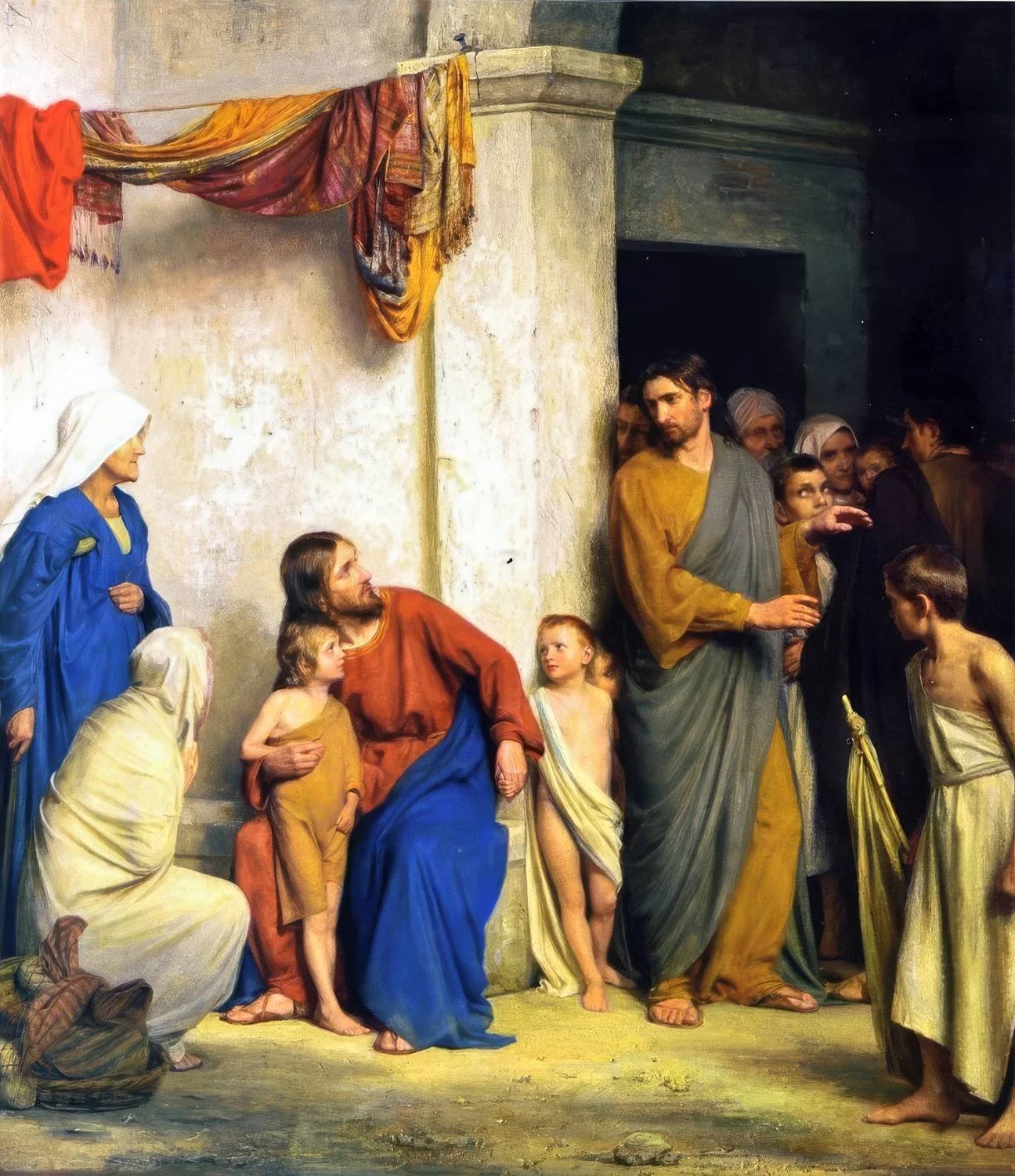
Though he was the son of God, Jesus was a humble servant, working with and among those whom others thought unworthy of his time and attention, setting an example for Christians by serving those most in need of care. (“Let the Little Children Come unto Jesus,” Carl Bloch, Danish, c. 1800)
Anymal exploitation stems from the sin of hubris. Scriptures do not instruct humankind to weigh the “value” of God’s creatures against our preferences or perceived interests. When we choose to use and destroy anymals for our purposes, we show that we think we are entitled to manipulate and harm (breed, confine, control), and to destroy, what God has made, despite core Christian ethics that require mercy, expansive love, and serving God amid creation. Anymal exploitation is arrogance. Anymal exploitation shows that we have forgotten our place amid creation.
James 4:10
Humble yourselves before the Lord, and he will exalt you.
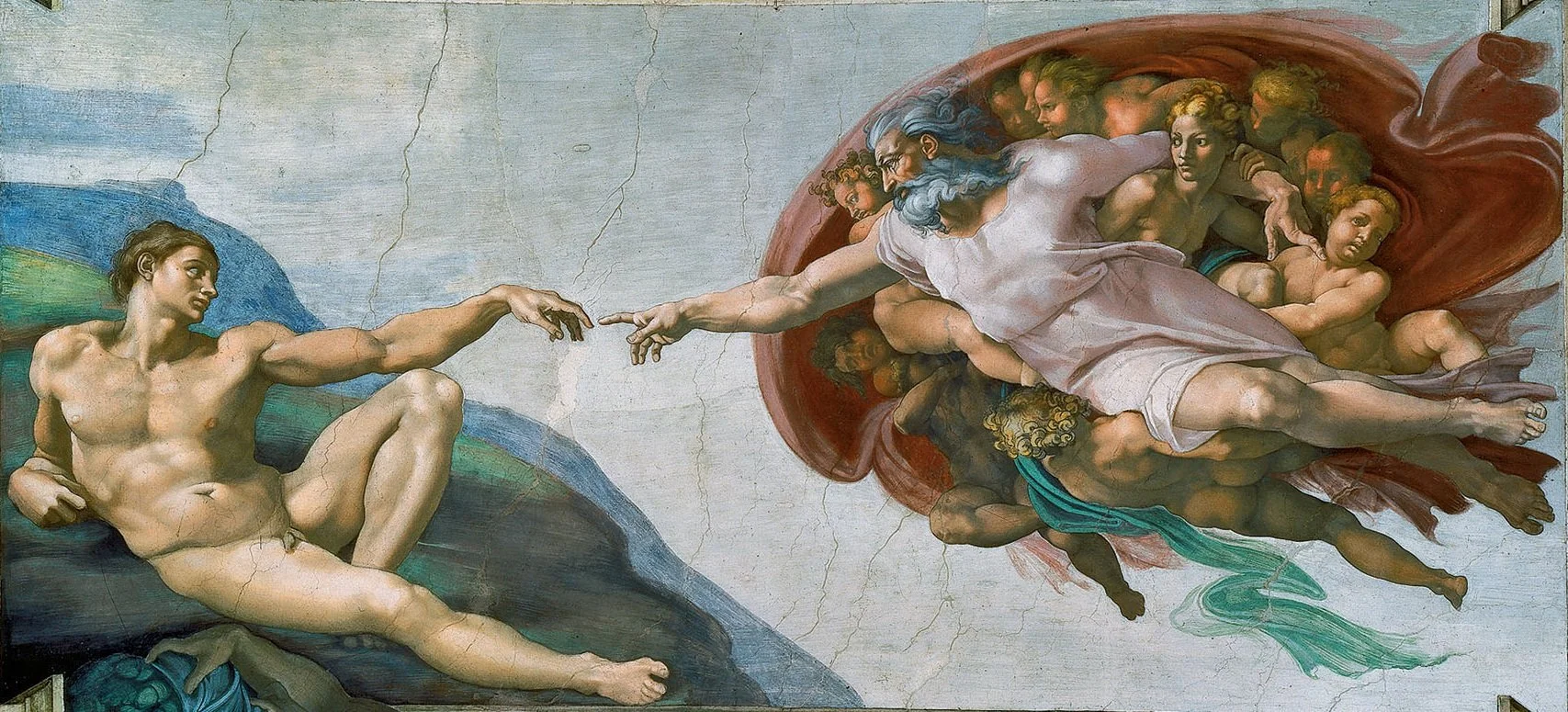
Only God stands apart from creation and humility is a core Christian ethic.(“Creation of Adam,” Michelangelo, Italy, c. 1511, Wikimedia Commons)
Sacred texts describe a God-centered universe in which only God stands apart—the pinnacle, the core, Life of all life. Genesis, Ecclesiastes, and the Book of Job affirm and remind humankind of our animality, our creatureliness, our mortality. We are creatures with nephesh chayyah among creatures with nephesh chayyah, all of whom share the frailty of flesh (kol basar).
Ecclesiastes 3:18-21
I said in my heart with regard to humankind that God is testing them to show that they are but animals. For the fate of humans and the fate of animals is the same; as one dies, so dies the other. They all have the same breath, and humans have no advantage over the animals; for all is vanity. All go to one place; all are from the dust, and all turn to dust again.
Scriptures remind humankind that only God stands apart from creation, that human beings are creations of God; we are living creatures. When Job speaks of anymals as lower and lesser, God reminds that we are their kin; when Job complains that he is “brother of jackals, and a companion of ostriches” (Job 30:29), God does not disagree but asks, “Where were you when I laid the foundation of the earth? Tell me, if you have understanding” (Job 38:4).
Job 38:25–29
Who has cut a channel for the torrents of rain,
and a way for the thunderbolt,
to bring rain on a land where no one lives,
on the desert, which is empty of human life,
to satisfy the waste and desolate land,
and to make the ground put forth grass?

God asks Job pointed questions, making clear that only God is separate and distinct: Job is a living creature of the earth among living creatures of the earth, created and sustained by God. (“The Lord Answering Job Out of the Whirlwind,” William Blake, England, 1805, Wikimedia Commons)
The Book of Job also informs readers that certain anymals were created to live outside of human influence, that they were created to be free of humankind. In speaking of one such creature, God delivers a final and blunt reminder that we are animals, that we are God’s creations and not gods amid creation: The behemoth (hippopotamus) was made “just as I made you” (Job 40:15).
Job 39:1-10
“Do you know when the mountain goats give birth?
Do you observe the calving of the deer?
Can you number the months that they fulfill,
and do you know the time when they give birth,
when they crouch to give birth to their offspring,
and are delivered of their young?Who has let the wild ass go free?
Who has loosed the bonds of the swift ass,
to which I have given the steppe for its home,
the salt land for its dwelling place?
It scorns the tumult of the city;
it does not hear the shouts of the driver.
It ranges the mountains as its pasture,
and it searches after every green thing.Is the wild ox willing to serve you?
Will it spend the night at your crib?
Can you tie it in the furrow with ropes,
or will it harrow the valleys after you?”
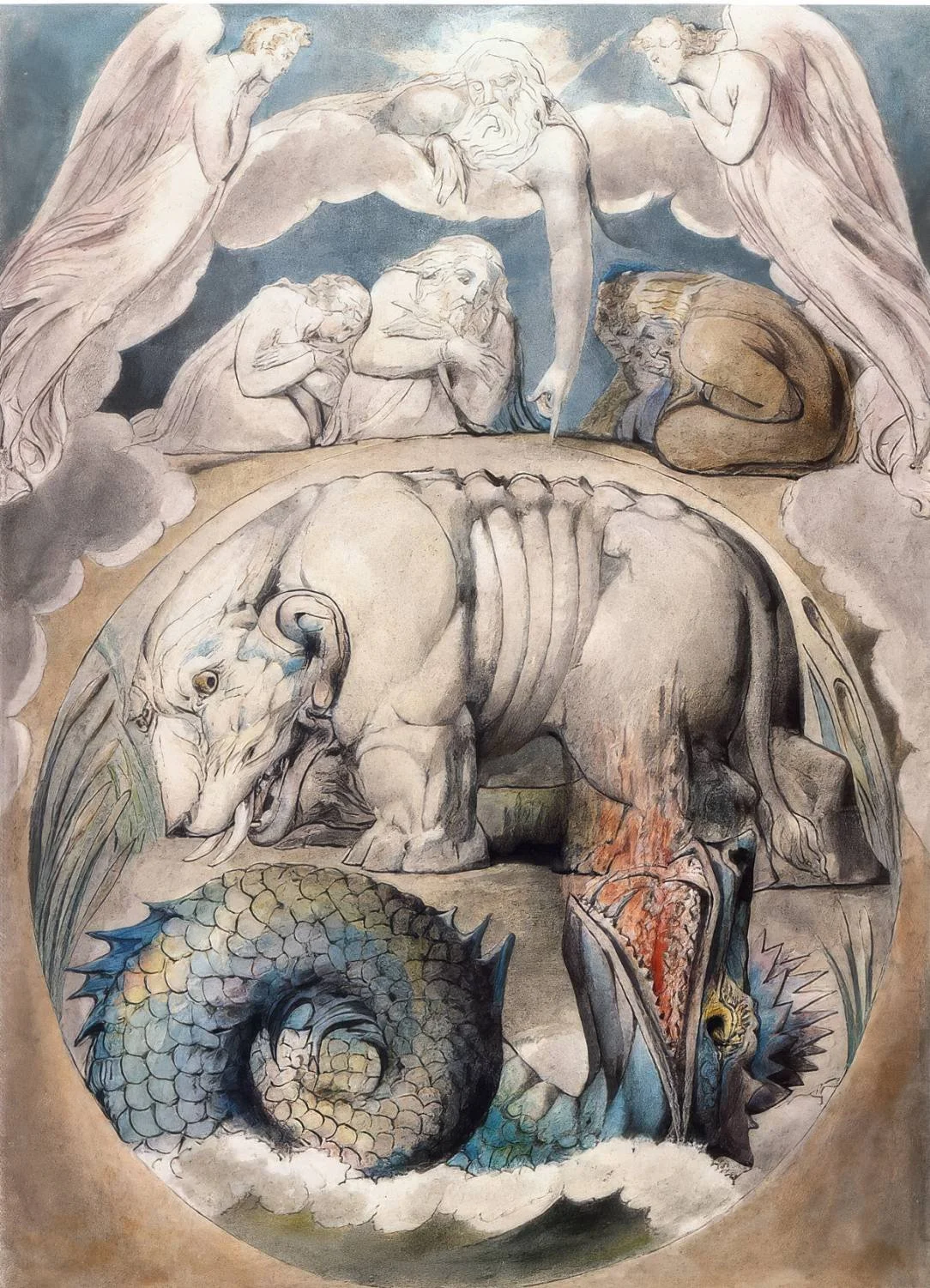
God creating the behemoth and humankind in the same way. (Illustration from Behemoth and Leviathan, William Blake, England, 1805, Wikimedia Commons)
Job finally grasps his creatureliness in contrast with God’s divinity and recognizes that he is “brother of jackals, and a companion of ostriches” (Job 30:29). We are God’s beautiful creations, as is everything else on Earth—cows and chickens and snakes and spiders. If humankind views living creatures as lowly and lesser, so much the worse for humankind.
Job 40:4
See, I am of small account; what shall I answer you?
I lay my hand on my mouth.
Humanism is human-centered; Christianity is God-centered. The human tendency toward hubris conflicts with core religious ethics: Hubris, selfishness, and self-centeredness are irreligious. All that exists is God’s; not even one living being is ours to harm or destroy for the sake of habit or to satisfy personal preferences. God has given each anymal their life. Anymals are not ours to eat, wear, or exploit in the name of science. Capitalistic anymal exploitation is a cancer fed by a gross disconnect between core religious teachings and daily practice.
Christian discipleship is a commitment to a relationship with God that we build across time in the course of daily life. Hubris is incompatible with Christianity. A humbled humanity ceases to cause inexplicable suffering and premature death to trillions of anymals, all the while devastating the planet; in aligning faith and practice in this way, a humble humanity also benefits humankind, for we are utterly dependent on this Earth, and we also fare better with less violence and bloodshed. God created a peaceful, vegan world: God’s wisdom is everywhere apparent. Through prayer and with grace, we can learn to walk humbly with our God. The ethical foundations of Christian discipleship are explored more fully in Sacred Texts.
Micah 6:8
He has told you, O mortal, what is good,
and what does the LORD require of you
but to do justice and to love kindness
and to walk humbly with your God?
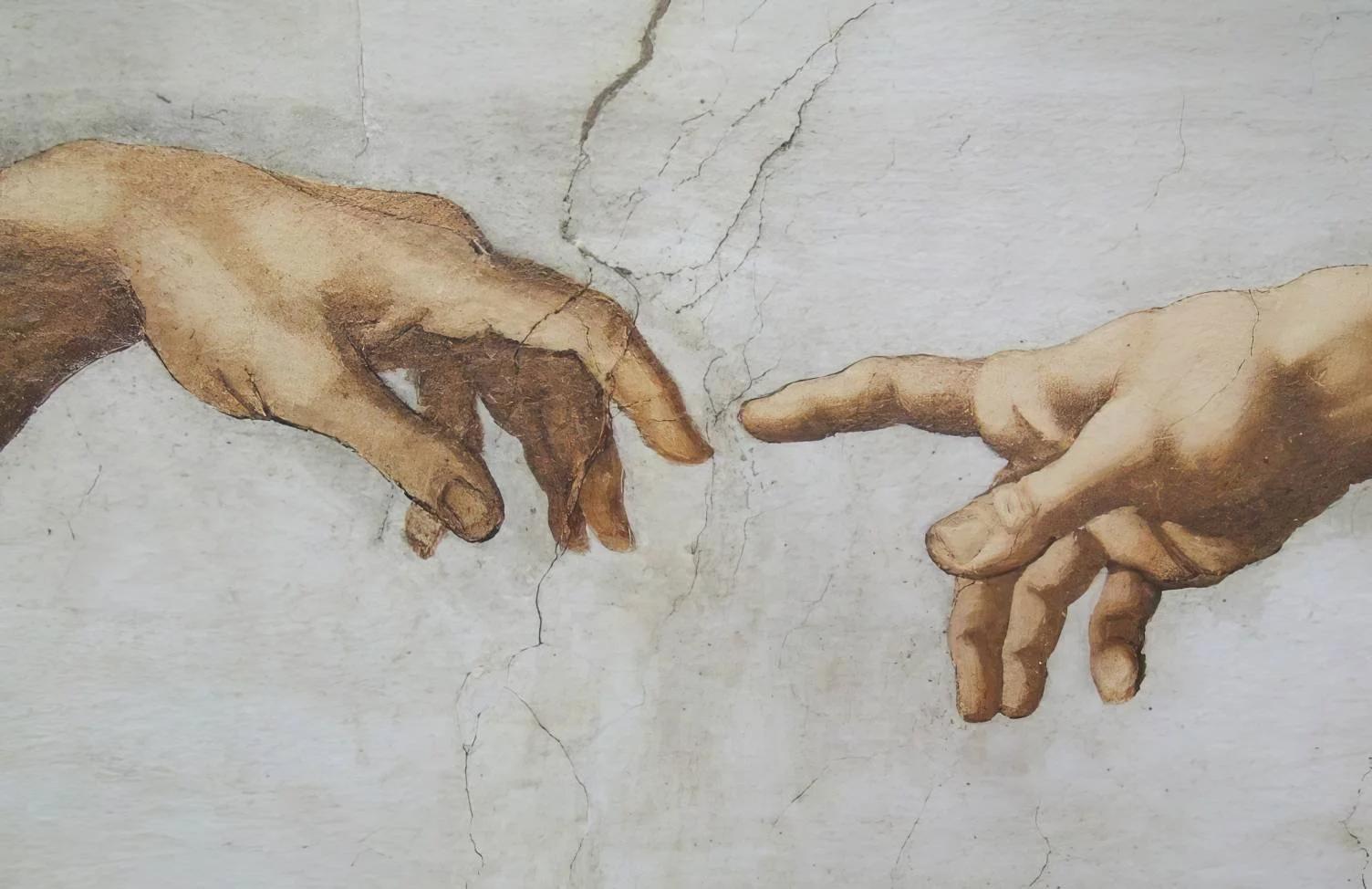
Michelangelo’s famous and intriguing depiction of creation’s closeness to and separation from God.
(“The Creation of Adam” (detail), Michelangelo, Sistine Chapel in Italy, 16th century, Wikimedia Commons)