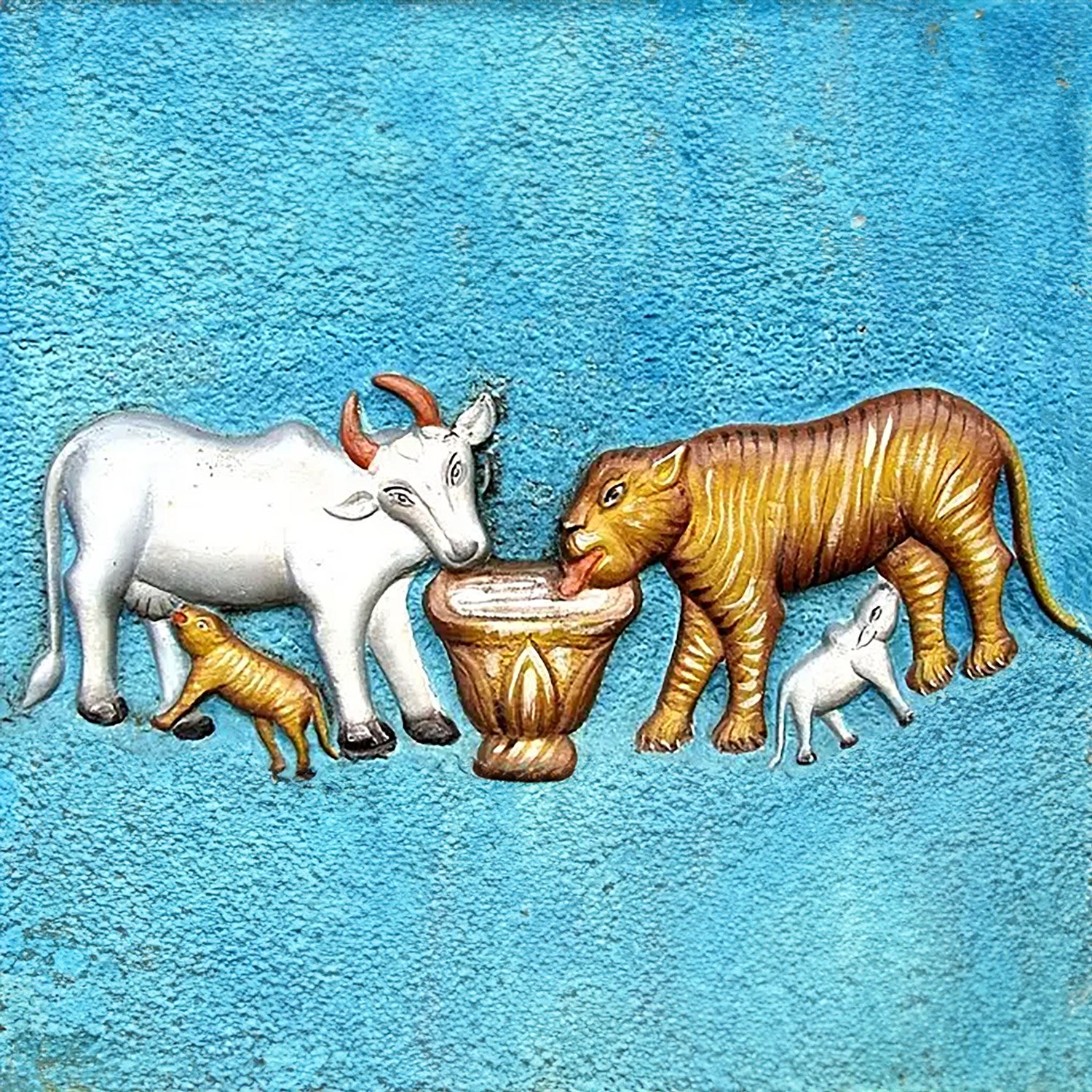
Animals in Jainism
Explore Jain teachings that shape our lives with animals through texts, core ethics, and practice
Foundations
Ahimsa, non-harm, stands at the heart of Jain belief and practice; the first and highest vow calls us to avoid injury to living beings in thought, word, and action. Animals are jivas, living souls. Animals are recognized as fellow creatures traveling through karma and rebirth along the path to liberation.
Our sacred teachings invite us to live day-to-day carefully. Aparigraha, non-possessiveness, calls for restraint in everything that we do, including what we purchase and consume. Anekantavada, many-sidedness, mitigates human pride—every being has their individual experiences, their personal perspectives, and their own ways of going about life, and we are to take account of the points of view of animals. Jain philosophy forms a solid foundation for compassion, humility, thoughtfulness, and care for animals in the course of our lives.
The lives of Tirthankaras, and Jain sacred writings more generally, remind us that spiritual practice requires simplicity, restraint, and ahimsa. Lord Mahavira’s life and teachings call us to vigilance in self-simplicity and self-discipline, to a life at all times guided by ahimsa. Sacred texts such as the Pūrva-bhava narratives (biographies of exalted beings) of the Charitas and Purāṇas remind us of previous lives of the Great Heroes, especially the Tirthankaras, reminding that every living being carries a jiva that is spiritually important.
Most Jains keep a lacto-vegetarian diet, permitting only dairy from among animal products, but not meat or eggs. Animal advocates invite other followers of the Jina to learn about the dairy industry, and as a matter of foundational Jain teachings such as ahimsa, restraint, understanding the plight of others, and reverence for life, particularly the lives of cows and calves in the dairy industry, to avoid dairy products. What do our sacred texts actually say on this matter?
Teachings
Non-harm (ahimsa) is at the core of Jain ethics, which teach that animals have their own point of view (anekantavada) and are morally and spiritually important. Panch Mahavratas (Five Vows) protect all living beings.
Narratives
Jain narratives remind that every living being has a point of view and that compassion and non-harm are preeminent moral virtues. The Parable of the Elephant and the Rabbit teach us that animals are compassionate, spiritual individuals; sacred accounts tell of the compassion of Prince Arishtanemi, which led to his rebirth as the 22nd Tirthankara.
Tension
Some Jains harm cattle by consuming dairy, by purchasing animals as a form of rescue, and because some Jain animal sanctuaries do not necessarily alleviate the suffering of animals in their care.
Living
Panch Mahavratas (Five Vows) invite us to choose only plant foods in contemporary society. This allows us to avoid harming humankind, animals, and the planet, to honor both truth and the points of view of animals, and not to take what has not been given.
Advocacy
Jain heroes exemplify non-harm and compassion for animals, so it is not surprising that we have been animal advocates for centuries. We continue this long tradition of establishing and tending animal shelters (panjrapoles) and engage in many other forms of contemporary animal activism.