Animals in Judaism
Explore Judaism and animals through the Torah—biblical ethics, the creation account, and the Creator
Foundations
Torah provides a strong and full basis for living faithfully with animals.
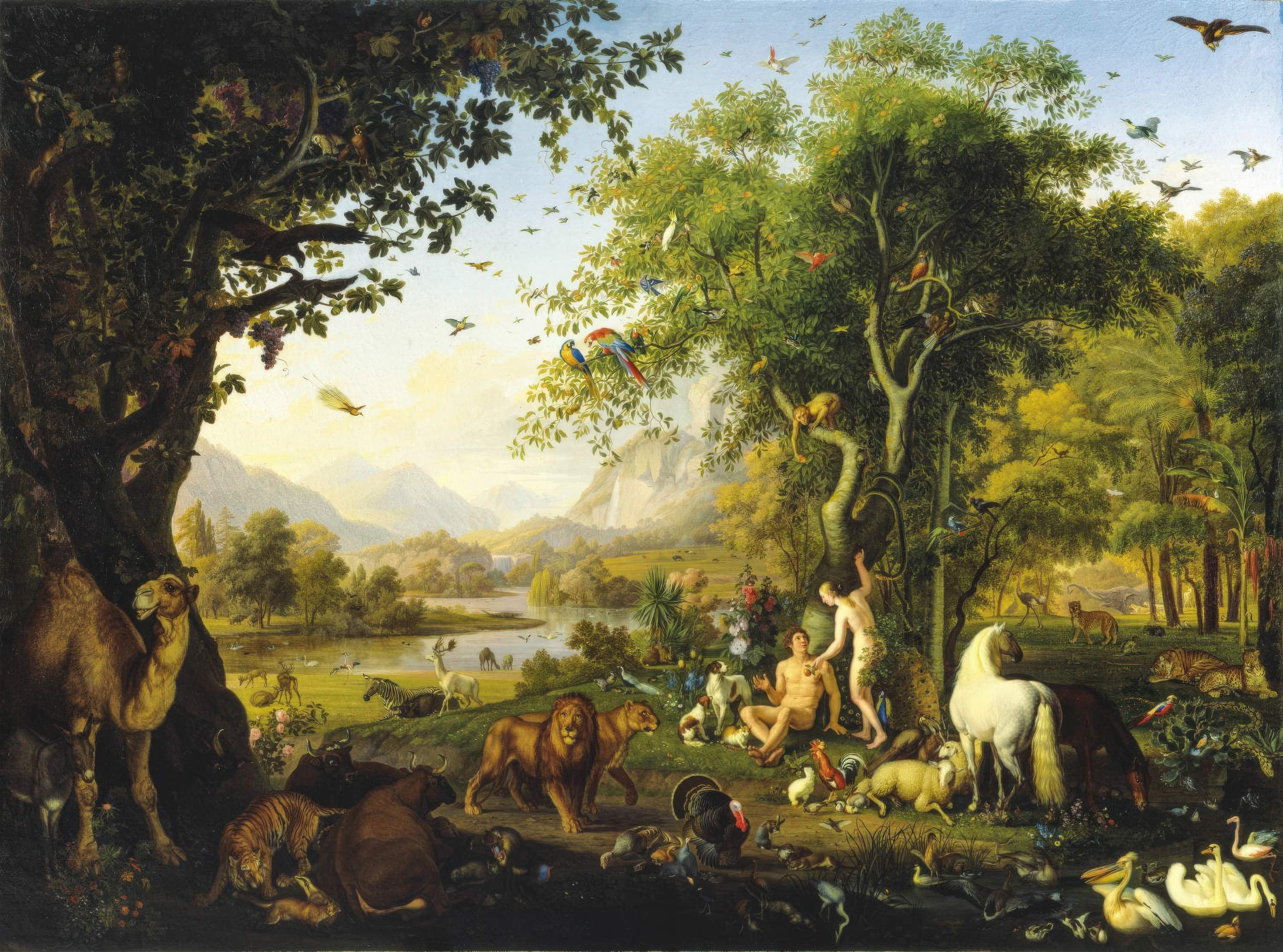
Genesis 1 and 2 record the world as created by God, a world of kinship and community between all living creatures, a world of perfect and total peace. In many ways and places, Torah also tells us that God, who remains compassionately invested in creation, is sole proprietor of all that exists. God explicitly designates only plants for food. To respect and faithfully serve God is to honor all that has been made, as it was made, by compassionately caring for creation.
Torah sometimes focuses on animals, providing key information about animals as individuals and about their relationship with God. These writings also help us to discern our rightful relationship with God’s creatures—how to respect God through animals.
Because we are a work in progress, there is often tension between what the Tanakh teaches and our actions. This tends to be particularly true in our relationship with animals. We may show too little humility or mercy with regard to God's creatures, miss opportunities to serve God by tending to the needs of animals, or hesitate to explore how our daily purchases—especially what we eat—affect the earth’s many living creatures.
Jews are encouraged to grow, to examine how closely our daily lives align with Torah, to extend compassion, mercy, and care to all God’s creatures. As we open our hearts to God and allow Torah to shape our lives, we are invited to examine our attitudes, beliefs, and actions toward God’s creatures and to build more faithful Jewish communities.
The question may seem simple, but the answer is complex: Where animals are concerned, how can Jews walk closer to God?

Teachings
The Tanakh teaches that all creatures are kin, that we must avoid causing suffering, and that God created a world free of bloodshed. Genesis 1 and 2 reveal God’s creation as one of peace, kinship, and kindness. Torah tells us that the Creator cares for all living beings, while Core Jewish Law and Ethics call for peace, mercy, and serving God through creation.

Narratives
Jewish stories remind that animals are thinking, feeling individuals who are important both to God and to our religious lives. The Snake of Genesis 3 reminds that snakes and humankind are neighbors and kin. The Donkey in Numbers 22 teaches kindness and respect for God’s creatures, and the narrative of the calf, weasels, and Rabbi Yehuda HaNasi remind that God punishes humankind for indifference to animals.

Tension
In addition to buying animal products, some Jews harm animals due to humankind’s tendency toward prideful human exceptionalism, and also through ritual atonement (kaporos).

Living
Torah invites us to choose plant foods. The Genesis diet instructs humankind to eat only plants, a diet that fulfills many mitzvot and makes it easier to keep kosher.

Advocacy
Jews honor an eternal covenant with God that shapes everyday actions. As activists, the prophets provide inspiration for contemporary animal advocates.
Image Credits
Banner Image: Johann Wenzel Peter - Adam and Eve in the earthly paradise
Teachings: The Parah Adumah, The Hammelburg Mahzor, 1347–48, Hammelburg, Germany. Parchment, 305 × 230 mm. Darmstadt: Universitäts- und Landesbibliothek Darmstadt (Cod. Or. 13, f. 55r). Photo: University and State Library Darmstadt.
Narratives: Balaam and the angel, painting from Gustav Jaeger, 1836
Tension: Photo by JOHN TOWNER on Unsplash
Living: Photo by Monika Grabkowska from Unsplash
Advocacy: An activist protesting against Kaporos is met with nervous laughter and the cold shoulder (Photo Courtesy of The Jewish Star.)