Christian Ethics & Animals
(New Testament)
Galatians 5:22–23
The fruit of the Spirit is love, joy, peace, patience, kindness, generosity, faithfulness, gentleness, and self-control.
The Gospels teach ethics through the words and life of Jesus. His example and his words are affirmed elsewhere in the New Testament.
Love
1 John 4:8 and 1 John 4:16
God is love.
Love defines God: “God is love.” Love was central to the life and ministry of Jesus, whose love was all-inclusive, generous, and risky. Christ-like love originates in the munificence of God’s love, is expressed in the world, and connects us back to the divine. Jesus boldly expanded the moral circle outward to include Samaritans, prostitutes, tax collectors, lepers, and servants. Following his example, Paul extended the circle of love to gentiles.
Love is limitless and cannot be depleted. Christianity asks the faithful to love those whom others find unworthy, those rejected by mainstream culture. Some Christians argue that love is wasted on anymals, but Christians are expected to consciously expand their capacity for and expressions of love. All-inclusive, generous, risky love rightly extends to all of God’s creation, all of God’s creatures. Justice extends Christian love outward toward every creature of God and rightly leads us to help those who suffer alongside the road, or those who will be spared if we choose vegan foods (no flesh, dairy, or eggs). Whatever righteous actions are done for “the least of these” are done for Jesus (Matthew 25:40).
Catechism of the Catholic Church 2418
It is contrary to human dignity to cause animals to suffer or die needlessly.
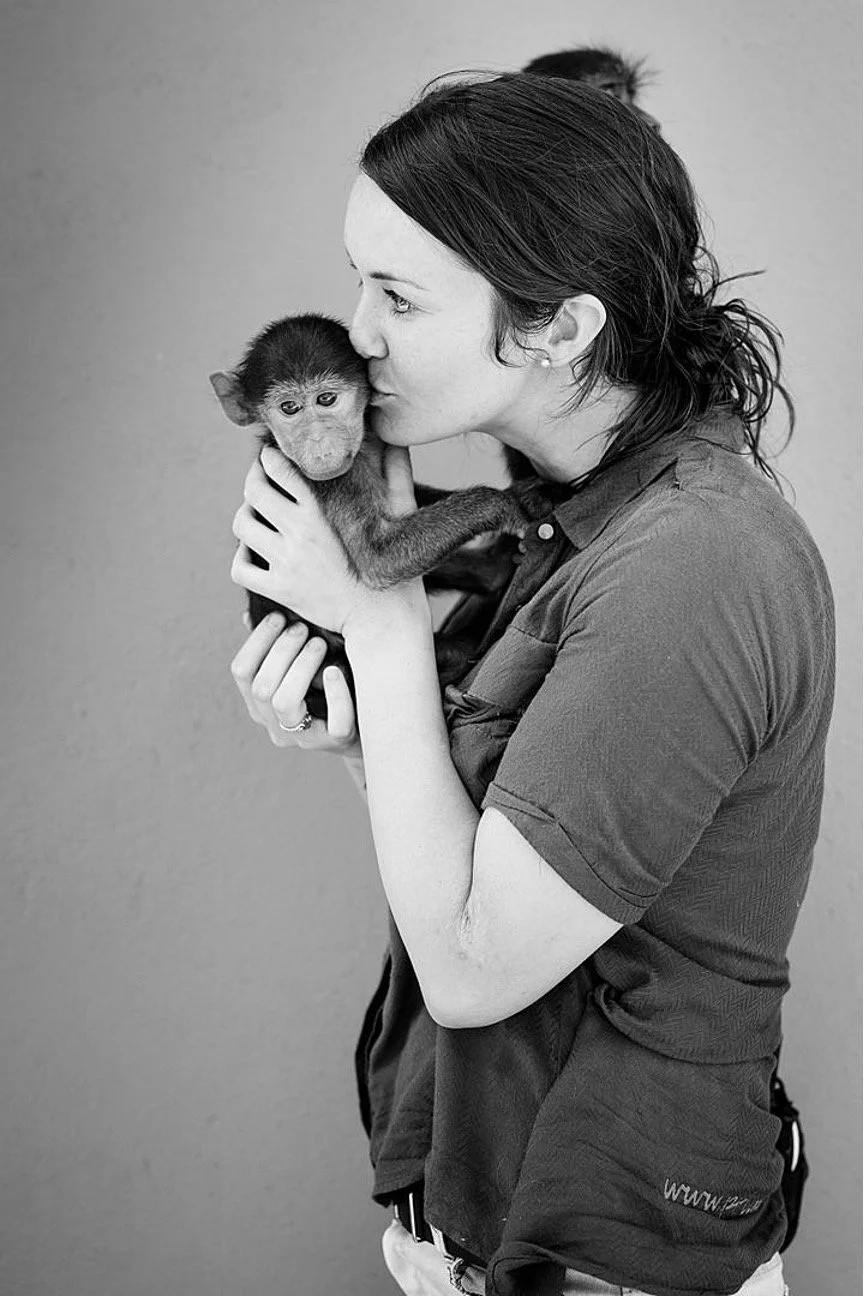
At a vegan anymal sanctuary in South Africa, a caretaker tenderly provides love-needs for an orphaned baboon, whose mother was shot or trapped as “vermin.” (We Animals Media)
Humility
James 4:6
God opposes the proud,
but gives grace to the humble.
Humility brings the understanding that anymals are not ours, but God’s, an understanding that forbids harming and destroying anymals for profit or pleasure, to satisfy our taste in food or fashion, or because we believe anymal experimentation benefits humankind, though there are far better methods, methods that comply with core Christian texts because they do not harm and destroy innocent lives. Profit is not a legitimate measure of the value of God’s creatures, who must never be counted by the pound. Humility leads humankind to respect what is God’s, and when we humble ourselves to welcome, tend, and receive innocents, we remember that everything that exists is God’s, and we welcome, tend, and receive Jesus (Matthew 18: 3–5).
Matthew 18: 4-5
Whoever becomes humble like this child is the greatest in the kingdom of heaven. Whoever welcomes one such child in my name welcomes me.
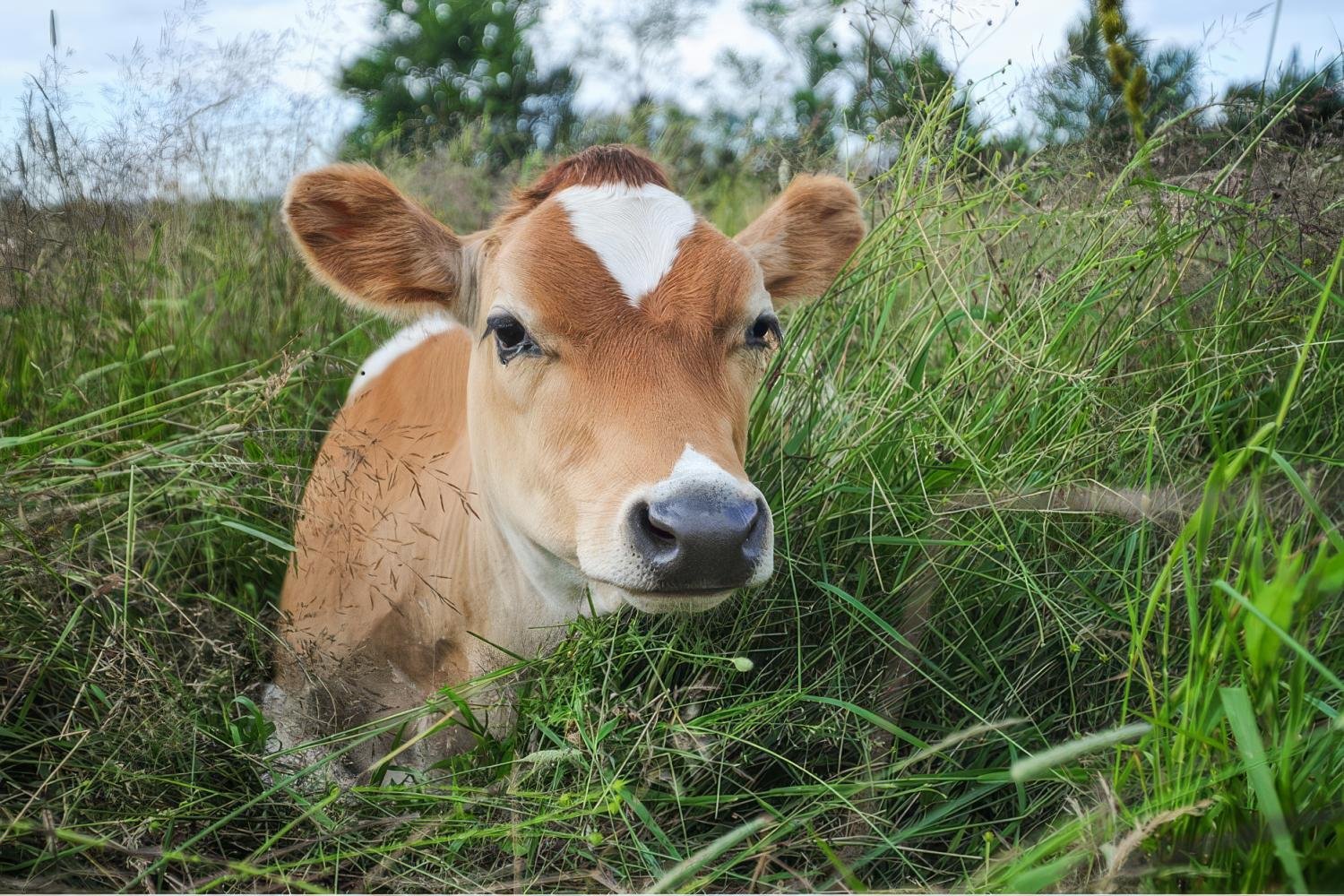
Through humility we are able to recognize other living creatures as God’s, not ours. This calf, rescued from the United States dairy and flesh industries, is now sheltered at a vegan anymal sanctuary.
(We Animals Media)
Mercy
Matthew 5:7
Blessed are the merciful, for they will receive mercy.
Humankind has complete power over trillions of anymals. We control their pregnancies, births, and time of death. We decide whether they stay with their mothers, whether we cut off tails or beaks, whether they will have medical care or pain control, how tightly they are confined, whether they have any small joy during their short lives. These trillions of anymals are at our mercy just as we are at God’s mercy. Personally, we are unlikely to ever see the deprived lives and mass deaths of farmed anymals or homeless cats and dogs, we control our purchasing power, what we choose to eat or wear, and whether or not we choose to adopt when we seek a companion. If we pay for leather, wool, flesh, dairy, or eggs, we pay for merciless suffering and premature death; if we buy a dog, hamster, cat, lizard, bird, or snake, our money decides that homeless pets remain homeless while yet more anymals will be exploited in pet mills and snatched from the wild to be sold in pet stores.
Proverbs 21:21
“Whoever pursues righteousness and mercy finds life, righteousness, and honor.”
Righteous mercy and the Christian heart draw the faithful to rethink the effects of our purchasing power, and how we might best protect these vulnerable anymals in our daily lives—every hen trapped in a battery cage, every sow confined in a tiny farrowing crate, every anymal hoping for a home.
Luke 6:36
Be merciful just as your Father is merciful.
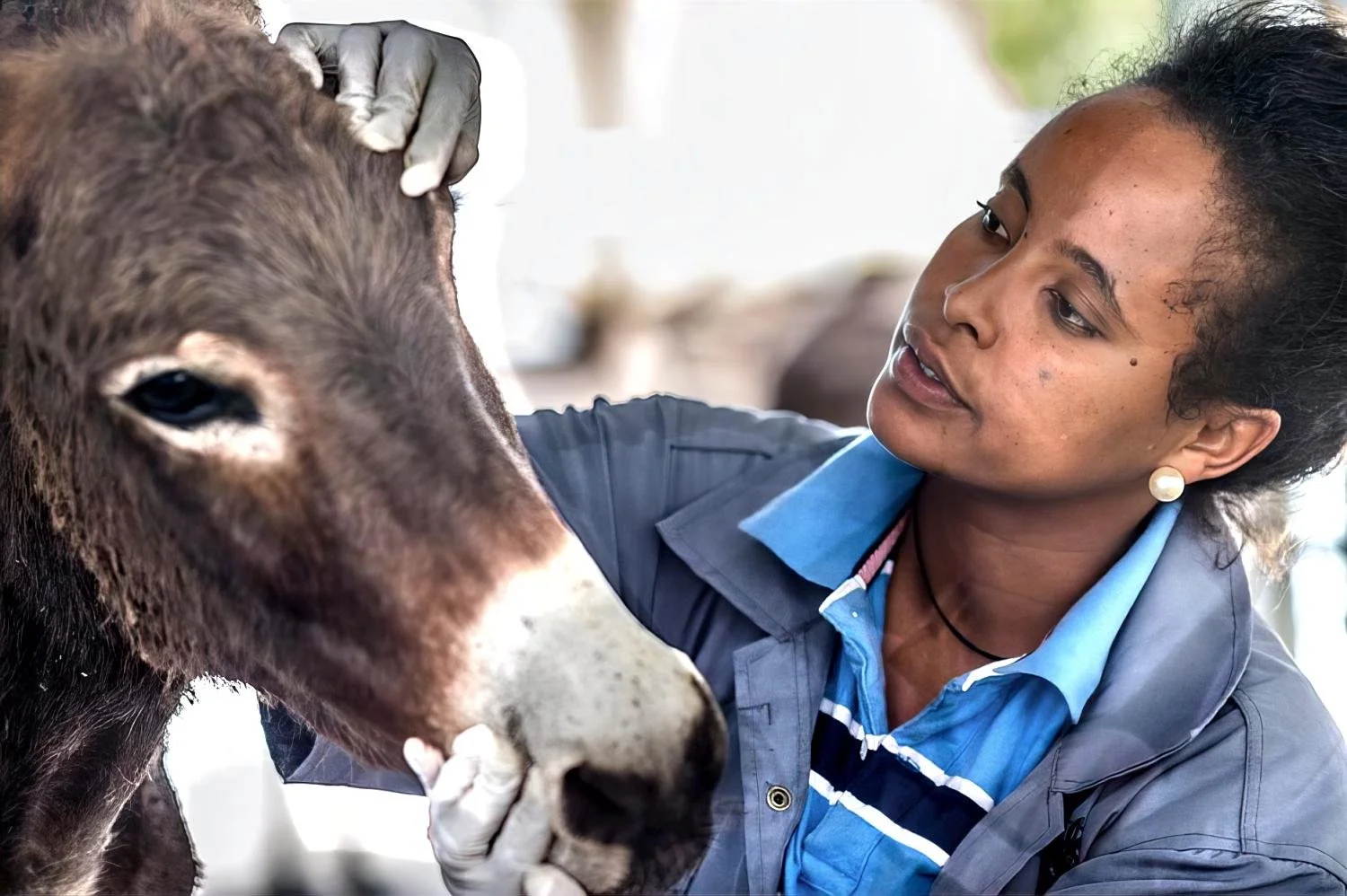
Anymals are dependent on us as we are dependent on God, and mercy calls Christians to see to their needs. In this photo a veterinarian tends a donkey at a free clinic in Ethiopia. (We Animals Media)
Service
Ephesians 6:8
Whatever good we do, we will receive the same again from the Lord.
Jesus washed the feet of his disciples, healed lepers, and walked among the bedraggled poor. Above all else, Jesus served the needs of those who were overlooked and sidelined, those that his culture conditioned him to see as lowly outcastes unworthy of the attention of those fortunate enough not to be among them (Mark 7:24). Jesus pushed the boundaries of moral consideration outward, tending and ministering to gentiles, sinners, tax collectors, slaves, women, even healing the child of a Syrophoenician woman. Jesus did not say come to me only if you are considered worthwhile by others, he said, “Come to me, all you who are weary and are carrying heavy burdens, and I will give you rest” (Matthew 11:28), and there are few humans as weary and overburdened as the anymals.
Romans 2:13
It is not the hearers of the law who are righteous in God’s sight but the doers of the law who will be justified.
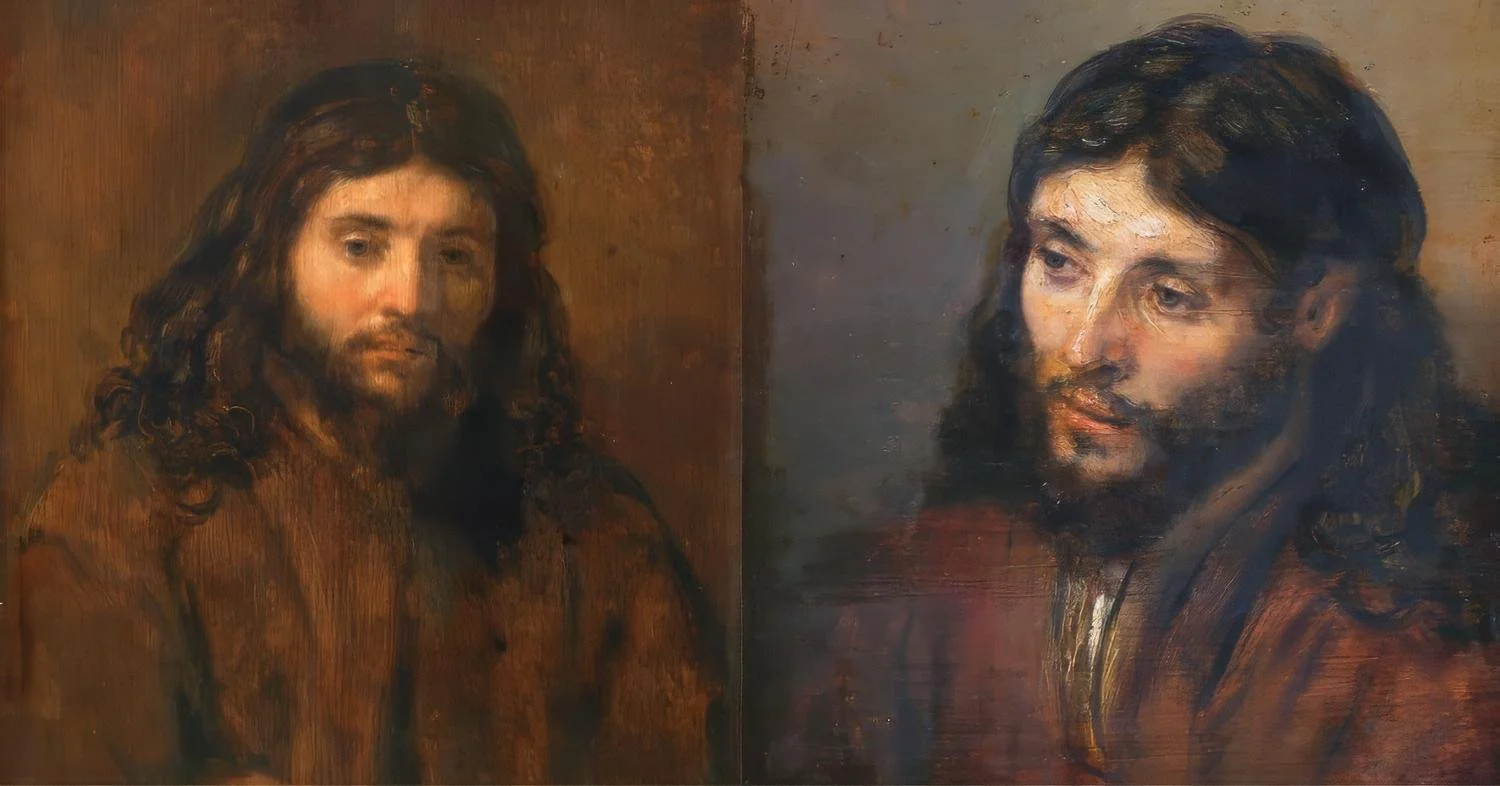
Unless stirred to righteous indignation, Jesus is portrayed as gentle and kind, as especially attentive to the needs of those his culture taught were unworthy of his time and energy.
(“Portraits of Christ,” Rembrandt van Rijn, Holland, 1648, Wikipedia.)
Christians are expected to follow the example set by Jesus. Christians are called to serve all who are weary and downtrodden, even those whom others believe to be unworthy of love, mercy, and tender care. In so doing, we serve God. We may be unlikely to see enslaved people or lepers in our communities, but the downtrodden are everywhere apparent. Anymals are often thought too lowly for even a modicum of compassion. Inasmuch as Christians fail to serve the needs of anymals, whether they be homeless, trapped in the tyranny of exploitation and profit, or neglected and abused in a neighbor’s yard, they fail to follow in the footsteps of Jesus: “Come to me, all you who are weary and are carrying heavy burdens, and I will give you rest” (Matthew 11:28, italics added).
Psalm 116:12
What shall I return to the LORD
for all his bounty to me?
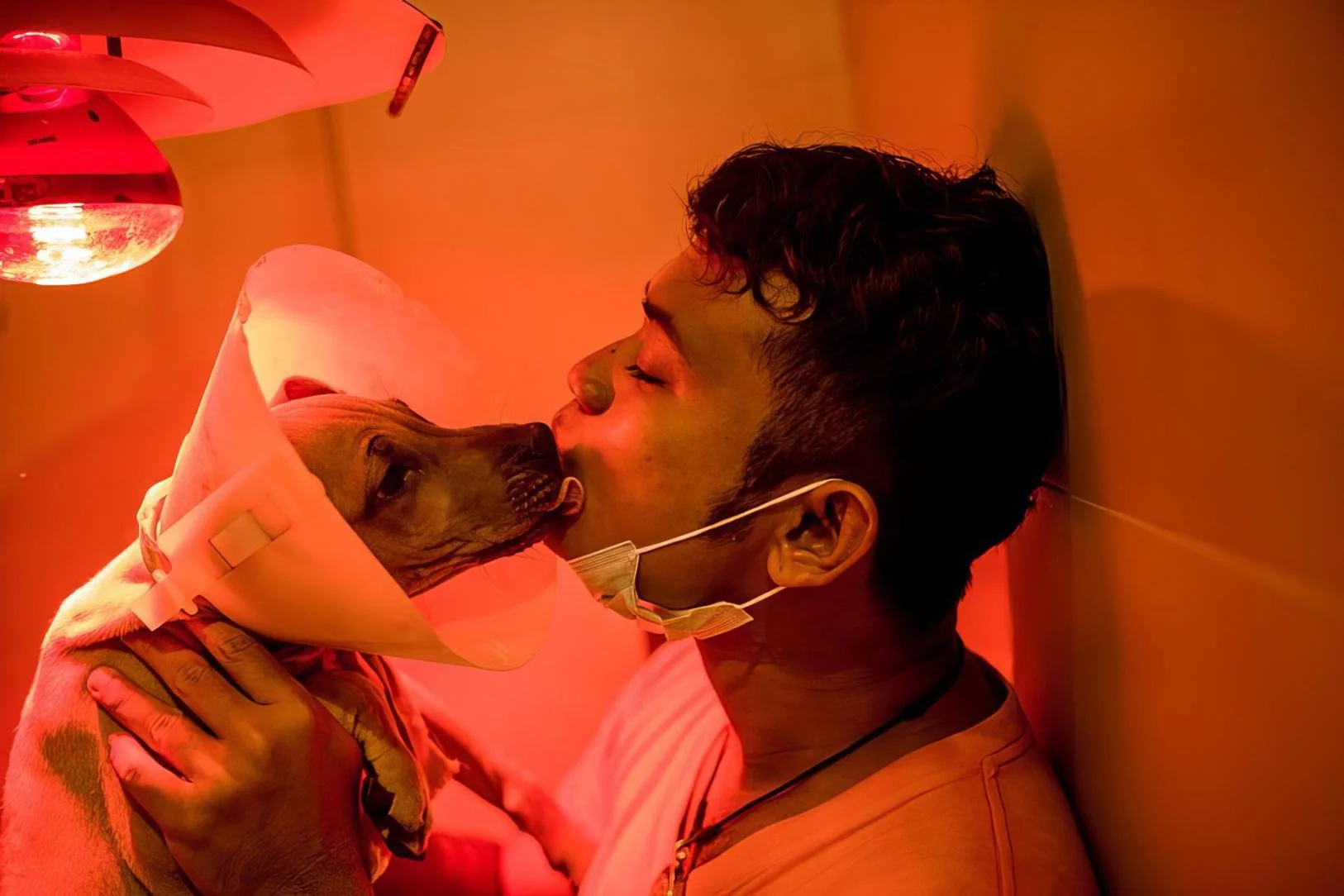
Serving those most in need, a caretaker sees to the needs of a street dog in Thailand—a discounted and overlooked stray, downtrodden and marginalized by the larger community. (We Animals Media)
Peace
Matthew 5:9
Blessed are the peacemakers, for they will be called children of God.
Peace is a central theme for Christianity. Christians are called to help restore a deep and pervasive peace. As with love and mercy, peace is unlimited. The Christian quest for peace is not intended to be restricted to a certain few humans or a certain few species. The peace of Christ and the perfect peace of Christianity are intended for all of God’s creatures.
This tension is explored more fully in Discord.
Colossians 3:15
And let the peace of Christ rule in your hearts….
Christians work with God to restore peace on Earth when they speak up on behalf of anymals, step forward to help anymals in need, and change their own lives to protect anymals. By making vegan choices at the grocery store (avoiding flesh, dairy, and eggs), every Christian can help to restore peace “on earth as it is in heaven” (Matthew 6:10).
Luke 19:42
If you, even you, had only recognized on this day the things that make for peace!
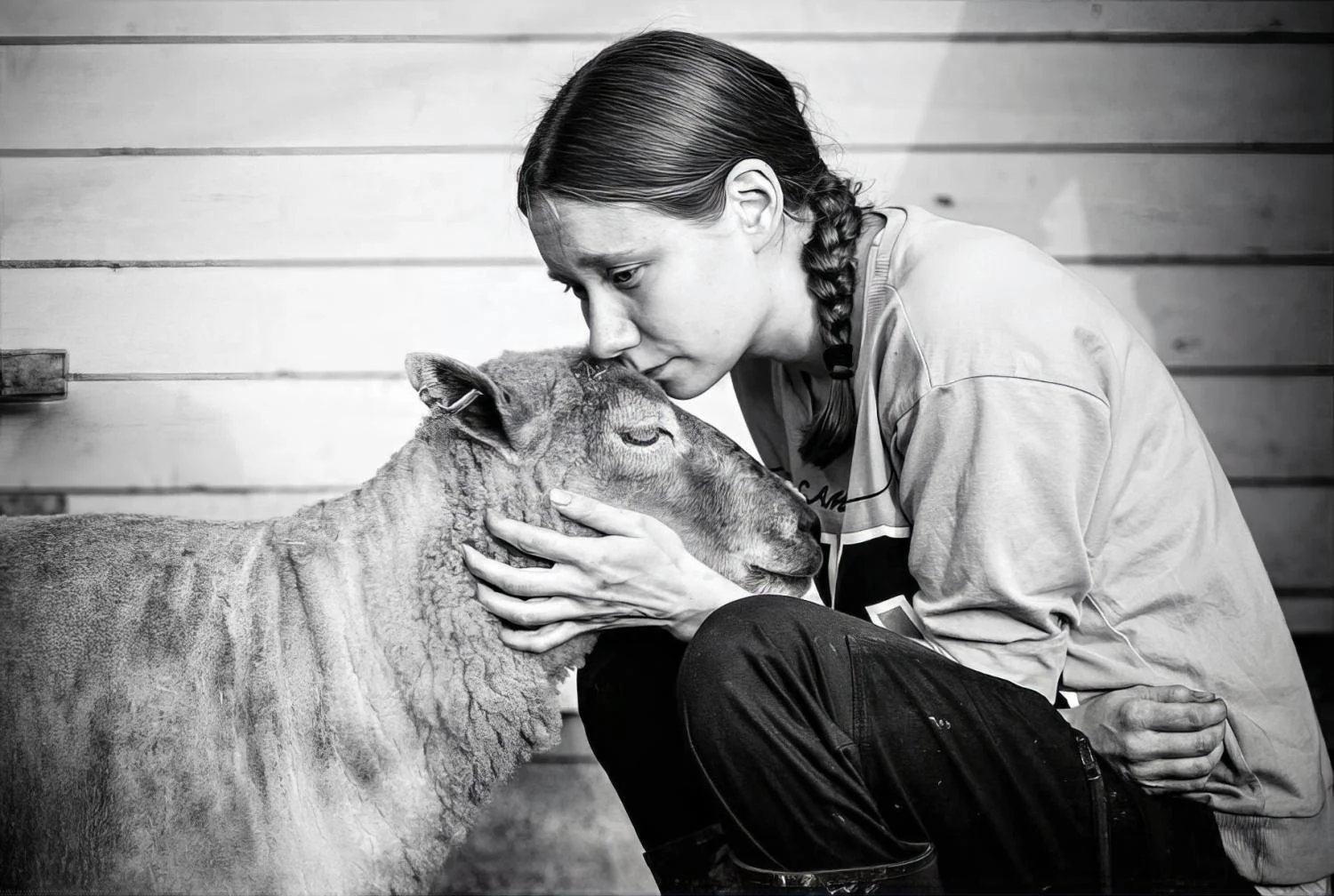
Sanctuaries are places of peace, one of the very few places where peace is felt across species. Look online for a vegan anymal sanctuary near where you live. (We Animals Media)
Generosity / Sharing
Luke 6:38
Give, and it will be given to you…. for the measure you give will be the measure you get back.
Christians are to share generously, and through sharing, travel the path to salvation. Generosity expresses Christian love, mercy, and peacemaking. To share is to understand that we are all God’s creatures, that we are all “one in Christ Jesus” (Galatians 3:28), and in giving to “the least of these” (Matthew 25:40), we give to Jesus and we turn our lives toward God.
Matthew 5:16
Let your light shine before others, so that they may see your good works and give glory to your Father in heaven.
We need about 1.4 billion tons of grain to feed humankind. The world produces about 2.5 billion tons, yet more than half—especially corn, wheat, sorghum, barley, and oats—is fed to farmed anymals, including farmed fishes. Farmed anymals consume not only grains but also soybeans, fava beans, and peas. In the process, more than 90% of protein and calories, and essentially all carbohydrates and fiber, are lost.
Although small in stature, one hen eats about 78 pounds of grain each year, dependent on subspecies, age, size, and outdoor temperature. Hens raised for flesh live about six weeks; hens raised for eggs live about 18 months. Each year 30–60 billion hens are slaughtered, and just as many are hatched. Over twelve months, about 30 billion chickens consume roughly 2.34 trillion pounds of grain, more than 1 billion tons annually. Grains fed to chickens alone could feed about two thirds of humankind for one year.
A single lactating cow on a dairy farm consumes more than 50 pounds (22.7 kg) of grain each day. A human being requires about 400 pounds (.2 tons, 181 kg) of grain per year—a lactating cow eats as much grain in eight days as one human needs across an entire year.
Every grain comes with an environmental footprint, such as fossil fuels, freshwater use, pesticides, and herbicides. Meanwhile, feeding grains through anymals wastes almost all of the protein and nutrients, and every bit of the fiber, as well as food calories.
Matthew 25:35
…for I was hungry and you gave me food….
To live is to burn calories. Anymals use energy moving, generating heat, digesting food, and growing hooves or nails, hair or feathers, horns or beaks, viscera, and bones, and also maintaining bodily functions. None of this can be recovered by eating an anymal. For example, less than half of a cow’s body weight is edible. Roughly two to three tons of grain consumed by a steer across about one year could feed a human being for about fifteen years.
Cycling grains through anymals to produce flesh, dairy, and eggs is extraordinarily wasteful and sharing non-vegan food worsens food shortages and undermines the intent of giving food. More than 800 million humans suffer chronic undernourishment while countless farmed anymals consume vast quantities of grain. Our food choices determine whether grains are used to feed factory farmed anymals or hungry human beings.
2 Corinthians 8:13
For I do not mean that there should be relief for others and hardship for you, but it is a question of equality between 14your present abundance and their need, so that their abundance may also supply your need, in order that there may be equality.
The grains that we already have would feed everyone on the planet if we lived in a vegan world, with plenty to spare. When we choose a vegan life and share vegan food, we serve social justice by feeding hungry people and ensuring adequate food for others and for tomorrow. The most fundamental and far-reaching act of sharing is choosing a vegan life.
For more information and sources on ethics and food choice, see the book, Vegan Ethics: AMORE.
1 Timothy 6:18
As for those who in the present age are rich…. They are to do good, to be rich in good works, generous, and ready to share, thus storing up for themselves the treasure of a good foundation for the future, so that they may take hold of the life that really is life.
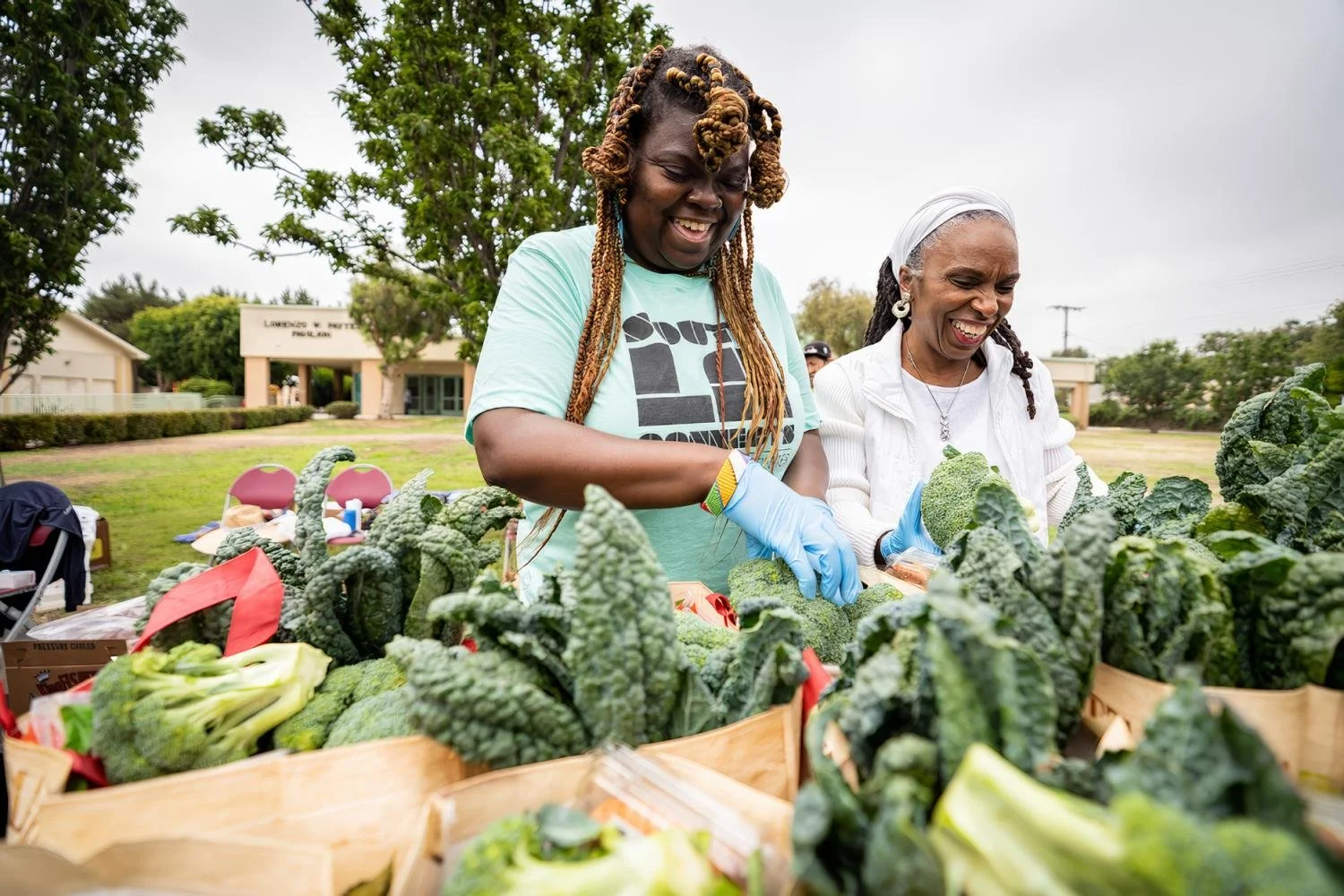
Sharing helps others to see how delicious vegan foods are while also making sure that whatever food we have reaches as many people as possible. Above, anymal activists package fresh vegetables for communities in need. (We Animals Media)