Christians Acting for Animals Through History
From Humphry Primatt Through Tolstoy to the 20th Century
Today’s anymal enterprises exhibit a brazen disrespect for God and God’s good creation, through their perpetual indifference to anymal suffering and their destruction of uncounted numbers of God’s creatures. For some, when they become aware of the unfathomable numbers of innocent and helpless lives destroyed now, and now, and now, it is not enough to align religious knowledge with daily practice in their personal lives. Some feel compelled not only to boycott anymal industries personally, but to become part of righteous mobilization for deep and lasting change, to become part of a struggle for justice that has been ongoing among Christians for hundreds of years.
Dr. Humphrey Primatt
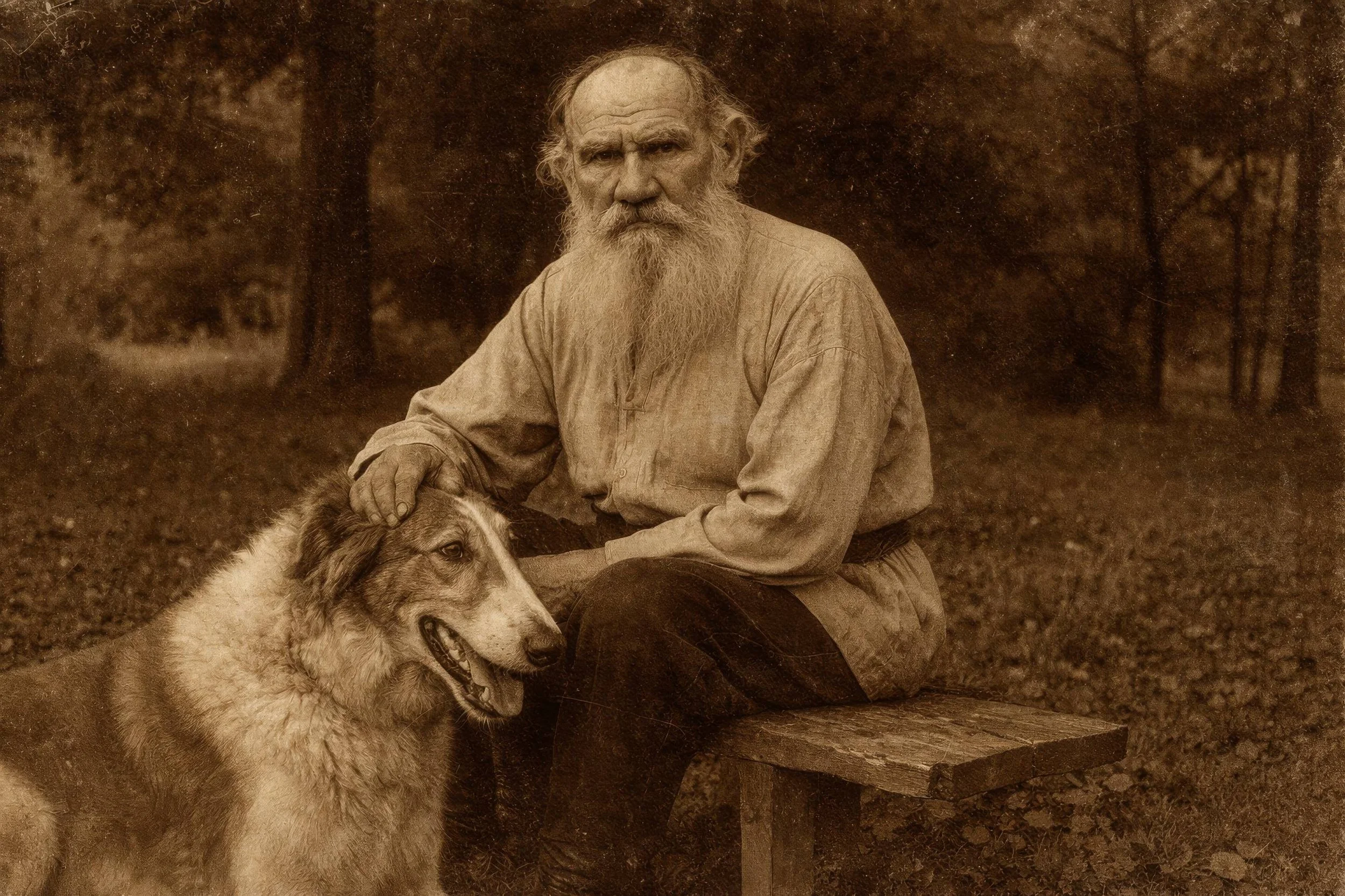
Christianity fosters a way of life that encourages not only kindness to anymals in personal life, but anymal activism. Therefore, it should be no surprise that there are many Christian anymal activists and anymal advocacy organizations, or that Christian activists have shined among those who choose a vegan life. This fertile ground was prepared across time, by Scriptures, through the life of Christ, and by people like Dr. Humphrey Primatt and John Wesley in the 18th century; William Wilberforce, Reverend Arthur Broome, and Leo Tolstoy in the 19th century, and by people like you and me.
Dr. Humphrey Primatt’s “A Dissertation on the Duty of Mercy and the Sin of Cruelty to Brute Animals,” completed in 1776, offers an astonishing theological argument for extending justice to anymals, a very early and strong Christian argument for anymal liberation. Primatt argues that differences between species are irrelevant to the primary Christian commandment to love, to the requirement that we care: “pain is pain, whether it be inflicted on man or on beast; and the creature that suffers it... suffers evil.” Primatt comes straight to the point—“cruelty is atheism.” Though written some 250 years ago, Primatt’s writing is an inspiration for today’s Christian anymal activists.
“We may pretend to what religion we please, but Cruelty is Atheism. We may make our boast of Christianity; but Cruelty is Infidelity. We may trust to our Orthodoxy, but Cruelty is the worst of Heresies. The Religion of Christ Jesus originated in the Mercy of God and it was the gracious design of it to promote Peace to every creature upon Earth.... For, indeed, a Cruel Christian is a Monster of Ingratitude, a Scandal to his Profession and Beareth the name of Christ in vain.”
- -
“Now, if amongst men, the differences of their powers of the mind, and of their complexion, stature, and accidents of fortune, do not give any one man a right to abuse or insult any other man on account of these differences; for the same reason, a man can have no natural right to abuse and torment a beast, merely because a beast has not the mental powers of a man. For, such as the man is, he is but as God made him; and the very same is true of the beast.... And being such, neither more nor less than God made them, there is no more demerit in a beast being a beast, than there is merit in a man being a man.”
- -
“The cruelty of men to brutes is more heinous (in point of injustice) than the cruelty of Men to Men…. what Court of judicature does now exist in which the suffering Brute may bring his action against the wanton cruelty of barbarous man?”
- -
“Christian love is without partiality and without hypocrisy:... let us examine ourselves well, and if we find that we hold any doctrine or tenant that explicitly or consequently represents the Supreme Being as partial or injurious to any of his creatures, such doctrine is a contracted misrepresentation of divine goodness.”
- -
“Whether we walk upon two legs or four, whether our heads are prone or erect, whether we are naked or covered with hair, whether we have tails or no tails, horns or no horns, long ears or round ears, or, whether we bray like an ass, speak like a man, whistle like a bird, or are mute as a fish; nature never intended these distinctions as foundations for right of tyranny and oppression.”
- -
“Mercy to brutes is a duty commanded and cruelty to them is a sin forbidden.”
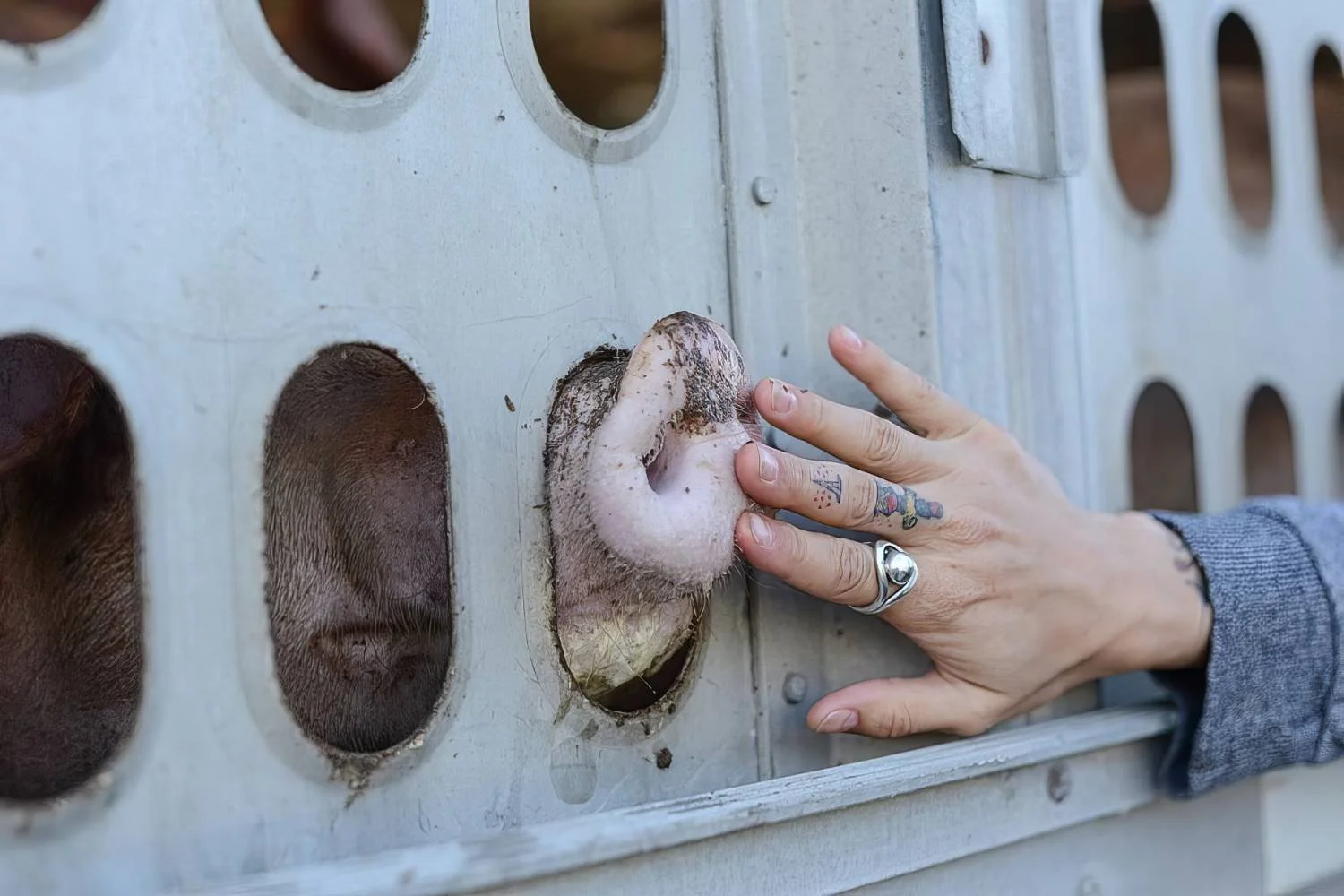
A human hand touches the nose of a pig in a truck bound for slaughter. (We Animals Media)
Leo Tolstoy
“She cannot avoid causing suffering to animals—for she eats them.”
— Leo Tolstoy
The Christian writings of Leo Tolstoy (1828–1910) helped shape the thinking and activism of some of the world’s most renowned moral giants. When Mahatma Gandhi was in Africa, just beginning to organize against injustice, he read Tolstoy’s writings. The two men exchanged a handful of letters, through which Tolstoy helped to shape Gandhi’s philosophy of peaceful resistance. Gandhi, in turn, influenced Christian activist Martin Luther King Jr., whose son and wife eventually chose a vegan life, aligning their food choices with their faith.
In early life, Tolstoy was a hunter, but as his faith grew, he could no longer justify such unnecessary killing. Tolstoy visited a slaughterhouse and wrote about it in The First Step (1900), calling for compassion and justice for anymals, beginning with a change of diet.
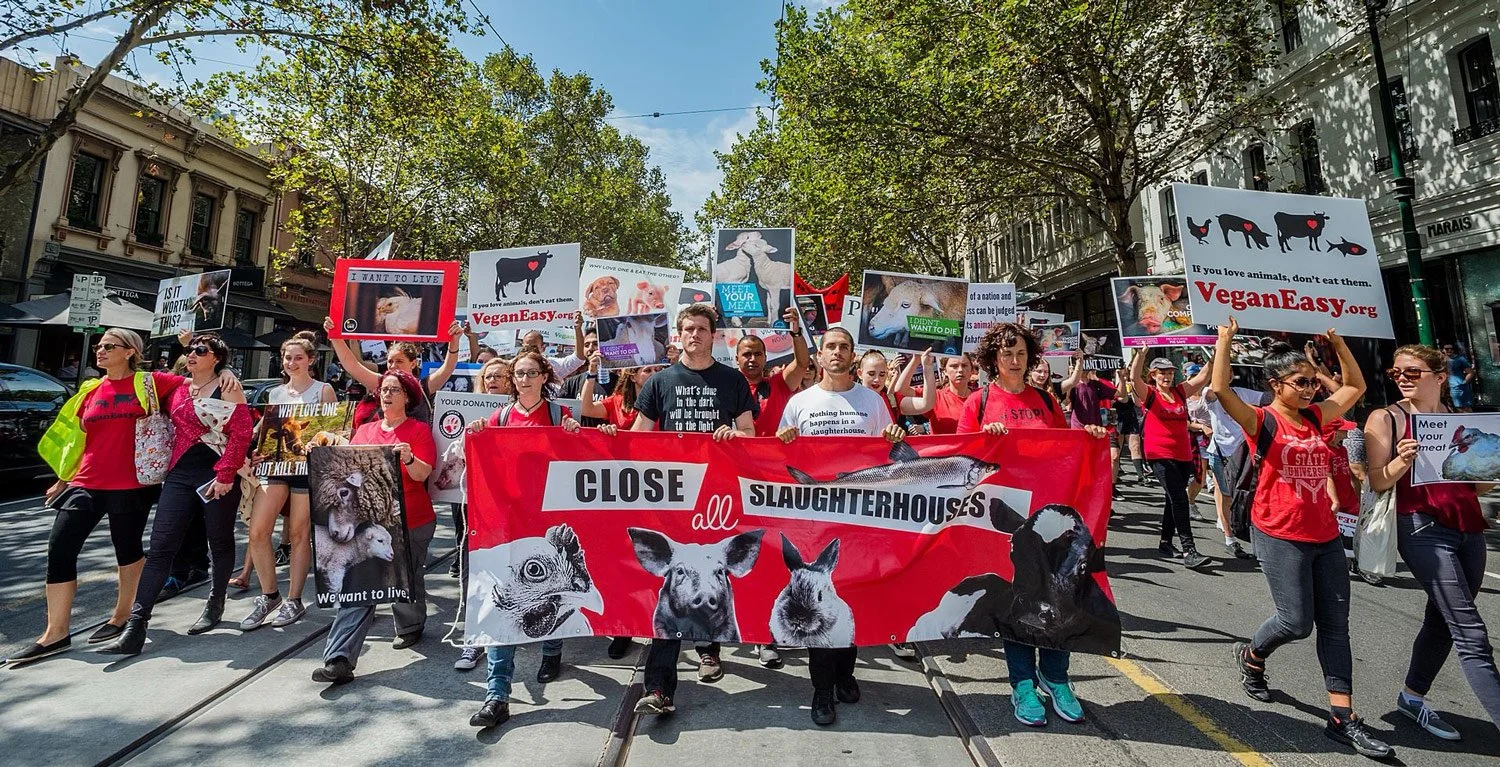
Animal activists in Australia working to restore the Peaceable Kingdom by speaking out against slaughter, as did Tolstoy. (We Animals Media)
Quotes from Leo Tolstoy’s The First Step (1900)
“We… cannot believe that if we refuse to look at what we do not wish to see, it will not exist. This is especially the case when what we do not wish to see is what we wish to eat.”
- -
“If he be really and seriously seeking to live a good life, the first thing from which he will abstain will always be the use of animal food, because... its use is simply immoral, as it involves the performance of an act which is contrary to the moral feeling—killing.”
- -
“She cannot avoid causing suffering to animals—for she eats them.”
- -
“I had wished to visit a slaughterhouse, in order to see with my own eyes the reality of the question raised when vegetarianism is discussed. But at first I felt ashamed to do so, as one is always ashamed of going to look at suffering... and so I kept putting off my visit.”
- -
“If he seriously and sincerely seeks a good life, the first from which a man will abstain will always be the use of animal food.”
Near the end of his life, Tolstoy noted that leaving anymals off his plate cost him nothing. Today, this is even more true: Innumerable markets offer a plethora of vegan options. In fact, vegans today are likely to report that shifting to a vegan life expanded and enriched their food options. And even more noteworthy, vegans today can add that choosing vegan food helps anymals and the environment, is an act of sharing with hungry human beings, and pays back tenfold in health benefits. And Christians can add that choosing a vegan life aligns core teachings with praxis. The relationship between Christian faith and food choice is explored more fully in Living.
“I am not ashamed as a Christian to testify my utter abhorrence of every instance of cruelty.”
— Humphrey Primatt
Quotes from Dr. Humphrey Primatt’s
“A Dissertation on the Duty of Mercy and the Sin of Cruelty to Brute Animals” (1776)
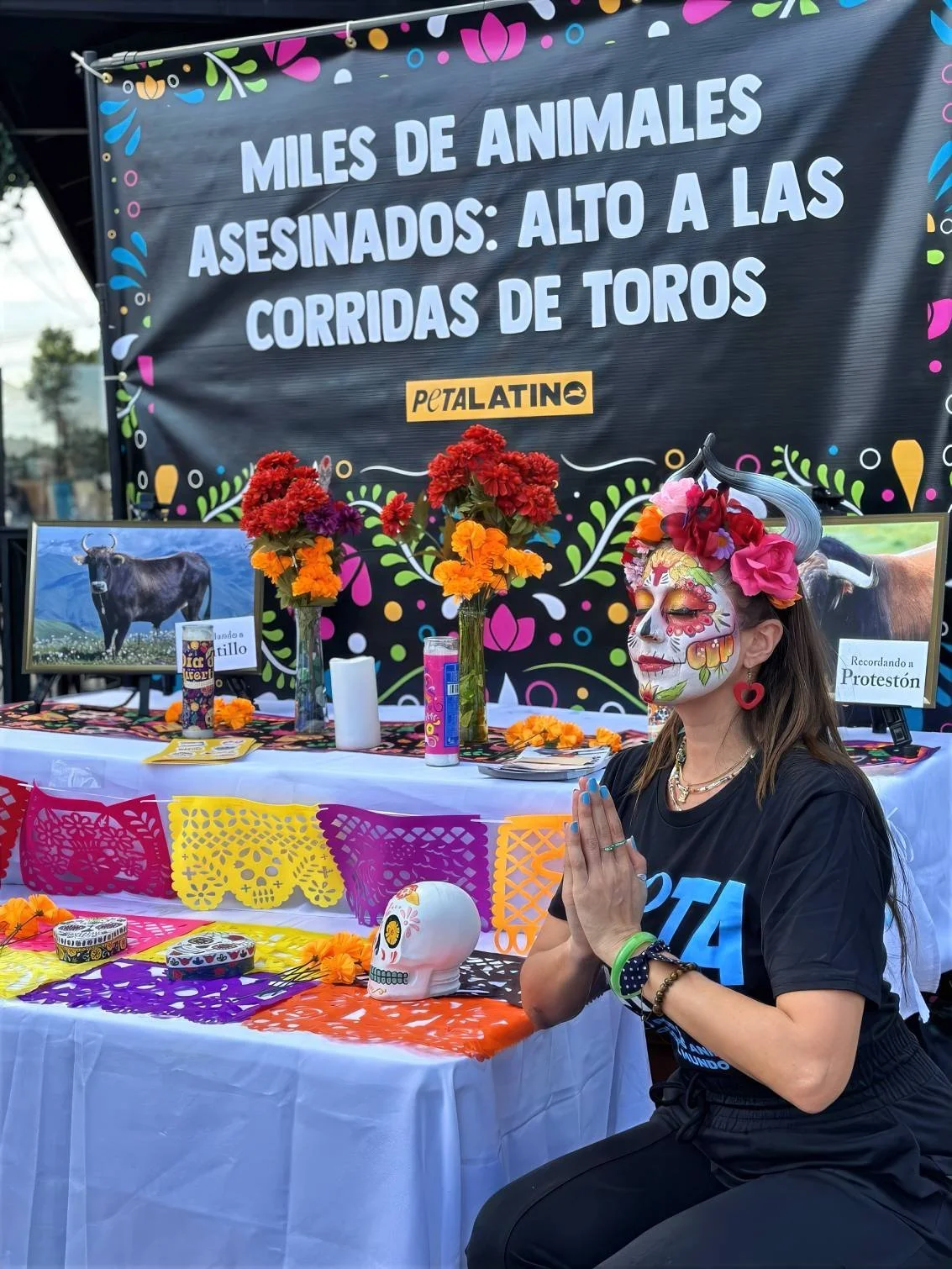
Demonstration against bullfighting on the Day of the Dead.
(Mexico, PETA)