Christian Humility & Animals
Lessons from Job & Jesus
Micah 6:8
He has told you, O mortal, what is good, and what does the LORD require of you but to do justice and to love kindness and to walk humbly with your God?
Humility is core to Christian ethics. Sadly, human arrogance is a common sin, one that tends toward human exceptionalism, which often leads to the denigration of God’s creatures, and to harms for animals.
Psalm 103:14
For he knows how we were made; he remembers that we are dust.
James 4:10 (also 1 Peter 5:6)
Humble yourselves before the Lord, and he will exalt you.
Christianity is God-centered. Human beings are but creatures of God.
The narrative of creation reminds Christians that humility is built into our bones: Humankind was created on the 6th day as land animals among land animals (Genesis 1:24–26), made to humbly serve God on Earth (Genesis 1:26).
The Gospels also teach humility. Our Savior models a life of servitude, a life of tending to those most in need, those most marginalized and downtrodden. Jesus shows Christians how to live on Earth for God, not for self. Jesus gifted us with a perfect example of Christian humility.
With our focus on God, Christians can more easily see and confess shortcomings, renew our lives by realigning our minds and hearts to core biblical teachings. When we hold God at the center, with grace, we are able to step back from fickle, worldly influences.
When people of faith hold God at the center, humility is part of life. Christians are invited to diligently root out the human tendency toward arrogance and to humbly follow Jesus.
Proverbs 11:2
When pride comes, then comes disgrace, but wisdom is with the humble.
Christian Humility
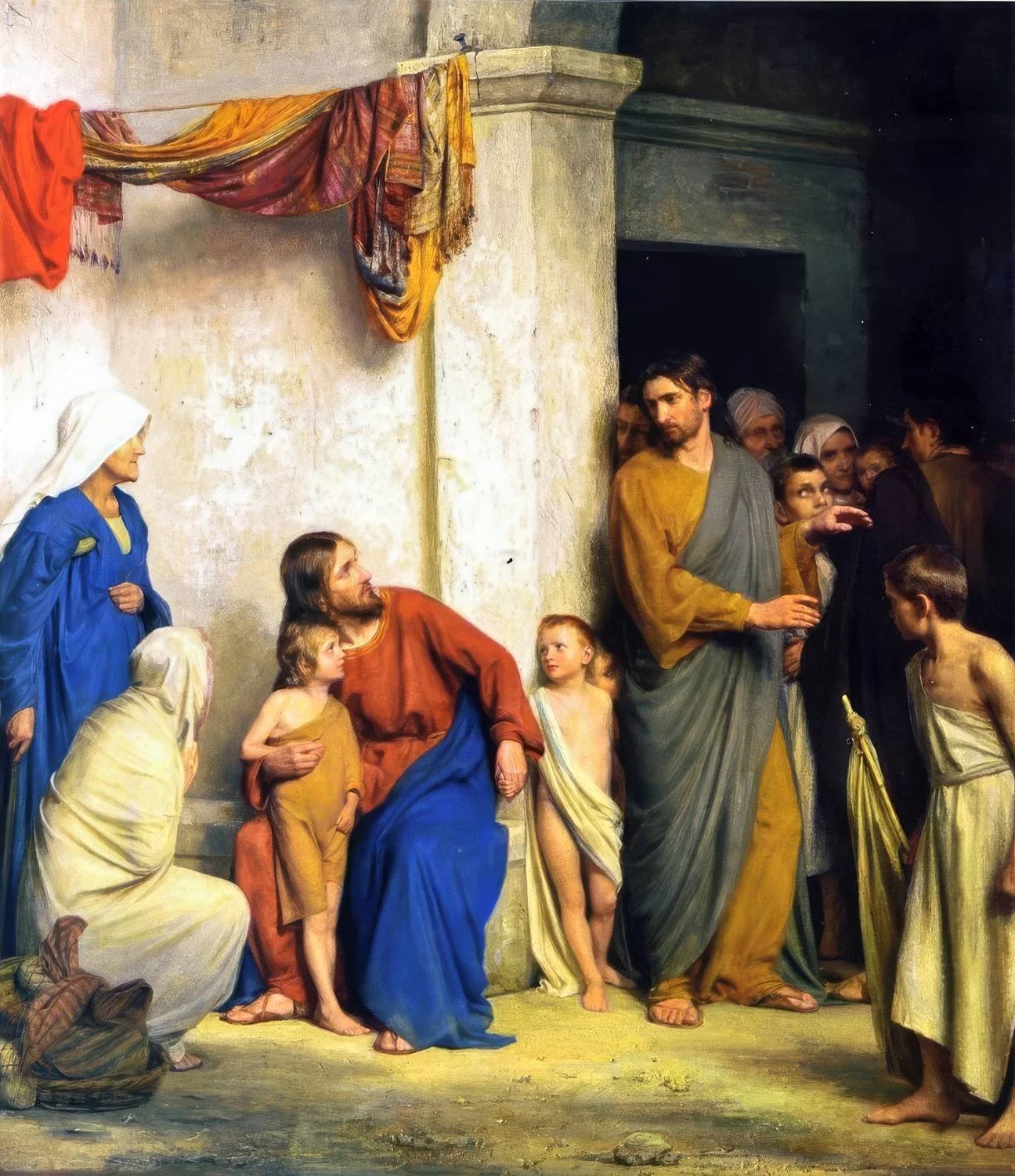
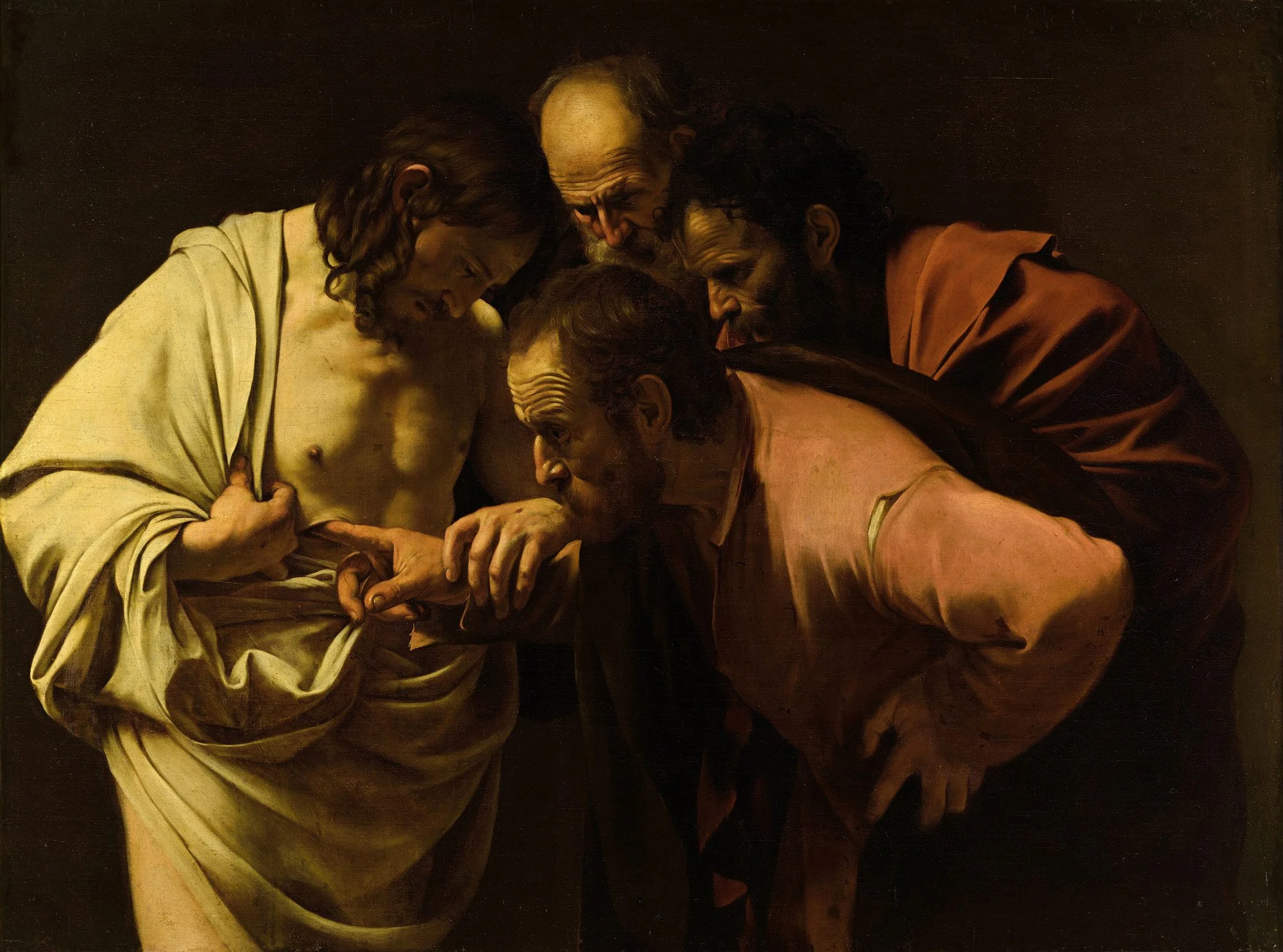
Though he was the son of God, Jesus served those whom others thought unworthy of his time and attention, setting an example of humble Christian service. (“Let the Little Children Come unto Jesus,” Carl Bloch, Danish, c. 1800)
Job 38:25–29
Who has cut a channel for the torrents of rain
and a way for the thunderbolt,
to bring rain on a land where no one lives,
on the desert, which is empty of human life,
to satisfy the waste and desolate land,
and to make the ground put forth grass?
Has the rain a father,
or who has fathered the drops of dew?
From whose womb did the ice come forth,
and who has given birth to the hoarfrost of heaven?
Job laments that he is “brother of jackals, and a companion of ostriches” (Job 30:29). God does not dismiss Job’s concern, but instead makes clear that Job is not Creator, but create. God asks, “Where were you when I laid the foundation of the earth? Tell me, if you have understanding” (Job 38:4).
Genesis tells us who we are. All living beings are one community. Other living beings and humankind are kin. The first man was created with land animals on the 6th day, all living beings share nephesh chayyah, and God created both animals and woman as companions for man, so that the first man would not be alone, though woman became man’s helper and partner.
Human beings are, indeed, living creatures of the earth alongside jackals and ostriches. The Book of Job, alongside Genesis, reminds readers that only God stands outside of creation.
The Book of Job

In the Book of Job, God asks Job pointed questions, leading him to understand that he is a living creature of the earth among many living creatures of the earth. Only God stands apart from creation. (“The Lord Answering Job Out of the Whirlwind,” William Blake, England, 1805, Wikimedia Commons)
The Book of Job also reminds Christians that wild animals were created to live outside of human influence, free of humankind. In speaking of one such creature, God delivers a final and blunt reminder that we, too, are animals: The behemoth (hippopotamus) was made “just as I made you” (Job 40:15).
Job 39:1-10
Do you know when the mountain goats give birth?
Do you observe the calving of the deer?
Can you number the months that they fulfill,
and do you know the time when they give birth,
when they crouch to give birth to their offspring
and are delivered of their young?Their young ones become strong; they grow up in the open; they go forth and do not return to them.
Who has let the wild ass go free?
Who has loosed the bonds of the swift ass,
to which I have given the steppe for its home,
the salt land for its dwelling place?It scorns the tumult of the city;
it does not hear the shouts of the driver.It ranges the mountains as its pasture,
and it searches after every green thing.Is the wild ox willing to serve you?
Will it spend the night at your crib?
Can you tie it in the furrow with ropes,
or will it harrow the valleys after you?
Finally, at the end of the narrative, Job grasps his creatureliness in contrast with God’s divinity, recognizing that, as he has lamented earlier in the narrative, he is “brother of jackals, and a companion of ostriches” (Job 30:29). This is not an insult—human beings are creatures of God.
If human beings view living creatures as lowly and lesser, so much the worse for humankind.
Job 40:4
See, I am of small account; what shall I answer you?
I lay my hand on my mouth.
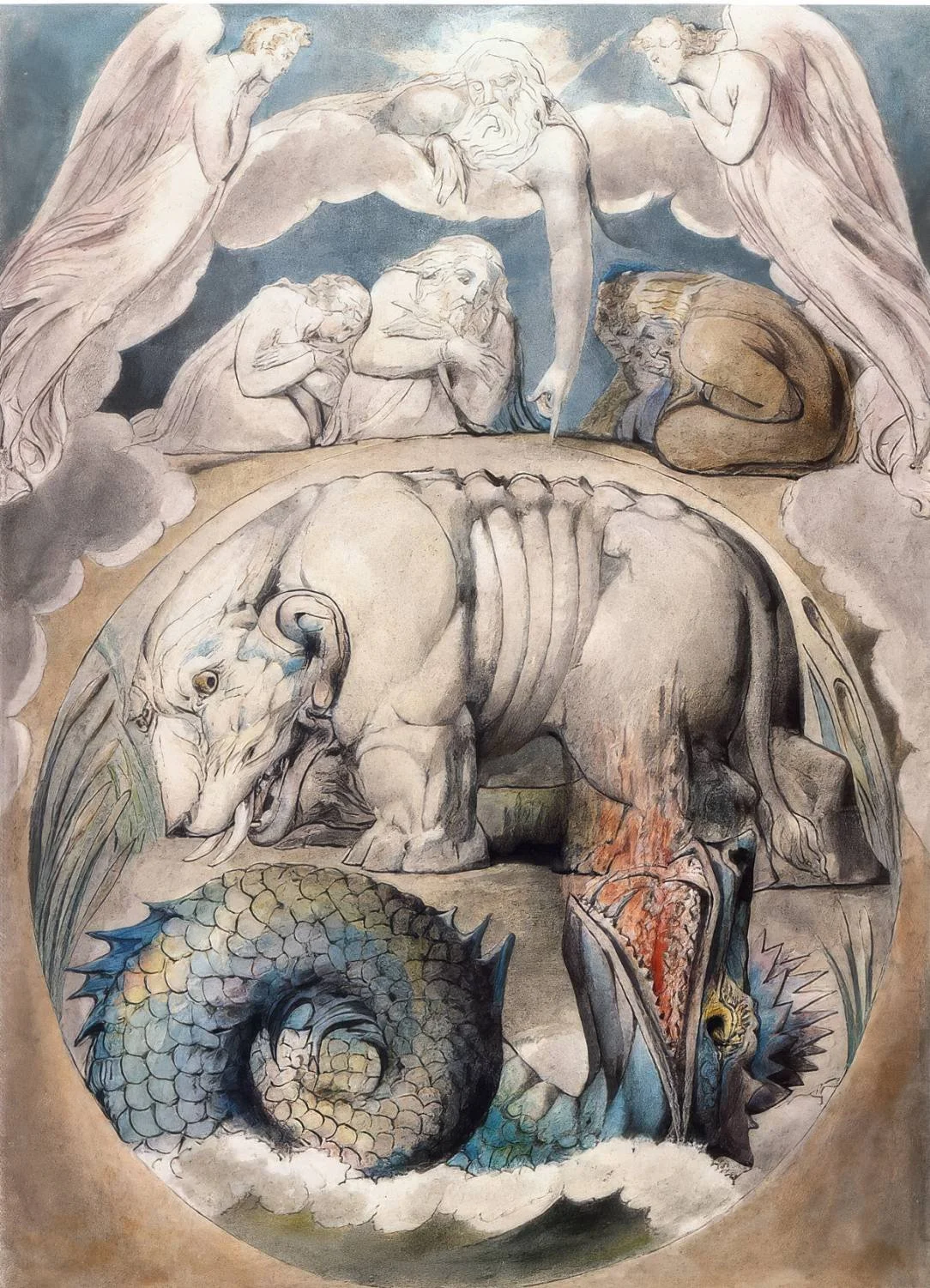
The glory of God’s animals—and humankind as one of them. In this image, God creates behemoth: “Look at Behemoth, which I made just as I made you; it eats grass like an ox” (Job 40:15). (Illustration from Behemoth and Leviathan, William Blake, England, 1805, Wikimedia Commons)
Proverbs 16:18
Pride goes before destruction and a haughty spirit before a fall.
Despite clear, core teachings that call for humility, human arrogance persists. Where animals are concerned, the sin of arrogance is often expressed as human exceptionalism, the idea that human beings are more important than the rest of God’s creation.
Perhaps even more disconcerting, some come to believe that creation was designed for humankind: In this view, creation, including animals, is a repository of resources designed to satisfy our needs. But the Bible tells us that living creatures were all created in the same manner, with nephesh chayyah, to share company, and that God cares for all living beings. While humankind was given the responsibility of lovingly caring for what God has created as the Creator would do, we are but God’s creations, alongside the animals.
Ecclesiastes 3:18-20
I said to myself with regard to humans that God is testing them to show that they are but animals. For the fate of humans and the fate of animals is the same; as one dies, so dies the other. They all have the same breath, and humans have no advantage over the animals, for all is vanity. All go to one place, all are from the dust, and all turn to dust again.
Human beings were given a diet of plants and instructed to serve God—not ourselves. And the Bible tells us that God tenderly cares for every living being, satisfying their needs and showing us what human beings are to do, serving God in the image of God. Jesus also shows us how to tend those so marginalized that many found them unworthy of care.
Human arrogance sometimes leads us to believe that animals exist for our purpose—that God’s creatures exist for our purposes, even paltry, base, and harmful human purposes. Scripture does not teach humankind to measure the value of God’s creatures according to our preferences or perceived interests.
This sin of human arrogance invites reflection and correction. The Bible is clear: We live in a God-centered universe—we are not at the center. Only God stands above and apart from creation.
When faced clearly with this presumptuous view of creation, Christians may easily recognize tension between our tendency toward human exceptionalism and core biblical ethics.
Psalm 147:9
He gives to the animals their food and to the young ravens when they cry.
The Bible teaches us our place in creation. These topics are explored fully in Teachings, Creation and Our Creator.
Human Exceptionalism
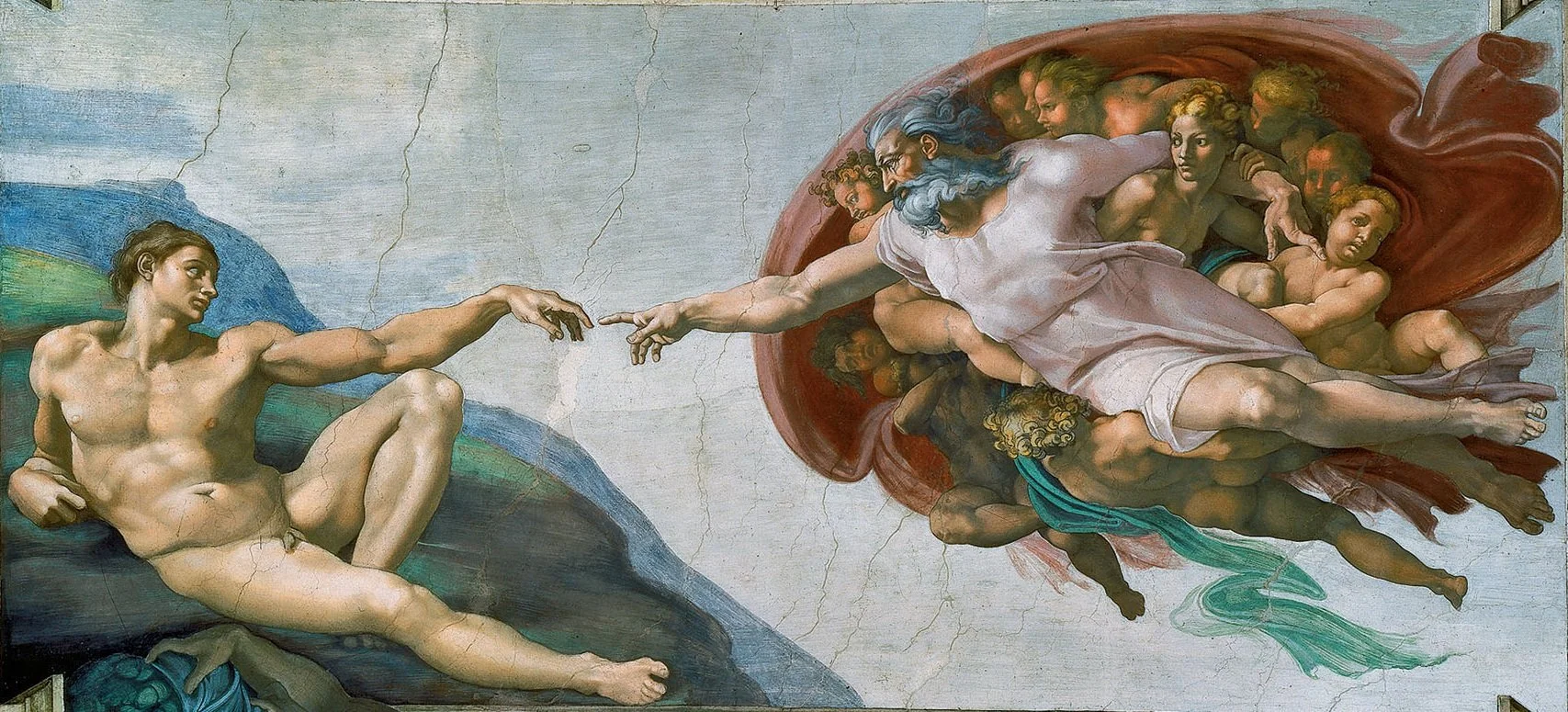
Humility is a core Christian ethic. Creation is a single unity, and we are part of creation, created on the same day as all the other land animals. Only God stands apart from creation. (“Creation of Adam,” Michelangelo, Italy, c. 1511, Wikimedia Commons)
The Bible tells us that God’s creatures are many and splendid and that we stand among them. We are God’s beautiful creations—along with the birds and fishes, among the other land animals.
Animals were not created for humankind, not to use as food, not as a source of material items, not for experimentation, and not for entertainment. Everything that exists is God’s. Not even one of God’s creatures is our personal possession, not even one creature may be harmed or destroyed to satisfy personal preferences or simply out of habit.
Christian discipleship is a commitment to a relationship with God built across time, in the course of daily life. We are drawn to invite Christ to help us realize humility in thought, word, and deed. Through prayer and with grace, Christians can learn to walk humbly among God’s creatures.
When Jesus guides our lives, when we align faith with practice, we are able to live simply, kindly, and thoughtfully, we are able to recognize that animals do not exist for our purposes, that animals are fellow creatures of God.
Human exceptionalism brings harm to animals. Human exceptionalism is human-centered; Christianity is God-centered.
Matthew 18: 4-5
Whoever becomes humble like this child is the greatest in the kingdom of heaven
Humility is a core Christian virtue that shows up in all five of our chapters. It is explored most carefully in three places—in this chapter, in Teachings under Christian Ethics, and in the next chapter, Living, in the portion on the Swine of Gerasene. Teachings also explores other key ideas covered in this chapter, such as kinship across species and our duty to serve God, both of which fall under the topic, Creation.
Christian Humility & Animals
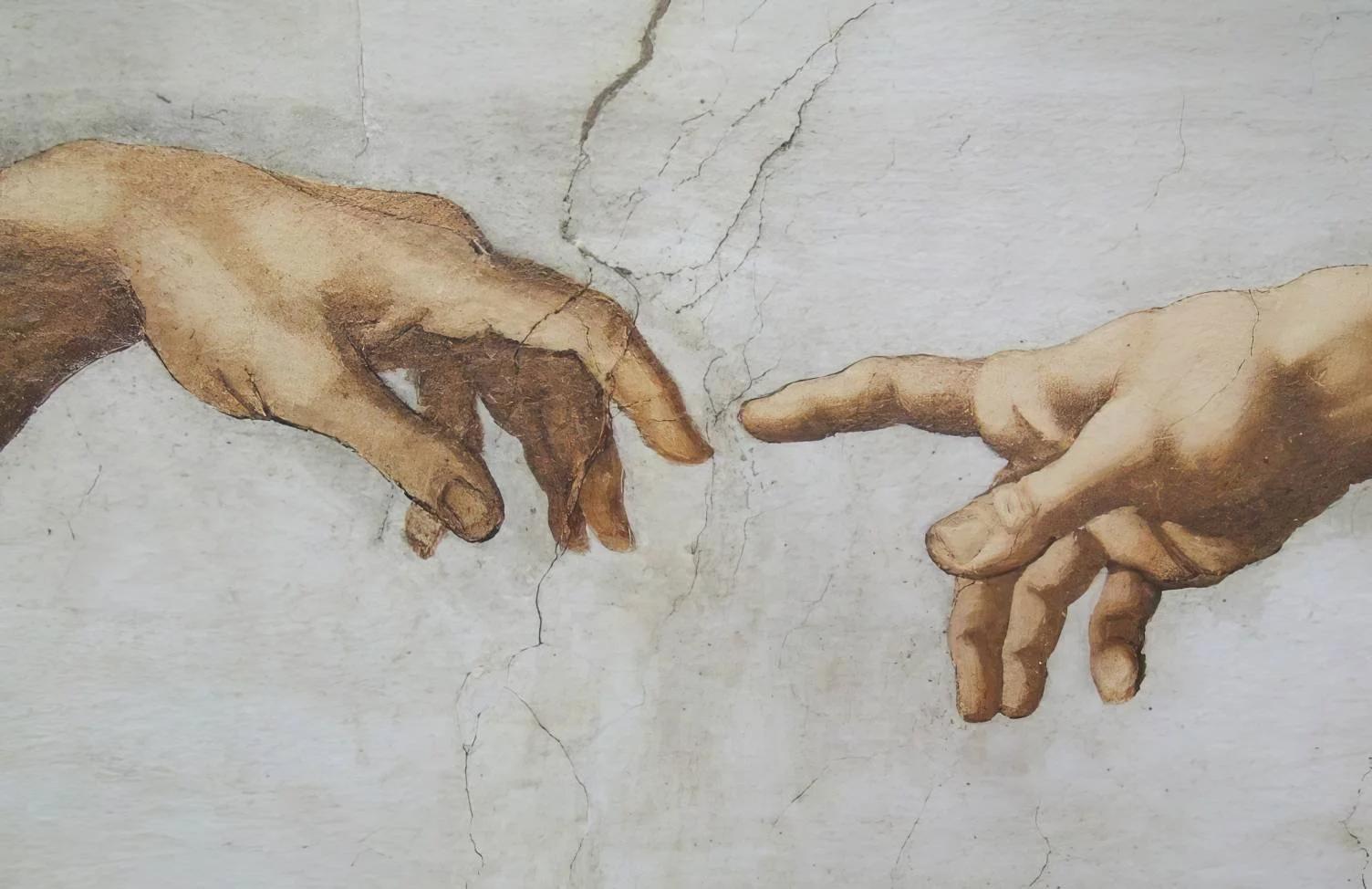
Michelangelo’s famous and intriguing depiction of both our closeness to and separation from God. (“The Creation of Adam,” Michelangelo, Sistine Chapel in Italy, 16th century, Wikimedia Commons)