Animal Sacrifice & Christianity
Jesus on the Cross, Contemporary Food Ethics, & The Nature of God
Genesis 8:20 (also Leviticus 1:1-17, 22:26-30, and 14:49-52, and Luke 2:24)
Then Noah built an altar to the Lord, and took of every clean animal and of every clean bird, and offered burnt offerings on the altar.
Luke 2:24 (At the circumcision of Jesus they offered)
…a pair of turtledoves or two young pigeons.
Hebrews 9:26But as it is, he has appeared once for all at the end of the ages to remove sin by the sacrifice of himself.
Matthew 9:13 (also 12:7)
Go and learn what this means, ‘I desire mercy, not sacrifice.’
Core Christian teachings are clear that Jesus was the final sacrifice, which means that animal sacrifice is unnecessary inasmuch as it does not and cannot take away sin. Only faith in Jesus Christ can cleanse sin and give the gift of salvation. When Christians read the New Testament and learn that Jesus died to cleanse sins, we understand that animal sacrifice is obsolete and at odds with Christianity—Jesus was the final sacrifice.
For Christians, it makes very little sense to point to ancient Hebrew blood sacrifice to defend contemporary food choices. The later prophets repeatedly place righteousness and justice above rote rituals, and with the loss of the temple, bloodletting rituals have not been practiced since 70 CE.
Ultimately, the New Testament rendered any form of ritual sacrifice obsolete for Christians. Jesus fully and completely replaced blood sacrifice.
It is not necessary for Christians to slaughter for salvation. Christians are to have faith in Jesus, to obey and serve God.
Romans 12:1
I appeal to you therefore, brothers and sisters, on the basis of God’s mercy, to present your bodies as a living sacrifice, holy and acceptable to God, which is your reasonable act of worship.
Jesus, the final sacrifice
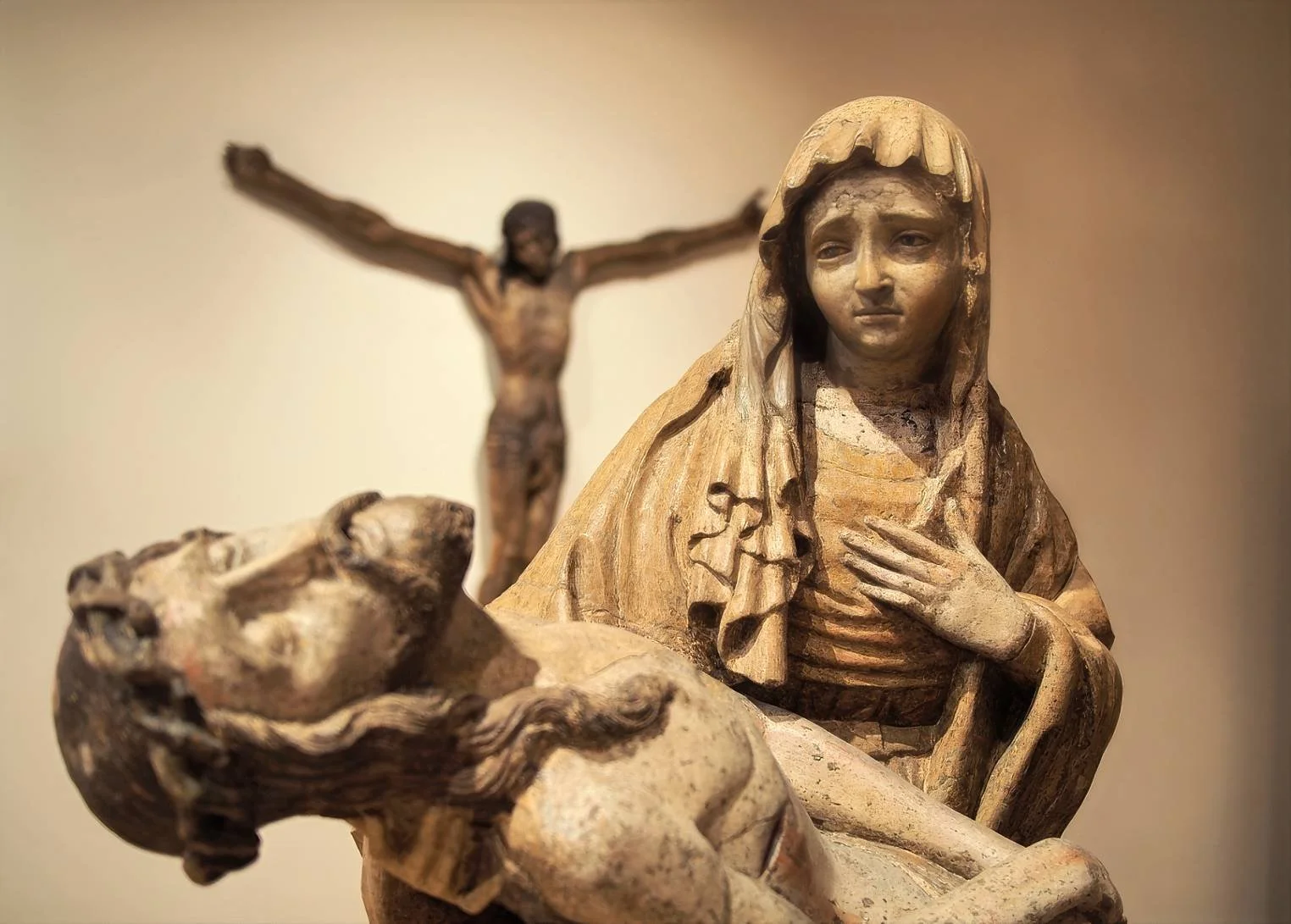
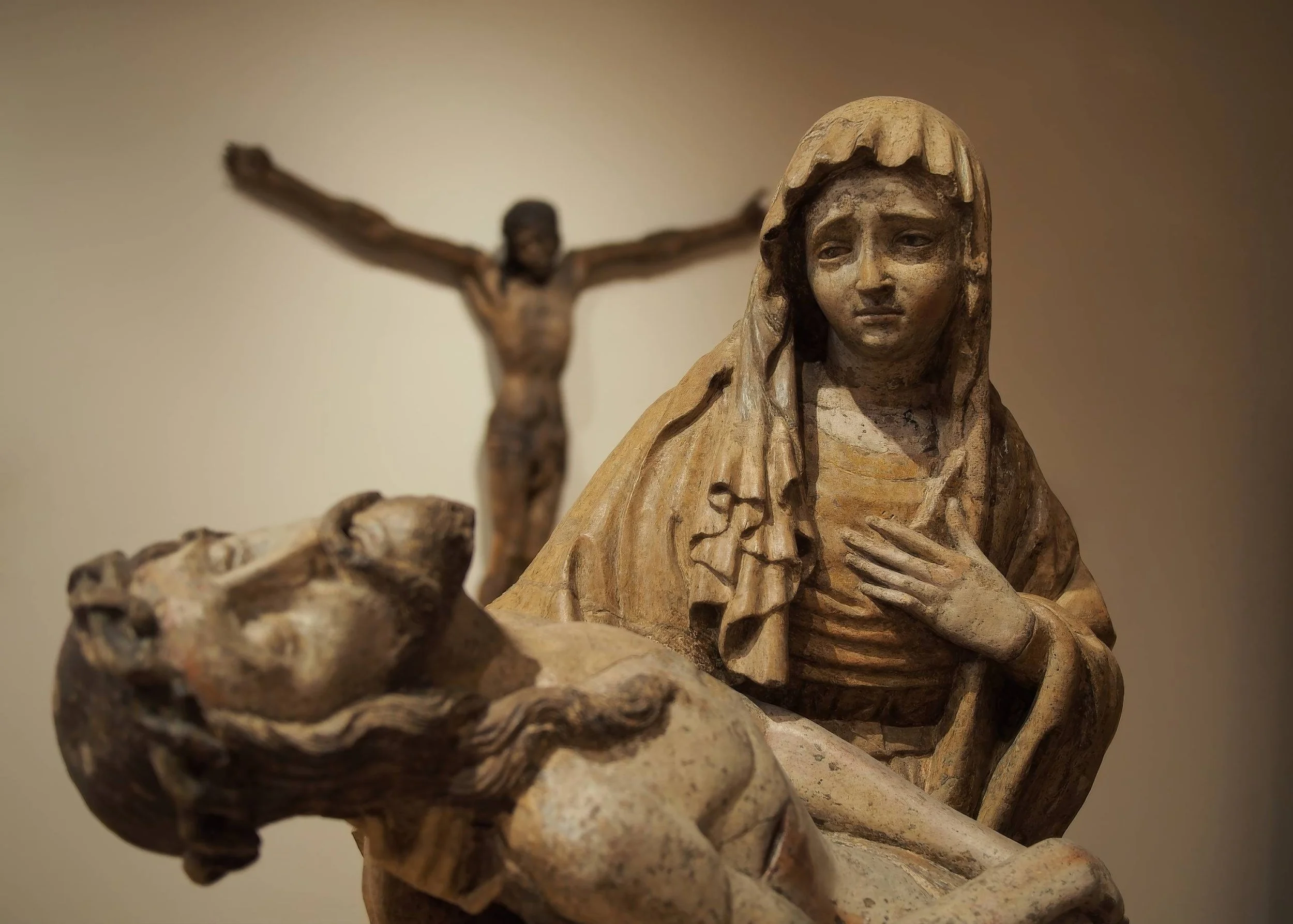
Jesus died on the cross, suffered and perished for all as the final sacrifice, making any additional sacrifices irrelevant, even irreligious. (“Passion of Jesus,” ”National Gallery of Slovenia, 14th-15th century, Wikkimedia Commons)
The Hebrew Bible also turns away from ritual bloodletting.
First, Genesis preempts the possibility of human sacrifice (Genesis 22). In this narrative God challenges Abraham to show obedience by sacrificing his son. Abraham is prepared to obey God, but an angel of the Lord appears and prevents him from slaying his child (Genesis 22:11). Abraham then chooses to sacrifice a nearby sheep—God does not tell him to do so.
Proverbs 21:3
To do righteousness and justice is more acceptable to the LORD than sacrifice.
Next, the prophets shift away from ritual bloodletting. Some of the earliest prophets (1 Samuel 7:9, 10:8; 11:15; Gad in 2 Samuel 24:18–25; Elijah in 1 Kings 18:30–39) overtly encourage blood sacrifice. Prophets who come later are less inclined to blood rituals. Instead, latter prophets speak strongly for the preeminence of good works and Christian ethics (mercy, justice, humility, knowledge of God, which they clearly indicate are more important than any form of ritual sacrifice (Amos, Hosea, and Micah 6:6-8): “…what does the LORD require of you but to do justice and to love kindness and to walk humbly with your God?” (Micah 6:8).
Isaiah 1:12-17
Bringing offerings is futile….
I cannot endure solemn assemblies with iniquity.
Your new moons and your appointed festivals
my soul hates;
they have become a burden to me;
I am weary of bearing them.
When you stretch out your hands,
I will hide my eyes from you;
even though you make many prayers,
I will not listen;
your hands are full of blood.
Wash yourselves; make yourselves clean;
remove your evil deeds
from before my eyes;
cease to do evil;
learn to do good;
seek justice;
rescue the oppressed;
defend the orphan;
plead for the widow.
Finally, Jesus puts an end not only to bloodletting, but to all forms of ritual sacrifices to God: “I desire mercy, not sacrifice” (Matthew 9:13, also 12:7). The crucifixion of our Savior ended the need for these rituals.
With the crucifixion of our Lord, the slow but clear shift away from bloodletting, and from any form of ritual sacrifice, was complete. Christians are not taught to slaughter innocents, but to give of ourselves, to share time and resources, to serve God here on earth.
Over time, Scripture moves from prescribing ritual bloodletting in the Hebrew Bible to a complete replacement through the crucifixion of Jesus in the New Testament. Jesus taught his followers that what is wanted is that we serve God through good works in daily life.
Micah 6:6-8
With what shall I come before the LORD
and bow myself before God on high?
Shall I come before him with burnt offerings,
with calves a year old?
Will the LORD be pleased with thousands of rams,
with ten thousands of rivers of oil?
Shall I give my firstborn for my transgression,
the fruit of my body for the sin of my soul?”
He has told you, O mortal, what is good,
and what does the LORD require of you
but to do justice and to love kindness
and to walk humbly with your God?

History shows sacrifice shifting over time, first drawing back from human sacrifice in Genesis, then drawing back from animal sacrifice in the later prophets, and with the coming of Jesus, a complete end to blood rituals. (“Abraham Sacrificing his Son, Isaac,” Giambattista Pittoni, 1750s, From the Museum of Fine Arts in the United States, Wikimedia Commons)
Ritual Sacrifice not food ethics
If petroleum and wax were sacrificed to God, would anyone believe that God therefore sanctioned the eating of petroleum and wax? Grain offerings are also prescribed in the Hebrew Bible, but does anyone suggest that Christians ought to eat the same grains that were sacrificed 2000 years ago on the altar because they were sacrificed on the altar?
Hebrew ritual sacrifices have nothing to do with what Christians ought to eat. Two-thousand-year-old Hebrew bloodletting rituals are not a reasonable place to look for contemporary Christian food ethics. Faithful discernment indicates that ancient Hebrew blood rituals and what contemporary Christians choose to eat are separate topics.

Nothing about animal sacrifice mirrors a contemporary meal: Ancient bloodletting rituals do not teach contemporary Christian food ethics. (From Bible Pictures and What They Teach, Charles Foster, 1897, Wikimedia Commons)
Deuteronomy 10:14
… heaven and the heaven of heavens belong to the LORD your God, the earth with all that is in it…
On pausing to reflect, it seems to make no sense for Christians destroy what is God’s in the hope of pleasing God, to destroy life with the hope of pleasing the Creator and sustainer of all life. Everything that exists is God’s; Scripture teaches Christians to guard and tenderly protect all that has been made on behalf of the sole proprietor—the Creator. Animals are God’s—their lives are not ours to give.
Our first chapter, Teachings, explores the Bible to discover what God has instructed humans to do in our time here on Earth.
Psalm 24:1
The earth is the LORD ’s and all that is in it, the world, and those who live in it…
God—Sole proprietor

All that exists is God’s. In ancient times, goats were sacrificed to the gods. This goat has been rescued from the meat and dairy industries and is now tended by loving hands in a sanctuary. (We Animals Media)
Gen. 8:20-21 (also see Leviticus 1:9)
Then Noah built an altar to the LORD and took of every clean animal and of every clean bird and offered burnt offerings on the altar. And when the LORD smelled the pleasing odor, the LORD said in his heart, “I will never again curse the ground because of humans, for the inclination of the human heart is evil from youth; nor will I ever again destroy every living creature as I have done.
Do Scriptures indicate that the smell of burning flesh pleases the nose of God?
While we cannot see God, the Bible does not tell us that God has a physical nose, an animalian sense of smell, or that our loving Creator takes pleasure in the odor of roasted flesh. The Bible does tell us that God is compassionate and invested in the welfare of every living creature.
A close read indicates that the smell of burning bodies is not what pleases God in Scripture.
Genesis recalls God observing disobedience (Genesis 3) and violence (Genesis 6) in humankind; God laments that the “inclination of the human heart is evil from youth” (Genesis 8:21). The smell of smoke itself is not what pleases God, only that the smoke is evidence that a wayward and morally challenged humanity has remembered their Maker.
When humankind remembers God and gives thanks, God is pleased. Scripture tells us how to remember, obey, and please God. For example, we have been told to serve God by guarding and tending creation. We have been told to live as Jesus lived—and Jesus did not kill or burn animals; Jesus took care of the needs of those overlooked by society and downtrodden. Jesus modeled helping those viewed as beneath a society’s concern.
To choose Genesis 1 food is to guard and tend creation, protect God’s creatures, who are generally viewed as beneath society’s concern, and is the antithesis of violence and disobedience.
To choose a Genesis 1 diet is to remember and obey God at every meal.
1 Samuel 15:22
Has the LORD as great delight in burnt offerings and sacrifices as in obedience to the voice of the LORD? Surely, to obey is better than sacrifice and to heed than the fat of rams.
Amos 5:22-24
Even though you offer me your burnt offerings and grain offerings,
I will not accept them,
and the offerings of well-being of your fatted animals
I will not look upon….
But let justice roll down like water
and righteousness like an ever-flowing stream.