
Fish & The New Testament
Layers of Meaning in the Gospels & Christian Food Ethics Today
Matthew 14:19-20 (also Matthew 15:36-37, Mark 6:36-44 and 8:1-9)
Taking the five loaves and the two fish, he looked up to heaven and blessed and broke the loaves and gave them to the disciples, and the disciples gave them to the crowds. And all ate and were filled.
John 21:5-6 (also Luke 5:4-6 and John 21:13)
Jesus said to them, “Children, you have no fish, have you?” They answered him, “No.” He said to them, “Cast the net to the right side of the boat, and you will find some.” So they cast it, and now they were not able to haul it in because there were so many fish.
Luke 24:42-43
They gave him a piece of broiled fish, and he took it and ate in their presence.

The risen Christ ate a morsel of fish. (“The Resurrected Christ,” Sandro Botticelli, Italy, 1480, Wikimedia Commons)
Luke 24: 36-43
While they were talking about this, Jesus himself stood among them and said to them, “Peace be with you.” They were startled and terrified and thought that they were seeing a ghost. He said to them, “Why are you frightened, and why do doubts arise in your hearts? Look at my hands and my feet; see that it is I myself. Touch me and see, for a ghost does not have flesh and bones as you see that I have.” And when he had said this, he showed them his hands and his feet. Yet for all their joy they were still disbelieving and wondering, and he said to them, “Have you anything here to eat?” They gave him a piece of broiled fish, and he took it and ate in their presence.
Through the life of Jesus, Scriptures show Christians how to live, but this does not mean that we are to eat, sleep, and dress like people 2000 years ago in the Holy Land. Cultural particulars of the day and in the life of Jesus are recorded in the Bible incidentally—they are not moral lessons. Jesus drank wine, yet many Christians today choose to abstain. Jesus wore sandals and spoke Aramaic, yet the vast majority of today’s Christians do neither; Jesus did not eat fast food or drive a car, yet many of us do. These incidental aspects of time and place are not what Scripture or the life of Jesus offers or teaches Christians.
Luke 24 tells readers that the risen Savior asks for food, not fishes specifically. In Jesus’ time and place, particularly around the Sea of Galilee, fishing was an important part of the Galilean economy, so it is not surprising that fishes and fishermen are mentioned in the New Testament, or that fish is what was offered.
Luke 24 is not about food ethics or law. This narrative does not tell us that we are to eat fishes and does not serve as justification for eating fishes, cows, pigs, turkeys, sheep, chickens, dairy products, or eggs in contemporary times.
There are also critical moral differences between Jesus eating a morsel of fish after resurrection and one of us choosing to eat fish today. Jesus does not catch or kill a fish. If we go fishing or purchase fishes in the market, we either kill fishes directly or pay others to kill fishes, and today our waterways and water creatures suffer from too many people eating too many fishes—and fish flesh today comes with mercury.
The situation in Luke 24 is quite different and not relevant to food choices today.
Christ Eats a Morsel of Fish

Jesus showed his wounds and ate a piece of fish that happened to be cooking in a nearby pan to convince a doubting public that he had defeated death and was again embodied—risen. (“Christ's Appearance to Mary Magdalene After the Resurrection,” Alexander Ivanof, Russia, 1834, Wikimedia Commons)
Christians are called to faithful discernment. Instead of asking, “What did Jesus eat?” Christians are invited to ask, “What does the Word of God and the life of Jesus teach about how we are to live today? What is important about Luke 24?”
The resurrection of Jesus is vitally important, but it does not offer a justification for eating fishes today. Luke 24 tells Christians that Christ ate a bit of food as a means of demonstrating to a doubting humanity that he had risen from the dead, that he was again embodied—“flesh and bones.” Jesus defeated death so that we might gain eternal life.
John 11:25
I am the resurrection and the life. Those who believe in me, even though they die, will live….

Picture of beautiful fishy
Matthew 5:6
Blessed are those who hunger and thirst for righteousness, for they will be filled.
Food metaphors are common in the New Testament (John 4:31-38, John 6:27, 2 Corinthians 9:10, 1 Peter 2:2-3, and so on). These metaphors are not about food or eating, and as metaphors, they are not meant to be taken literally.
In the New Testament, food metaphors convey extremely important spiritual messages about faith and obedience, salvation and eternal life, trust in God, the comparative emptiness of worldly pursuits, and the importance of spreading the Good News. Food metaphors draw on mundane aspects of life and culture from place and time—cultural details that are irrelevant to the many critical spiritual messages of these passages.
Scriptures that mention fishing or eating fishes are merely recording a fact of the day. They do not and cannot provide justification for eating fishes today, let alone other meats, dairy, and eggs.
John 6:35
Jesus said to them, “I am the bread of life. Whoever comes to me will never be hungry, and whoever believes in me will never be thirsty.
Food & Eating as Metaphors
What people ate and wore are incidentals in Scripture—these mundane details are unimportant to the critical spiritual Good News of the Bible. (Wikipedia)
How people dressed and what they ate are incidentals in Scripture. These mundane details are unimportant—they are not moral dictates. What matters is the life and teachings of our Savior! (“Birth of Baby Jesus,” Nan Phelps, United States, 1950)
Luke 5:4-7, 10 (also John 21:5-6, 19)
When he had finished speaking, he said to Simon, “Put out into the deep water and let down your nets for a catch.” Simon answered, “Master, we have worked all night long but have caught nothing. Yet if you say so, I will let down the nets.” When they had done this, they caught so many fish that their nets were beginning to burst. So they signaled their partners in the other boat to come and help them. And they came and filled both boats, so that they began to sink…. For he and all who were with him were astounded at the catch of fish that they had taken…. Then Jesus said to Simon, “Do not be afraid; from now on you will be catching people.” When they had brought their boats to shore, they left everything and followed him.
Matthew 4:18-20 (also in Mark, 1:16-18)
…he saw two brothers… casting a net into the sea—for they were fishers. And he said to them, “Follow me, and I will make you fishers of people.” Immediately they left their nets and followed him.
In Jesus’ day, many communities living along the water’s edges depended on fish flesh for nourishment. Fishes were caught with nets small enough to be pulled onto wooden boats by hand. The boats were powered with oars and poles, sometimes with the help of sails. The work would likely have been very hard and also dangerous.
In these fish-dependent communities, the miracle of full nets would have made a strong impression—and the Bible tells us that it did—fishermen turned from the sea to our Lord. Through the miracle of full nets, Jesus redirected fishermen to help spread the teachings of Jesus, the Good News of salvation.
The other two Gospels cut directly to this point without the miracle of full nets, which is superfluous to the key point: Jesus is the Anointed One, our Savior—follow Jesus and spread the Good News.
This miracle is not intended to, and does not sanction fishing or eating fishes then or now (or other forms of flesh, or dairy and eggs).
It is worth noting that this miracle may not have caused the deaths of any actual fishes from the water where the men fished—this is a miracle, not a mundane event.
Mark 10:27
Jesus looked at them and said, “For mortals it is impossible, but not for God; for God all things are possible.”
Jeremiah 32:27
See, I am the LORD, the God of all flesh; is anything too hard for me?
From Fishing to Discipleship
In Italy, in a bucket on a family fishing boat, a small fish struggles to live while dying from asphyxiation. (We Animals Media)
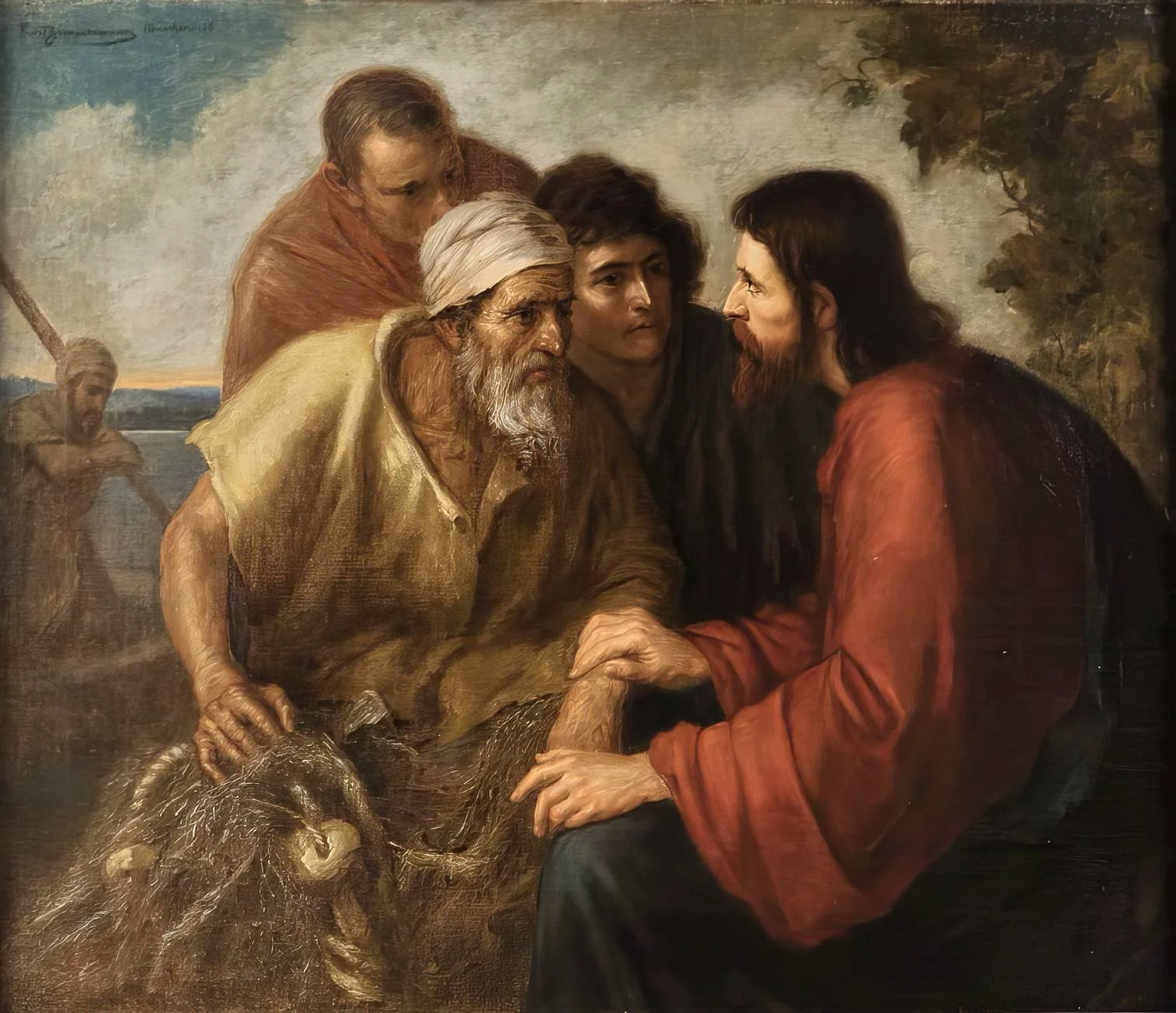
Jesus draws fishermen from their boats to help spread the Good News of salvation. (Argoikos Archival Library of History and Culture)
Matthew 15:32-38 (similarly in Mark 8:1-9, also Matthew 14:15-21, similarly in Mark 6:36-44)
Then Jesus called his disciples to him and said, “I have compassion for the crowd because they have been with me now for three days and have nothing to eat, and I do not want to send them away hungry, for they might faint on the way.” The disciples said to him, “Where are we to get enough bread in the desert to feed so great a crowd?” Jesus asked them, “How many loaves have you?” They said, “Seven, and a few small fish.” Then ordering the crowd to sit down on the ground, he took the seven loaves and the fish, and after giving thanks he broke them and gave them to the disciples, and the disciples gave them to the crowds. And all of them ate and were filled.
The Bible tells us that when the masses around Jesus were hungry, all that they had to eat were a handful of loaves of bread and a few or two small fishes (Matthew 14:17). Jesus multiplied these to create enough food for all who were present.
While Scriptures do not explain the details of this miracle, they do not say that Jesus killed fishes, but only multiplied fishes caught previously—almost surely dead. Jesus used what was in his surroundings to do what needed doing and make the points that he needed to make in his short life on Earth. He was not teaching people to eat fish, he was exhibiting his powers to help draw people in the right direction—toward God. He multiplied local foods to feed the masses.
This time on three counts, fishes are not important to the message conveyed. First, the focus of the story is about the compassion and power of Jesus. Second, Jesus breaks the food before passing it around, and it is common to break bread, but not fishes, carrying the focus to the bread while leaving out the fishes. Finally, if we look to the multiplying of fishes and loaves as a reason to eat fishes, the parallel requires a miracle—producing more fish from fishes who have already perished and not pulling them from their home in the waters and then killing them.
Today, when we buy or catch fishes, we cause suffering and bloodshed, and we destroy life. This is not what the Bible describes Jesus doing when he multiplies what is present to feed those who are hungry. Most fundamentally, these passages do not teach that we ought to eat fishes. The focus of the narrative is not food ethics, but the compassion, caretaking and his miraculous powers.
1 Corinthians 13:8
Love never ends.
Job 12:10
In his hand is the life of every living thing….
Romans 12:18
If it is possible, so far as it depends on you, live peaceably with all.
Multiplying Fishes
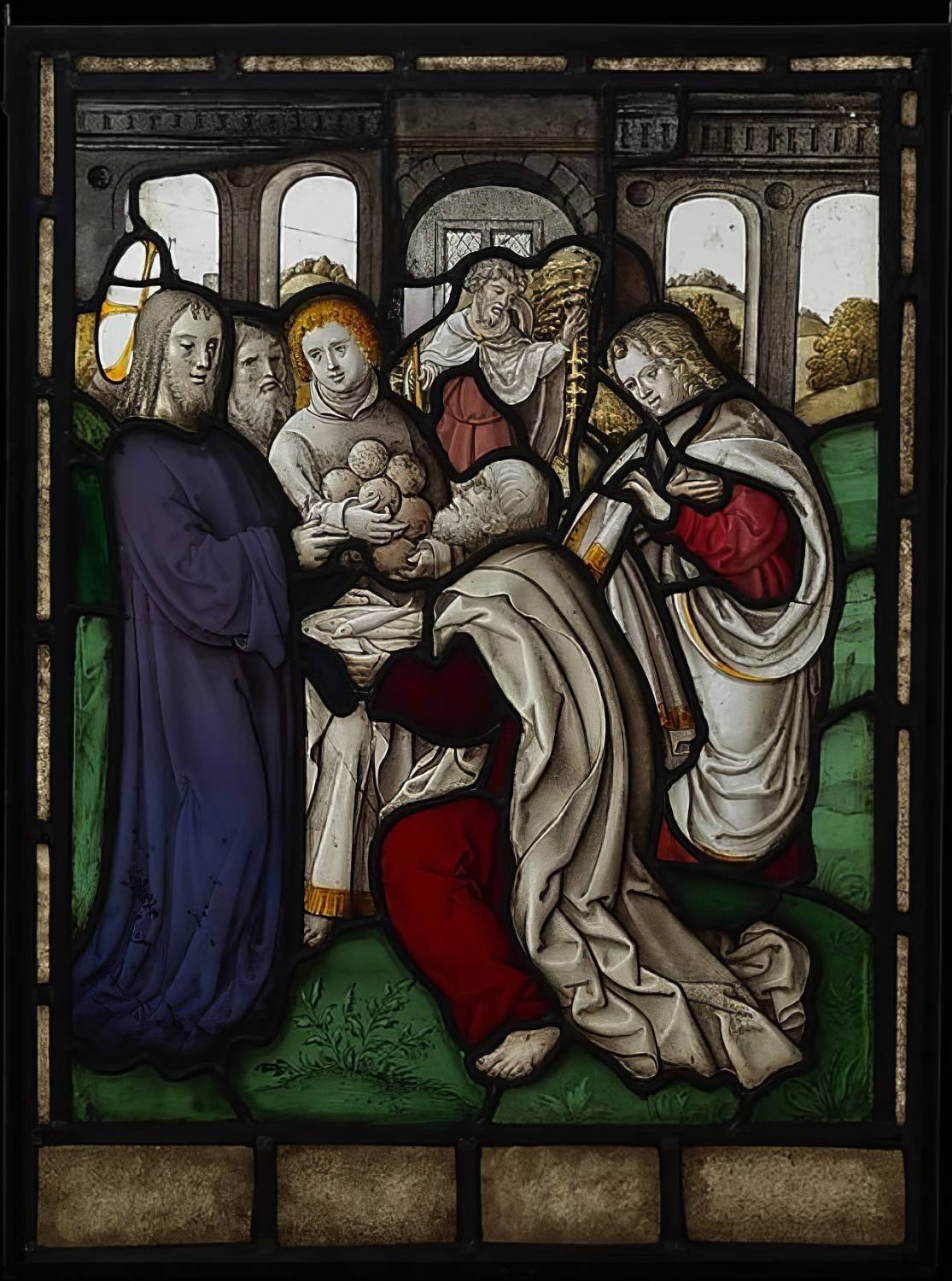
The Gospels never tell us that Jesus caught or killed fishes. (“Miracle of the Loaves and Fishes,” Jan Rombouts, Belgium, c. 1525–30)
Romans 10:2
For I can testify that they have a zeal for God, but it is not based on knowledge.
There were many fewer people in biblical times, and far fewer food options; fishing was important for subsistence. Eating fishes pulled into wooden boats from the Sea of Galilee 2000 years ago is not the same as eating fishes today. Today, many pressing moral concerns surround fishes and fishing.
There are now more than eight billion human beings on God’s Earth. Sea creatures are no longer caught only by those who live in little villages by the water—they are caught in mass quantities and shipped all over the world.
Uncounted, growing numbers of boats, nets, and hooks fill the Earth’s waters. Every day, boats drop hundreds of miles of nylon nets and hundreds of miles of nylon lines that are riddled with hooks into waters where God placed Earth’s water-creatures.
Nylon nets and lines break loose and nylon does not decay. Thousands of miles of fairly indestructible fishing nets (called ghost nets) and lines drift the oceans, ensnaring God’s creatures as far into the future as we can imagine.
Fishing nets and hooks do not decide who to catch—anyone can grab a hook or swim into nets. Turtles, whales, seals, dolphins, seabirds, and innumerable other unintended creatures, including many endangered species, are drowned and pulled in, then tossed overboard or counted with the other deaths—by the pound.
Exodus 23:2
You shall not follow a majority in wrongdoing….
Industrialized Fishing
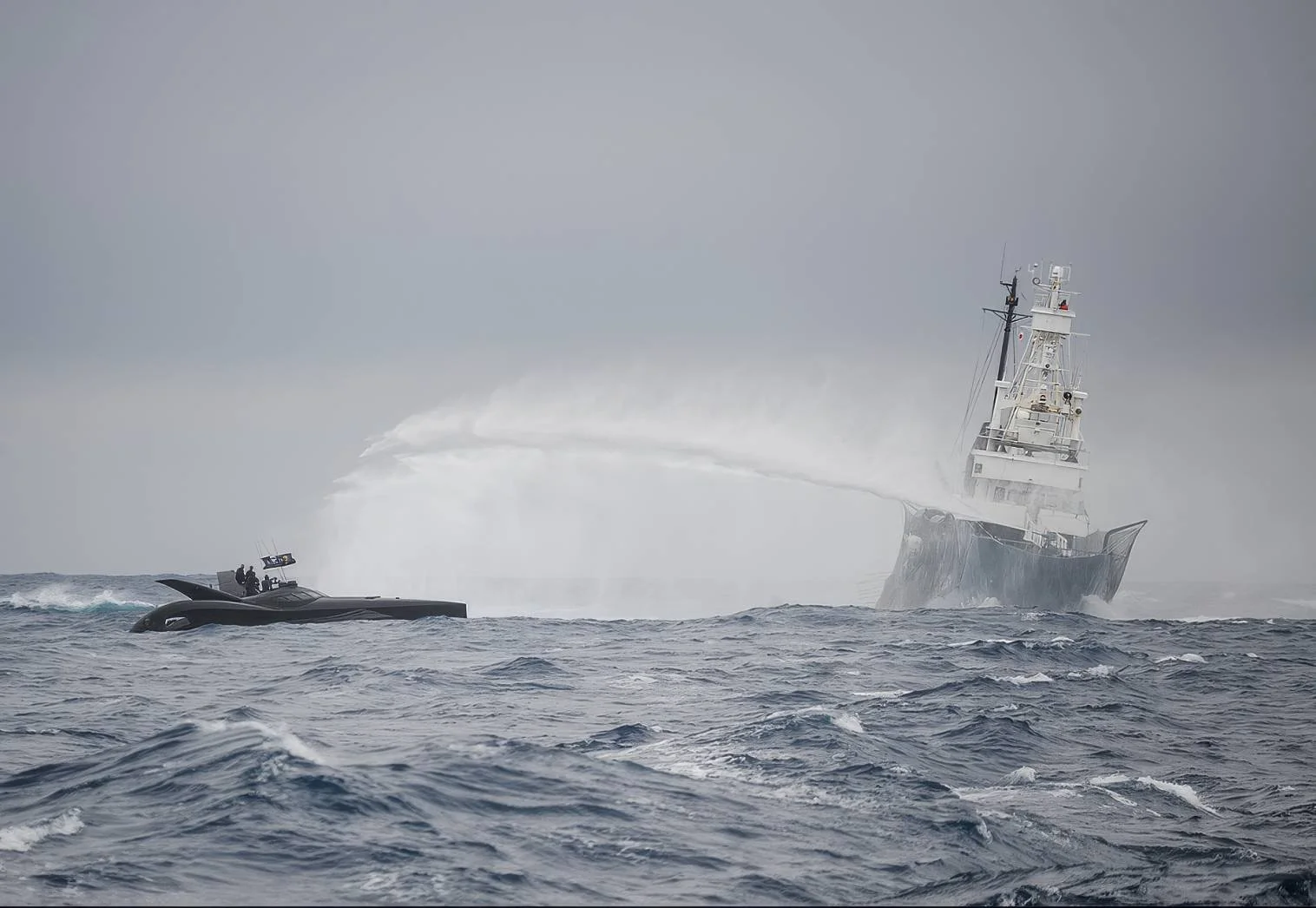
Activists help to fill in for a dearth of officers patrolling the world’s seas. In this photo an illegal Japanese whaling vessel blasts activists, ultimately sinking their small boat. (Photo We Animals Media)
It is impossible for authorities to patrol the Earth’s vast waters, and it is impossible to know whether fish and other sea-creatures in shops were caught legally or illegally, and when we buy fish, we never really know what kind of fish we are eating, or where and how it was caught.
The intensity, methods, and sheer quantities involved in industrialized fishing now endanger God’s creatures and the balance of their habitat. The fishing industry is driven by those who eat their catch, and what is caught is now the cause of extinctions—the permanent disappearance of God’s creatures.
2 Timothy 2:15
Do your best to present yourself to God as one approved by him, a worker who has no need to be ashamed, rightly explaining the word of truth.
Genesis 2:15
The LORD God took the man and put him in the garden of Eden to till it and keep it.(“Till” and “keep” in the original Hebrew are “guard” and “tend.”)
A statue outside an exhibit in Mexico City that focuses on the critically endangered vaquita. (Universum abre exposición sobre la vaquita marina)
One of God’s last remaining vaquitas—caught and drowned by a fishing net. (Sea Shepherd)
We can better obey and serve God if we understand some key details about contemporary food industries. Today, there is much concern about the disruption of sea ecosystems and the depletion of species—the damage and destruction of God’s good and holy creation.
Many animals who depend on the seas for food now die for want of food
Today, due to industrialized fishing, humankind eats so much sea food that animals who depend on sea creatures for their survival cannot find enough to eat—whales, penguins, manatees, and many types of coastal seabirds, including pelicans. These creatures of God are utterly dependent on the seas for their survival, and there is not enough food for their sustenance. We protect these creatures of God when we choose a Genesis 1 diet.
When we learn that certain food choices harm or destroy God’s good and holy creation, including humankind, we can make different choices to align faith with action. When faith calls us to adjust what we choose to eat, we find that God has provided many wonderful plant foods (Genesis 1:29).
Proverbs 1:7
The fear of the LORD is the beginning of knowledge; fools despise wisdom and instruction.
James 2:17
So faith by itself, if it has no works, is dead.
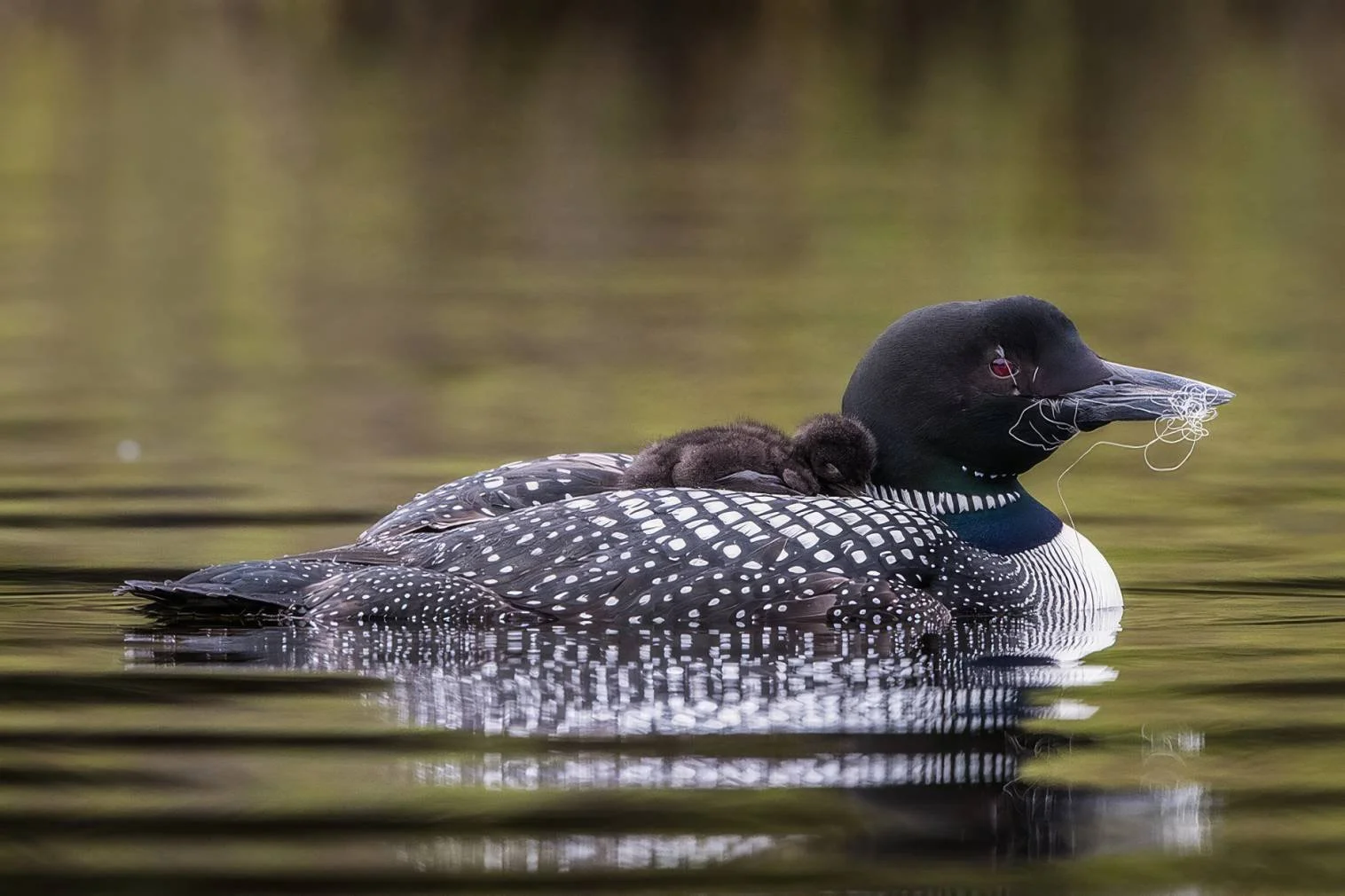
A loon with chicks has become tangled in fishing hook and line, likely causing the death of both mother and young. (We Animals Media)