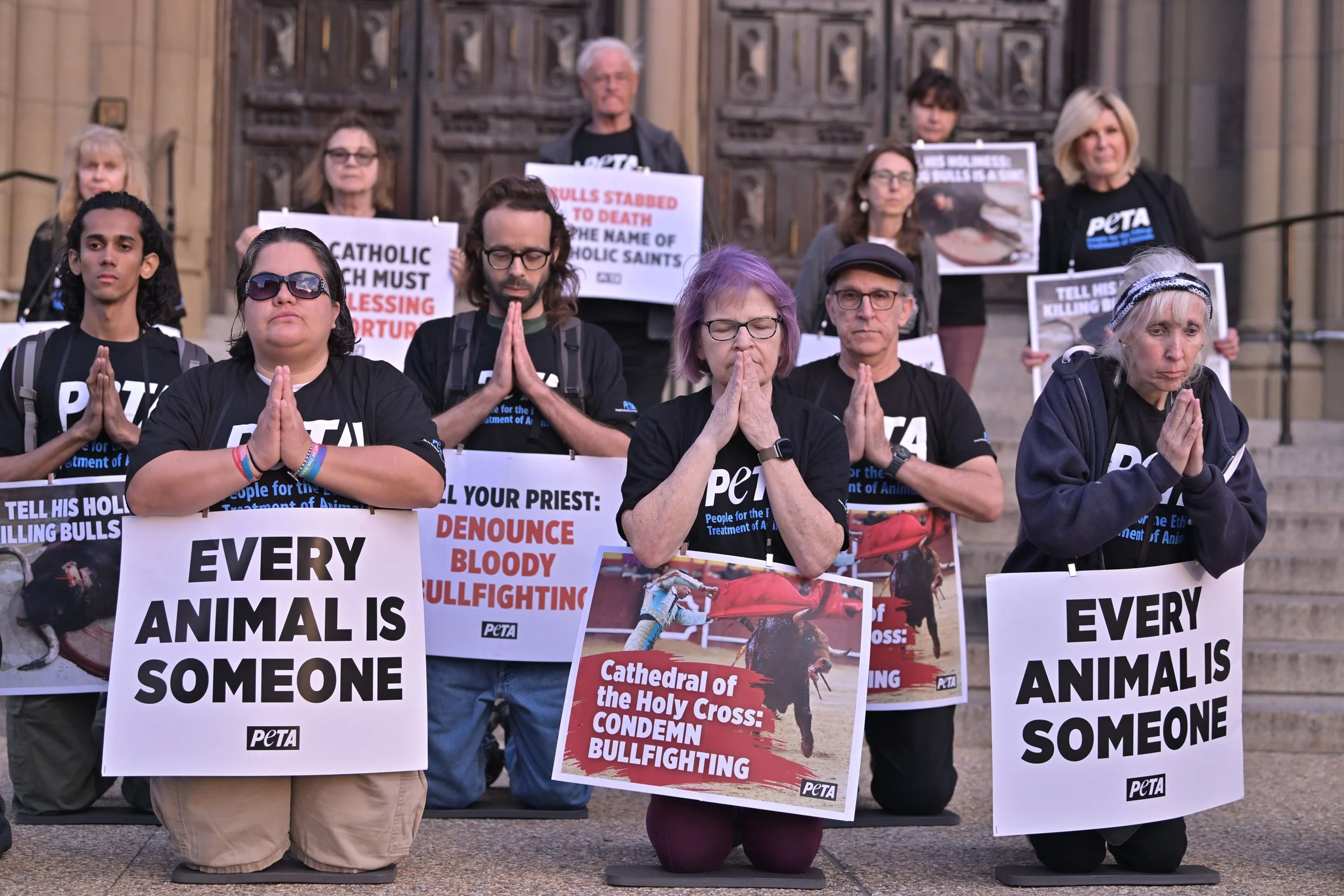
Christian Engagement for Animals
A Faith That Speaks and Acts for Animals
Micah 6:8…what does the Lord require of you but to do justice…?
In Animals and World Religions, Dr. Kemmerer writes, “Imagine Jesus walking through a slaughterhouse, a vivisection lab, or a poultry farm: How would the Prince of Peace feel about contemporary exploitation of pigs, mice, and hens? Would he justify these institutions as readily as we do?” Scriptures suggest that Jesus would likely display righteous anger if faced with such cruelty and indifference to God’s creatures.
Christianity is lived. Living Christianity can take a wide variety of forms, such as leading a prayer circle, helping with technology for services, visiting those who are elderly or ill, cleaning up after fellowship time, providing pastoral care, or helping out at a local soup kitchen or anymal shelter. Some might be called to work for political and social change, and to establish greater justice, whether for children, the poor, immigrants, the elderly, or anymals. If you think that anymal activism might be your calling, then this page is for you. (To first read about core Christian teachings and anymals, see Sacred Texts.)
Romans 12:1
…present your bodies as a living sacrifice, holy and acceptable to God, which is your reasonable act of worship.

An all-female anti-poaching force in South Africa works to protect critically endangered wildlife with boots on the ground, through teaching, and by setting an example in local communities. (We Animals Media)
Explore this Chapter
What does advocacy look like in Scriptures, and what does it look like when Christians choose to live their faith as animal advocates?
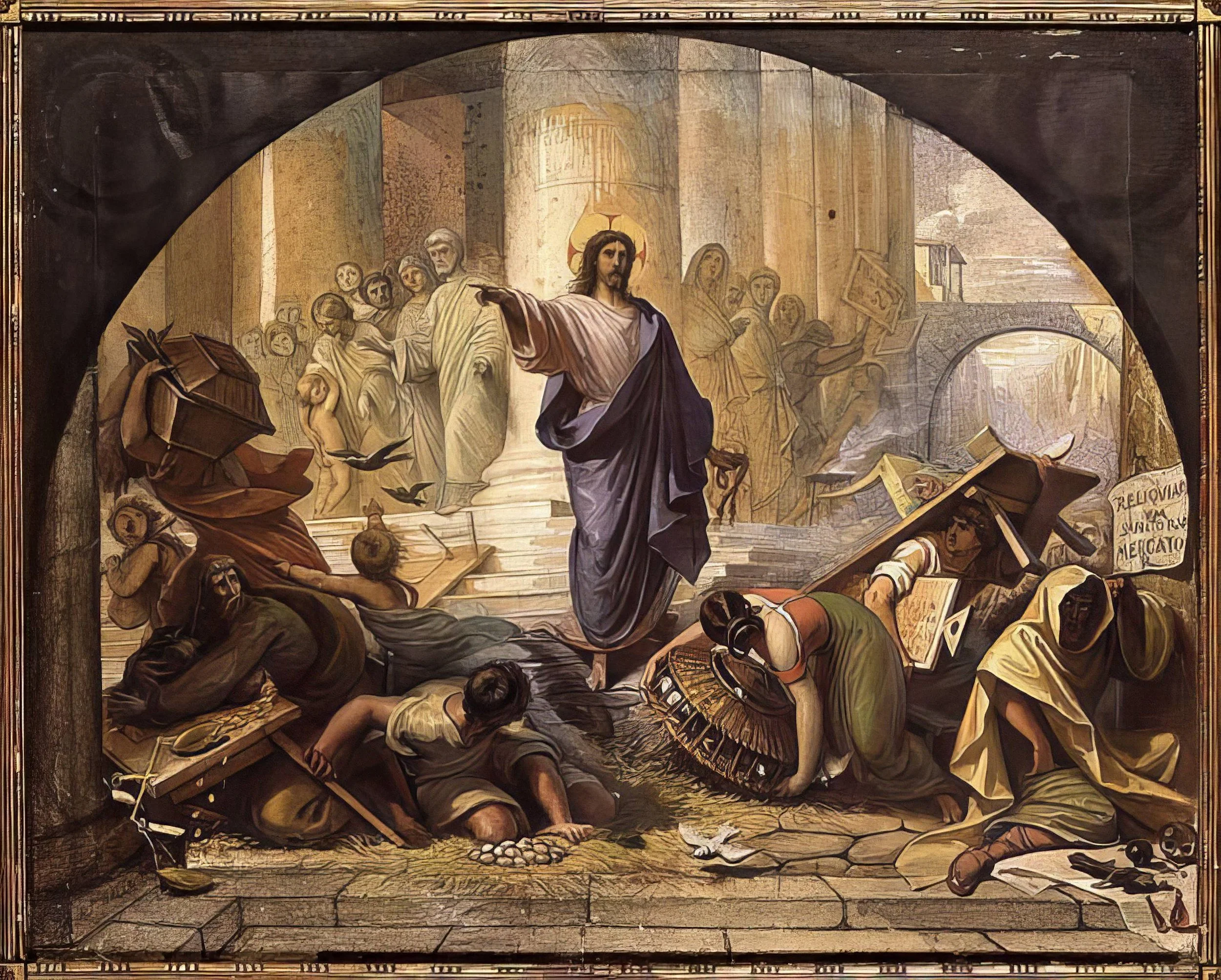
Jesus and the Call to Justice The Gospels portray a Jesus who did not stand apart from injustice — he confronted it. His life offers Christians a model of faith that acts courageously on behalf of those who cannot speak for themselves.

The Prophets The biblical prophets understood that faith without public witness is incomplete. Their willingness to disturb the comfortable — and to speak plainly about what God requires — remains a model for every generation.

Modern Era Christian Activism From Humphry Primatt's 18th-century theological argument against cruelty, through Tolstoy's writings on compassion and diet, Christians have been advocating for animals long before it was culturally acceptable to do so.
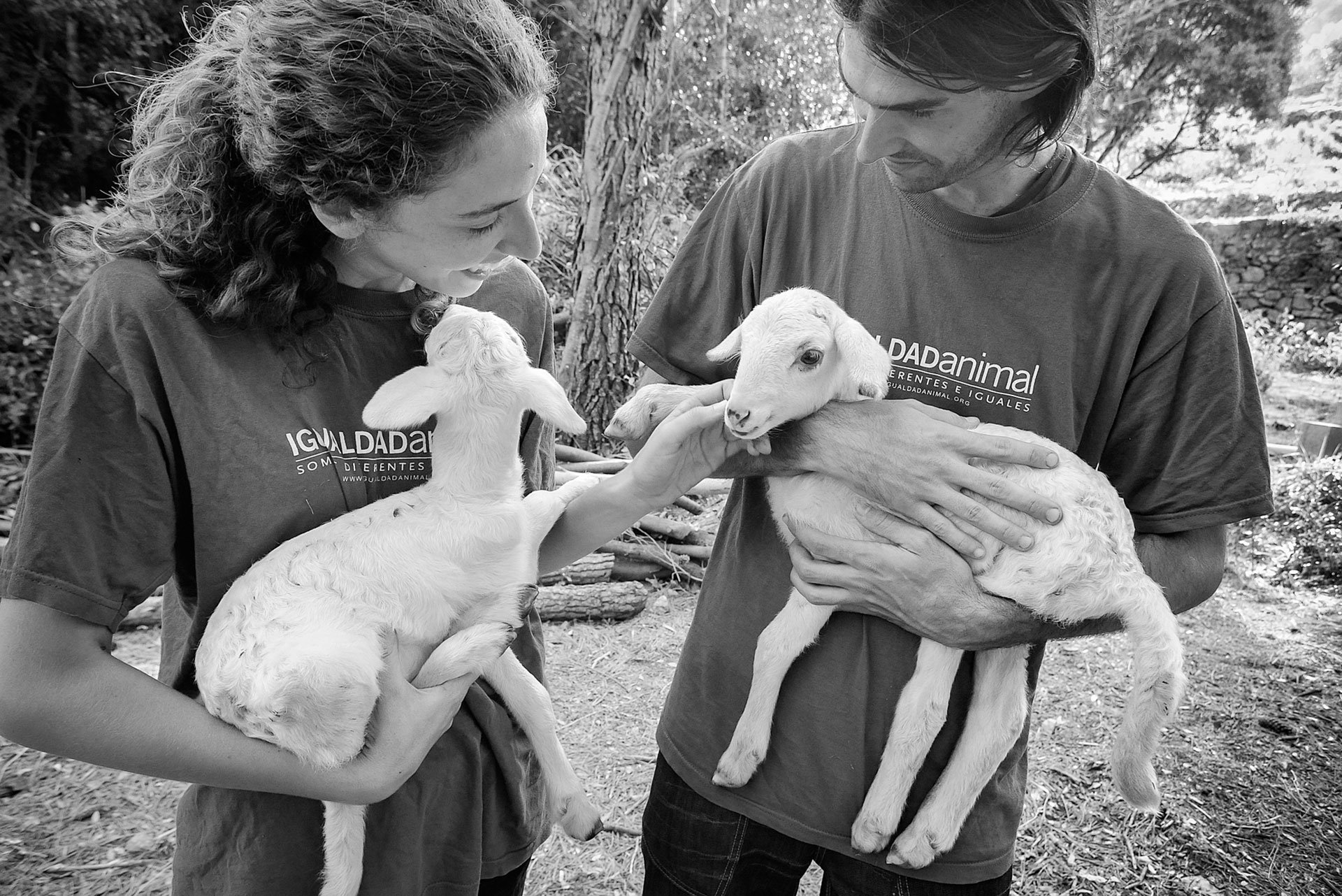
Contemporary Activism Today, Christians around the world are finding their own ways to act — in their congregations, their communities, and their daily lives — on behalf of animals. The tradition is alive, and it is growing.
Common Questions
-
The Bible emphasizes the importance of good works, of striving to bring positive change in the here and now, and advocacy is an important way of bringing positive change here on Earth. The prophets advocated for honoring our covenant with God. Jesus advocated for social justice and expansive love. Many Christians have followed in the footsteps of the prophets and Jesus, advocating for justice and universal love; some of these dedicated Christian activists have spoken out on behalf of animals.
-
The Gospels tell us that Jesus took action to improve social justice—he spoke up on behalf of those who had little to no voice in society, such as the poor, and women, and he healed those labeled as unclean, as outcastes unworthy of attention. When Jesus sees money changers in the temple, he physically disrupts their activities, challenging and disrupting practices that dishonor God. Jesus shows his followers that we need to address the problems of our communities diligently, as part of daily life.
-
The biblical prophets remind Christians that society at large often forgets about God, and that faithful practice invites us to work for God here on Earth, to draw people to Jesus. The Bible tells us that the prophets showed courage in expressing accountability before God, speaking up on behalf of biblical law, encouraging a life that honors our covenant with God, and an end to unholy ways. Undeterred by the clamoring of the majority, the prophets persisted, urging repentance, obedience, and spiritual renewal.
-
There are many levels and ways that animal advocacy can be a faithful expression of faith for Christians. Animals are overlooked and suffer greatly at the hands of humankind. Like the poor, the outcastes, and the women and children who were overlooked in the holy land 2000 years ago—like those Jesus served—animals are overlooked and neglected and they suffer greatly because we often fail to see them as creatures of God. Calling humankind back to the mercy and love that are core to biblical ethics, and reminding humankind that animals are God’s, and not ours, is a faithful way for Christians to serve God.
-
Across centuries, in various ways, and now more than ever, Christians are taking a visible and public stand on behalf of animals. Animal activists find their roots in the work of authors such as theologian John Wesley, minister Humphry Primatt, and Count Leo Tolstoy, each of whom advocated for animals in previous centuries. Contemporary Christians may choose to work with their churches or in the larger community, for example, posting information on social media or working with local restaurants and cafeterias to list and price plant based meals. Others might start a Bible study exploring Christianity and animals, create fliers with key contacts for helping strays or injured wildlife for the church lobby, or talk to church leaders about providing a more inclusive selection of foods at church functions.
1 John 3:18
Love not in word or speech but in deed and truth.
Some feel called to follow in the footsteps of Jesus and the prophets by working for political and social change, to reduce worldly sufferings, and to draw people back to God. Humphrey Primatt, Leo Tolstoy, and innumerable contemporary Christian anymal activists have chosen this path, standing with and for God by protecting anymals, and in so doing, these activists have also protected humankind and the planet. (For more on the connection between the sufferings of anymals and the sufferings of humankind and environmental destruction, see this book, Vegan Ethics: AMORE, or to learn about dietary choice and feeding the hungry, see Sacred Texts, New Testament, Core Christian Ethics, Sharing.)
Everybody thinks of changing humanity, and nobody thinks of changing himself.
— Leo Tolstoy
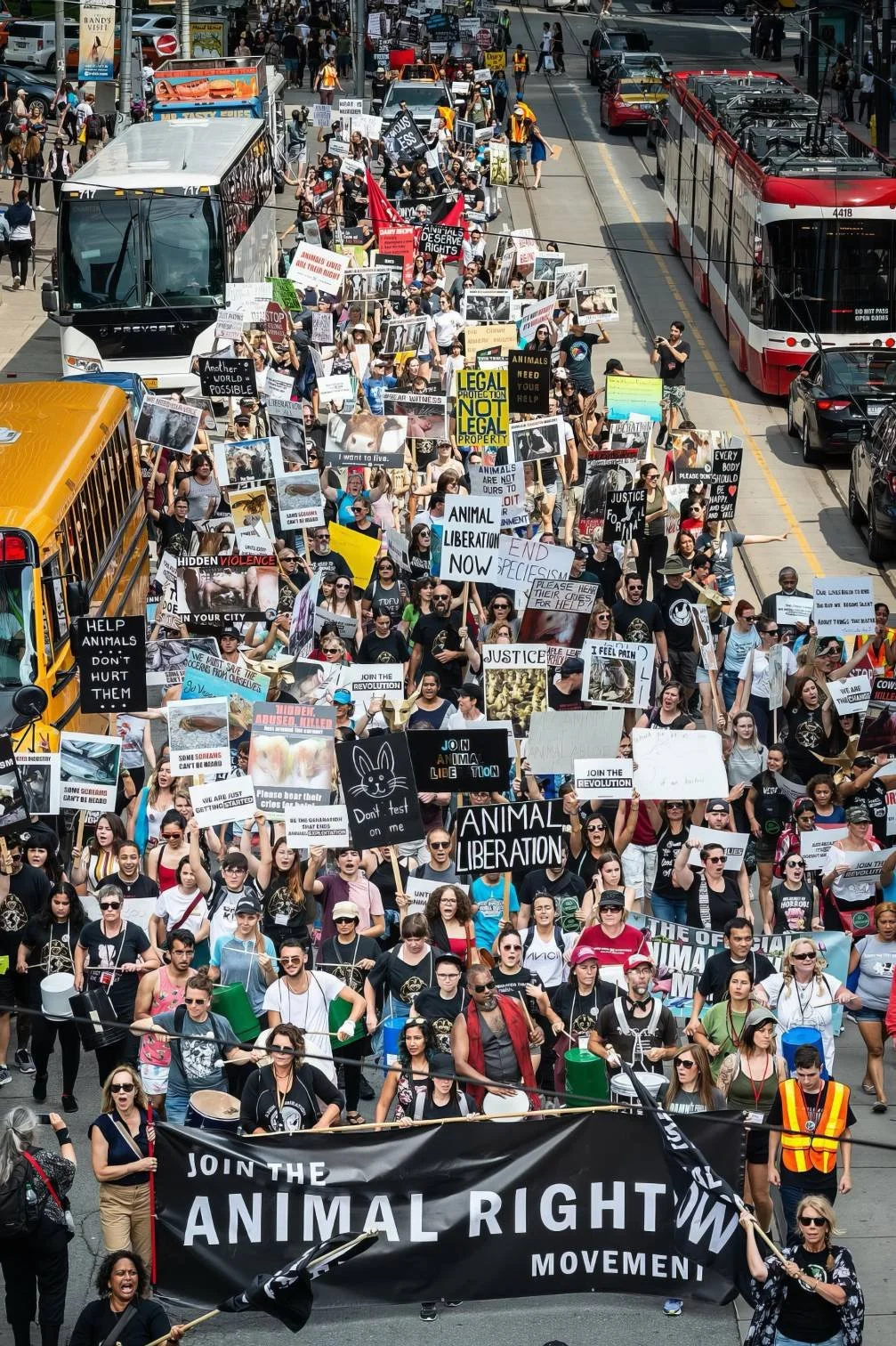
Animal activists in Canada. (We Animals Media)