New Testament Ethics
A Moral Foundation for Christian Care for Animals
Galatians 5:22–23
… the fruit of the Spirit is love, joy, peace, patience, kindness, generosity, faithfulness, gentleness, and self-control.
The Gospels provide Christian ethics through the words and life of Jesus. His example and his words are affirmed elsewhere in the New Testament.
Hebrews 4:12
Indeed, the word of God is living and active and sharper than any two-edged sword, piercing until it divides soul from spirit, joints from marrow; it is able to judge the thoughts and intentions of the heart.
Love
1 John 4:8 (and 1 John 4:16)
God is love.
1 Corinthians 13:4
Love is patient; love is kind
The Bible tells us that love defines God: “God is love.” Christian love originates in the munificence of God’s love and connects us back to the Creator.
Love was central to the life and ministry of Jesus, whose caring was all-inclusive, generous, and risky. Christians are called to express Christ-like love in this world, in daily life.
Love is limitless and cannot be depleted. Christianity asks the faithful to walk with Jesus, to express love unbounded. Christians are called to love those marginalized, downtrodden, and ostracized by mainstream culture.
Jesus has shown us how to love those whom others find unworthy of our care. Jesus boldly expanded the moral circle outward to include Samaritans, a Syrophoenician woman, prostitutes, tax collectors, lepers, servants, and the poor. The Gospels tell us that Jesus extended the moral circle to offer help to all who were in need.
Following our Savior’s example, Paul extended the circle of love to gentiles. Christians are invited to expand the moral circle outward, to extend the circle of love beyond cultural norms and societal expectations and restrictions.
All-inclusive, generous, risky love extends Christian love outward toward every creature of God.
Proverbs 4:23
Keep your heart with all vigilance, for from it flow the springs of life.
Ephesians 3:18-19
I pray that you may have the power to comprehend, with all the saints, what is the breadth and length and height and depth and to know the love of Christ that surpasses knowledge, so that you may be filled with all the fullness of God.

At a sanctuary in South Africa, a nation where baboons are broadly viewed as “vermin,” a caretaker tenderly provides for the love-needs of an orphaned baboon, whose mother was likely killed as a “pest.” (We Animals Media)
Humility
James 4:6
God opposes the proud but gives grace to the humble.
Christian humility brings respect for life.
The Bible tells us that all of creation is God’s. Humility expresses the understanding that everything that exists is God’s, not ours.
Christians are called to respect and protect life because it is a gift from God. Humankind tends to note the value of our lives—the gift that God has given. No life can rightly be viewed as frivolous, meaningless, irrelevant, or expendable.
When Christians invite Jesus into our hearts, he brings humility. When Christians humbly welcome and receive innocents, seeing to the needs of all of God’s creatures, the faithful welcome and receive Jesus (Matthew 18:3–5).
As humble servants of God, Christians are called to care for all that God has made, including animals.
Matthew 18:4-5
Whoever becomes humble like this child is the greatest in the kingdom of heaven.
Humility is a bridge concept across our five-part journey exploring Christianity and animals. Humility is core to Christian ethics, central to the life of Christ and important to our chapter on Teachings. The Narrative of Balaam and the Donkey demonstrates the folly of human pride and our chapter on Tension examines the manifestations and outcomes of pride as human exceptionalism. The importance of humility emerges again in our chapter on Living and is particularly important in our examination of the New Testament account of The Swine of Gerasene.
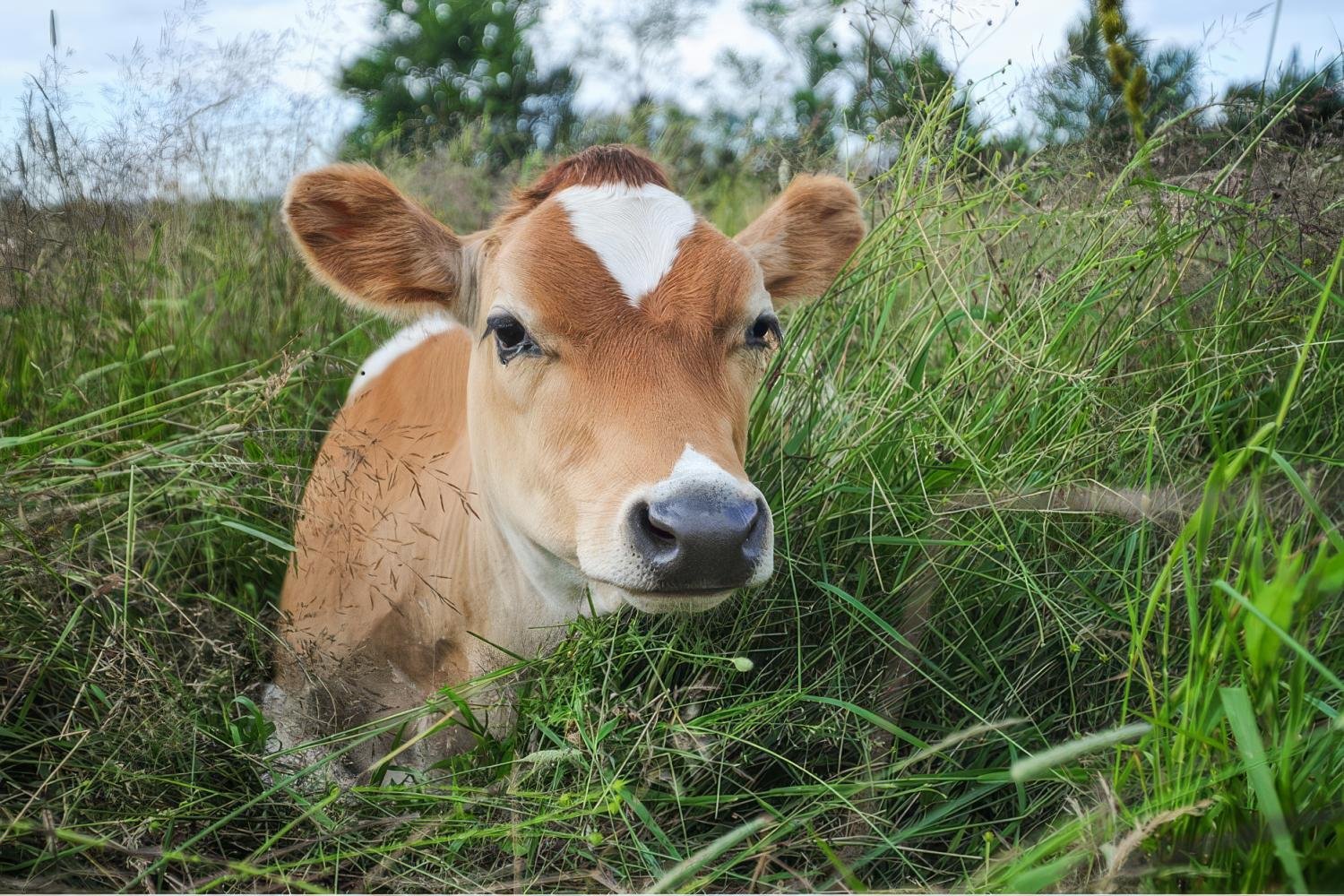
Through humility Christians are able to recognize other living creatures as God’s, not ours. This calf, rescued from a dairy farm in the United States and destined for the veal industry, is now sheltered at a sanctuary. (We Animals Media)
Mercy
Matthew 5:7
Blessed are the merciful, for they will receive mercy.
Animals, especially those who fall directly under our power, depend on our mercy.
Humankind often holds complete power over animals, especially those in our care. Human beings often control if and what animals eat, whether they have water to drink. People control their pregnancies, births, and whether they nurse or raise their young. Humankind decides whether they are confined, and if so, where and how. Human beings even decide whether God’s creatures find comforts of any kind during their lives—and how long they will live.
Christian mercy ought to extend to animals, including those exploited as food or for materials, entertainment, and experimentation. Consumer choices determine what products are available and mercy invites Christians to take into consideration what money buys—not only actual products, but the process of bringing a particular product to the market.
Gaps between the biblical call for mercy and common consumer choices are covered in the fourth chapter, Living, and also in parts of the third chapter, Tension.
Luke 6:36
Be merciful, just as your Father is merciful.
The Bible speaks often of mercy, a theme also explored in Narratives through the account of the Donkey and Balaam, and in several places in our chapter on Living.
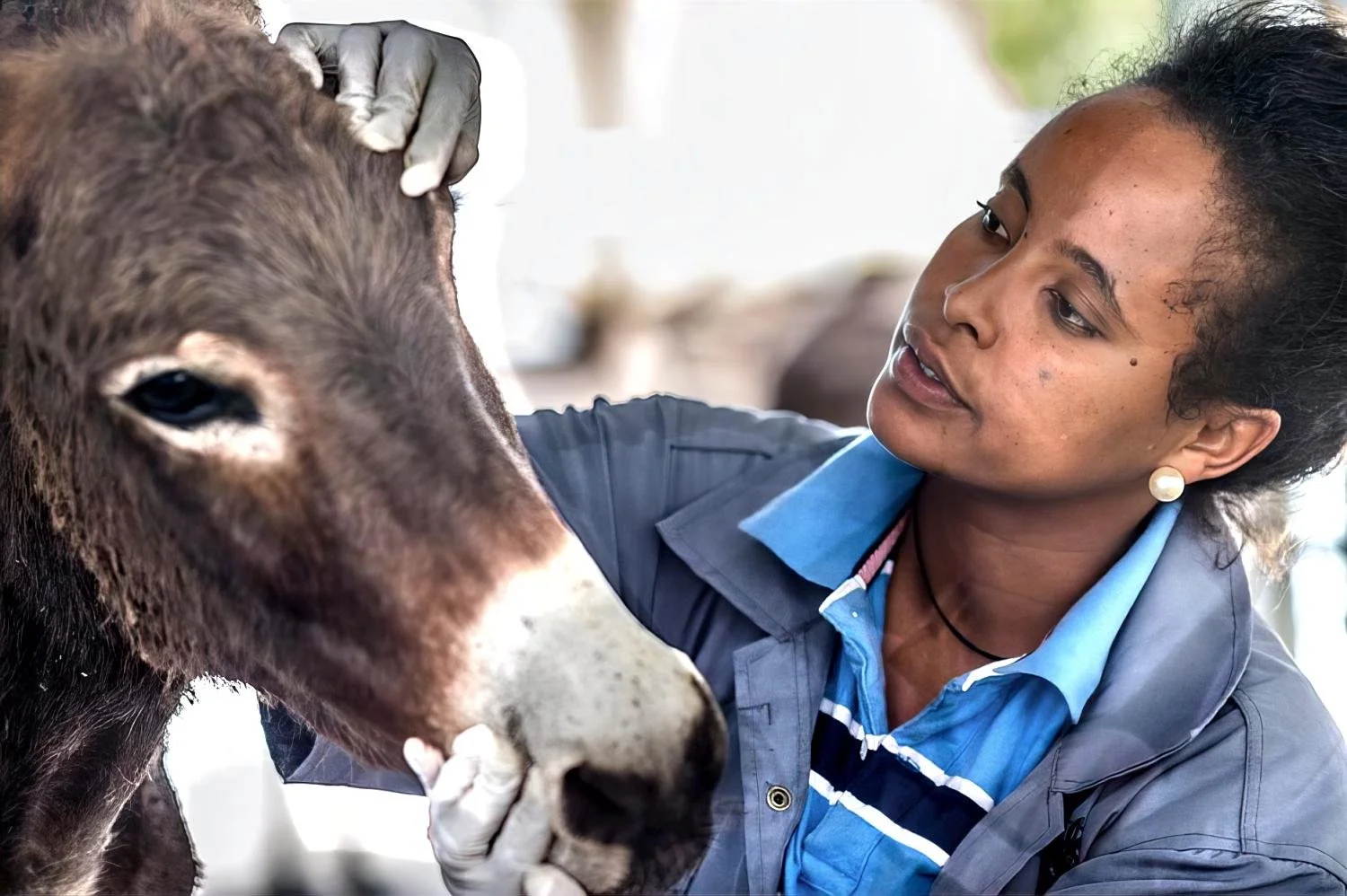
An act of mercy, a veterinarian sees to the needs of a donkey at a free clinic in Ethiopia. (We Animals Media)
Service
Mark 9:35
Whoever wants to be first must be last of all and servant of all.
Jesus washed the feet of his disciples, healed lepers, and walked with the poor and bedraggled. Jesus served the needs of those who were overlooked and sidelined, those often viewed as lesser, as outside the moral circle and unworthy of any concern (Mark 7:24).
Jesus always pushed the moral boundaries outward. He cared for and ministered to gentiles, sinners, tax collectors, servants, women, even healing the child of someone viewed as a complete outsider to his community and therefore completely outside the moral circle—a Syrophoenician woman. Jesus did not say, “Come to me only if others find you worthy.” Jesus offered loving comfort to everyone, and especially to those most marginalized (Matthew 11:28).
Christians are invited to follow the example set by Jesus, to serve all those who are weary and downtrodden. The faithful are to aid and comfort even those that our culture tends to view as unworthy.
James 2:14
What good is it, my brothers and sisters, if someone claims to have faith but does not have works? Surely that faith cannot save, can it?
Psalm 116:16
O LORD, I am your servant…
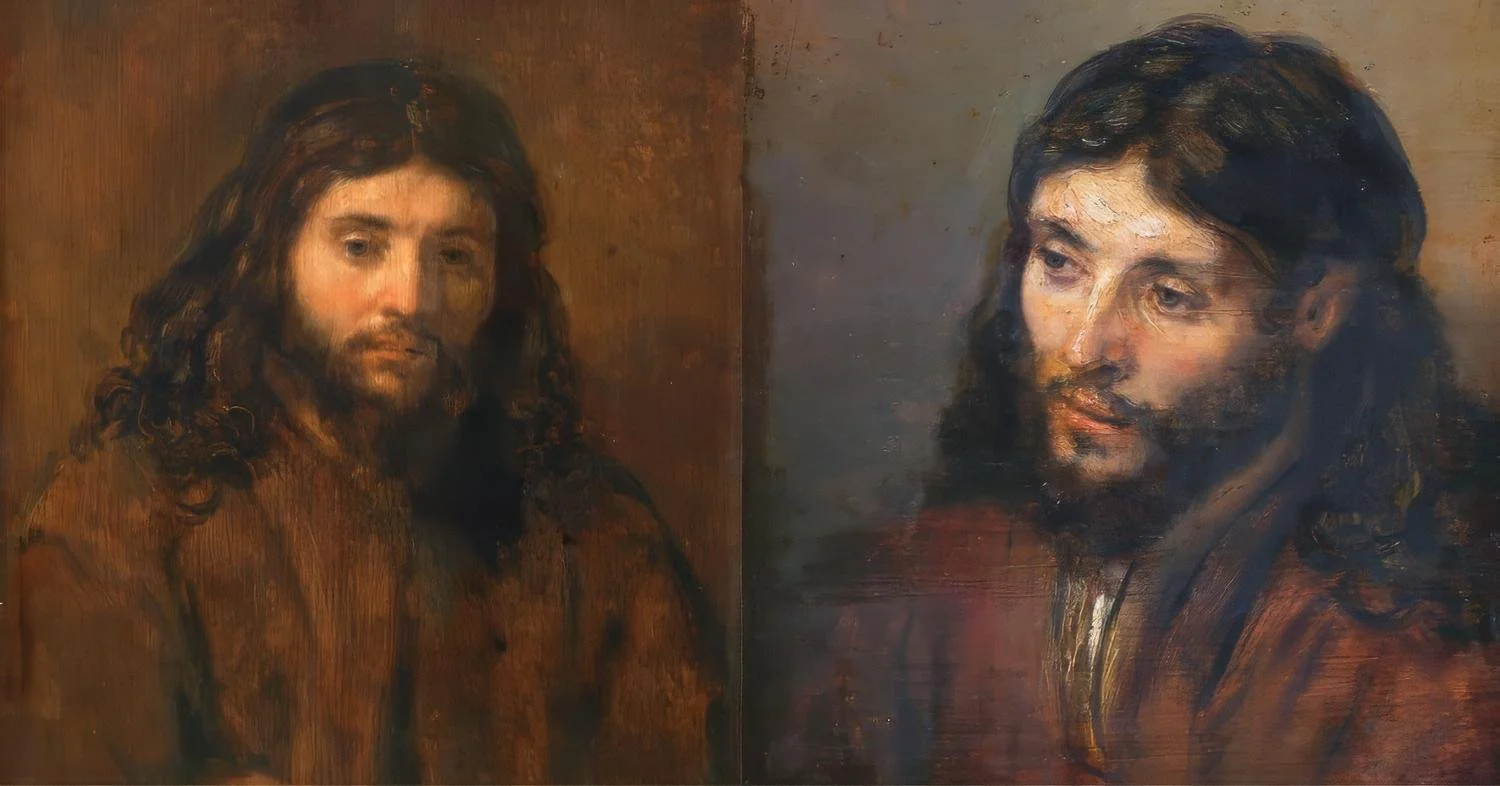
Unless stirred to righteous indignation, Jesus is portrayed as gentle and kind, a servant to those whom others thought unworthy of kindness and care. (“Portraits of Christ,” Rembrandt van Rijn, Holland, 1648, Wikimedia)
Those who are among the fortunate may never encounter people living with leprosy or suffering extreme poverty. But what about animals? Are they not also among “the least of these” (Matthew 25:40)—weary, overburdened, and profoundly marginalized? Are they not also God’s creatures?
Many of us have been conditioned not to see animals—just as people in Jesus’ time were conditioned not to see the sufferings of the poor and sick whom they viewed as too lowly for their moral concern. The Gospels invite us to open our hearts, invite Jesus in and expand our love outward. Christians are encouraged to draw a wider, and yet wider circle of moral concern until no one is left out in the cold.
Every creature of God stands firmly inside the Christian moral circle.
Job 12:10
In his hand is the life of every living thing and the breath of every human being.
Serving God is a bridge concept across chapters. This chapter (Teachings) explores the topic in Duties Assigned by God. Service again arises in Narratives, under Saints & Animals, and in Tension, under Christian Care for Creation. Living covers service, particularly in Genesis 9:3 and Jesus, Sparrows, & Christian Care, and finally, the chapter titled Advocacy explores serving God in this life by working to protect animals.

Serving someone very much in need, a caretaker shares affection with a dog at a medical facility for street dogs in Thailand. (We Animals Media)
Peace
Matthew 5:9
Blessed are the peacemakers….
Colossians 3:15
And let the peace of Christ rule in your hearts…
Christian peace extends to all of creation. Christians are invited to work with Christ to help restore the deep and pervasive peace of God here on Earth.
We are to model our days on the life of Jesus. It is difficult to imagine our Savior failing to care for any sentient and suffering individual, no matter what species, no matter what the tendencies of the dominant culture might be.
The Bible teaches that humankind is to live peacefully with animals (Genesis 1, Isaiah 11:6-9). Not only peacefulness, but also Christian reverence for life and respect for God, teach that profit can never be a legitimate measure for the value of any of God’s creatures, that people must never measure the value of a life by the pound, that life was not gifted to animals so that they could serve as a source of materials for human use (Genesis 1).
Christians are called to love, to have mercy, to replace violence with peace. When Christians speak up or step forward to help God’s creatures, or change our own lives to protect animals, we help to restore peace on Earth. When the faithful are kind to animals, we help to restore peace “on earth as it is in heaven” (Matthew 6:10).
Matthew 6:10
May your kingdom come.
May your will be done,
on earth as it is in heaven.
Romans 14:19
Let us then pursue what makes for peace….
The peace presented to Christians in Genesis 1 is reflected in the lives of Christian saints, who sometimes share their spiritual lives and hermitages with animals, extending Christian love and mercy to foxes, hares, deer, donkeys, and lions. In our second chapter, Narratives, Saints & Animals explores how Catholic saints lived on earth with animals as if the Peaceable Kingdom were already here.
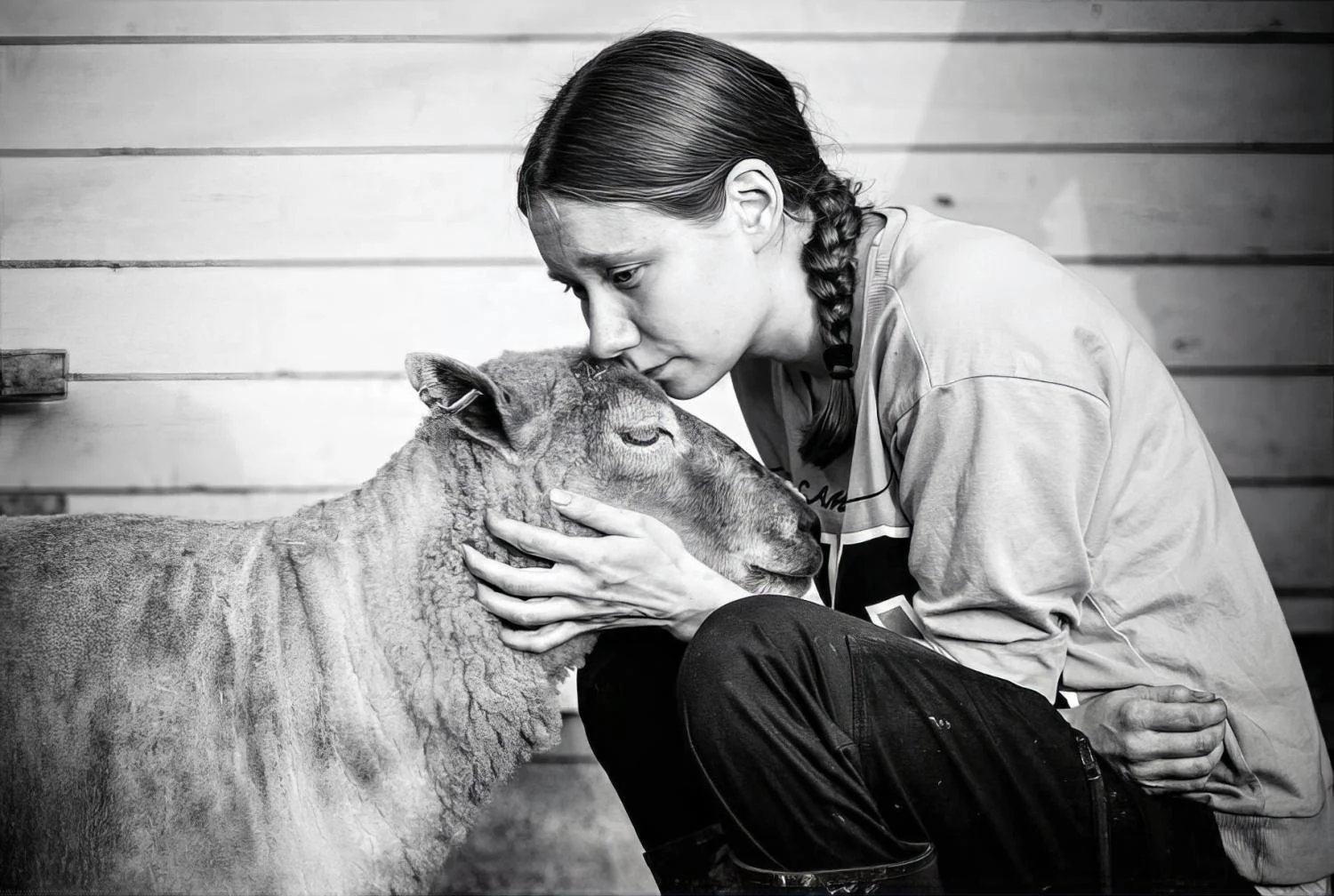
Sanctuaries are places of peace, places where peace is felt across species. Many sanctuaries post heartwarming stories online about animals in their care. (We Animals Media)
Generosity and Sharing
Luke 6:38
…give, and it will be given to you… for the measure you give will be the measure you get back.
1 Timothy 6:18
As for those who in the present age are rich… They are to do good, to be rich in good works, generous, and ready to share.
The New Testament tells us that, in giving to “the least of these,” humankind gives to Jesus (Matthew 25:40), that we are all “one in Christ Jesus” (Galatians 3:28).
In a world of seemingly endless need, sharing is critically important. Generosity expresses Christian love, humility, mercy, service, and peacemaking. How better to serve God than by sharing generously?
Every moment, each day, people die of hunger, from hunger-related health problems, and from a lack of clean drinking water. Comparatively wealthy communities can choose to eat foods that express caring and sharing. When people in wealthier nations choose plant foods, they help ensure that others also have something to eat.
Luke 3:11
Whoever has two coats must share with anyone who has none, and whoever has food must do likewise.
To learn more about food choices and world hunger, see Vegan Ethics: AMORE.
When Christians eat and share plant foods (grains, legumes, nuts, fruits, and vegetables), there is more grain and water to go around, more food to satisfy the needs of hungry human beings. In sharing plant foods, Christians honor our faith in two ways: We help to feed those who are hungry today and we prepare to feed more people tomorrow—by choosing not to support food industries that breed and feed animals the vital grains and water that are so desperately needed by humankind.
2 Corinthians 9:7
…God loves a cheerful giver.
The fourth chapter, Living, explores sharing and generosity, core Christian virtues, more thoroughly, particularly under the topic, Peter’s Vision. Sharing and generosity also emerge in the final chapter, Advocacy. Another good source of information on ethics and food choice is the book, Vegan Ethics: AMORE.
This chapter shows the beauty of New Testament ethics, but as later chapters show, biblical ethics are not always realized in Christian practice. To learn more about the gap between teachings and practice, please visit Tension and Living.
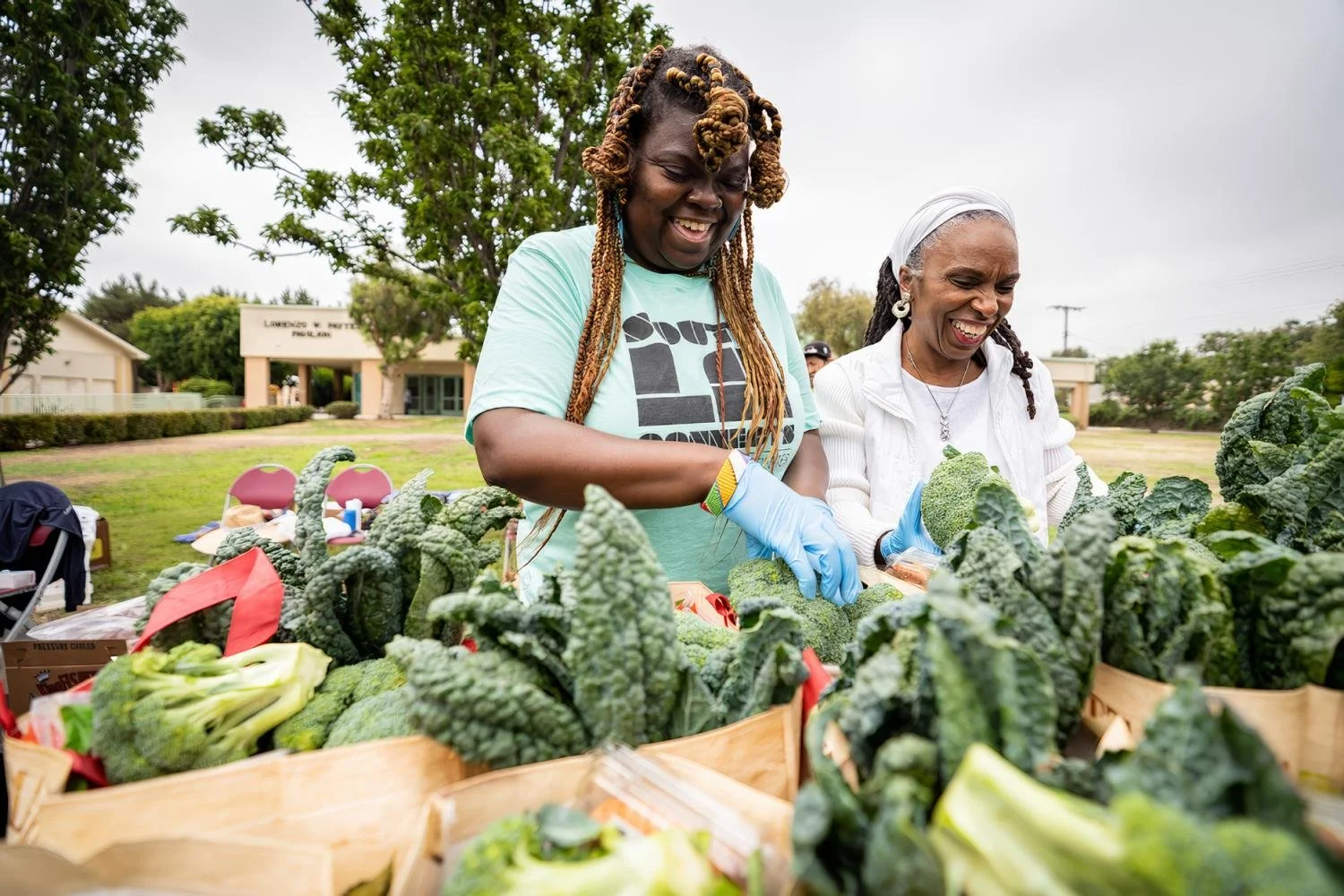
Sharing foods that come from plants helps others to see how delicious it is to eat greens while also assuring that food shared reaches as many people as possible. (United States, We Animals Media)