God & Animals
Psalm 104:24
O LORD, how manifold are your works! In wisdom you have made them all; the earth is full of your creatures.
To serve God, in the image of God, doing as God would do (Genesis 2:15) requires that Christians know something of the Creator. What does the Bible say about the nature of God and about the Creator’s relationship with animals?
Everlasting Commitment & Tender Care
Genesis 1:31
God saw everything that he had made, and indeed, it was very good.
The value of creation lies in and with God. Creation is of, by, and with God; therefore, creation is inherently good and holy. Every creature that God has made is part of this totality, which the Bible tells us God saw as “very good.”
Scripture tells us that God is neither distant nor purposefully separate from creation: An angel of the Lord appears in a flaming bush (Exodus 3:2), God speaks through a laboring donkey (Numbers 22), and “the Lord answered Job out of the whirlwind” (Job 38:1–2 and 40:6). The Bible reminds us that our Creator/Sustainer is present on Earth: “I the Lord dwell among the Israelites” (Numbers 35:34).
Psalm 104:3
…you set the beams of your chambers on the waters; you make the clouds your chariot; you ride on the wings of the wind….
Creation is Good, Holy, & God’s
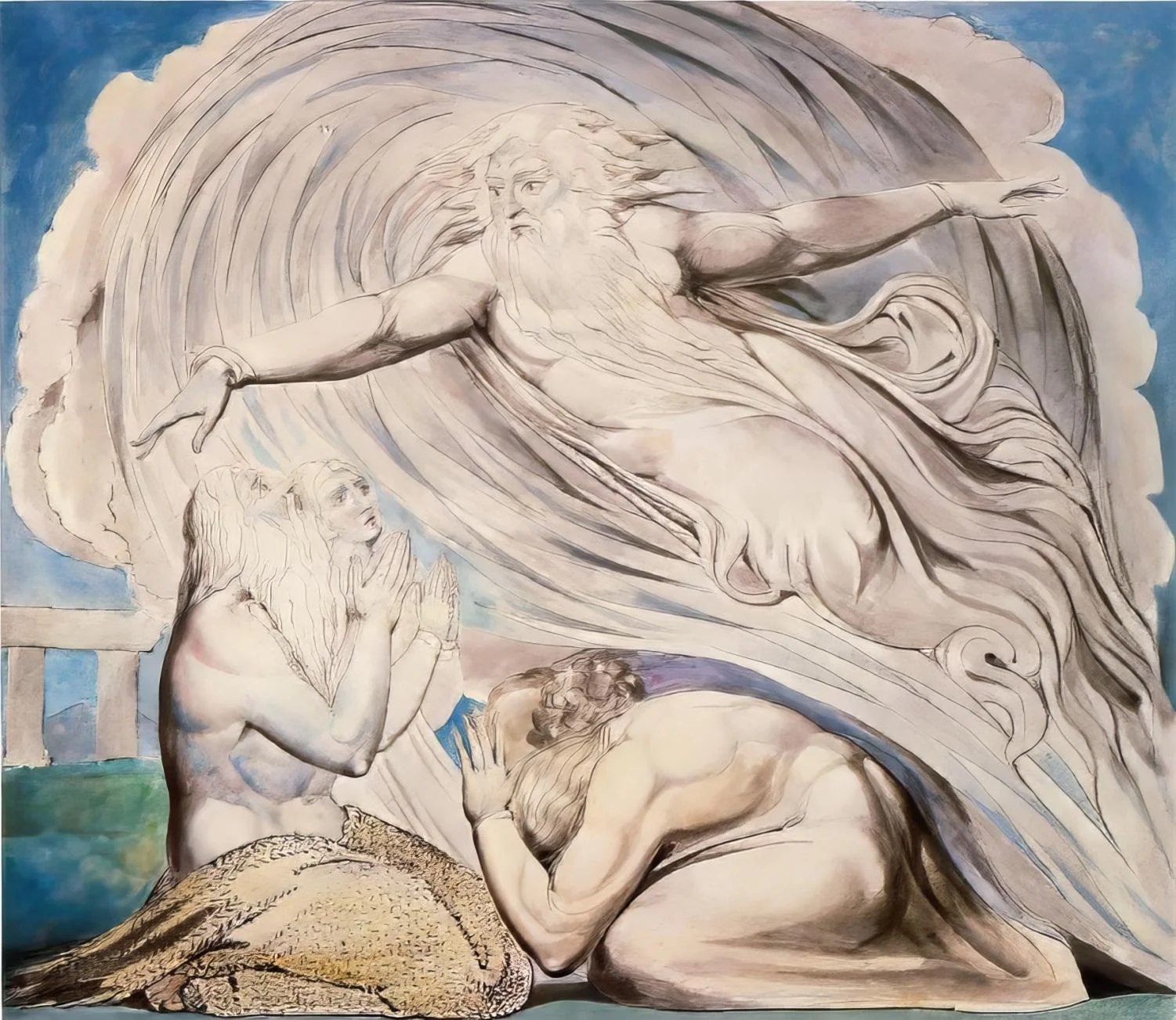
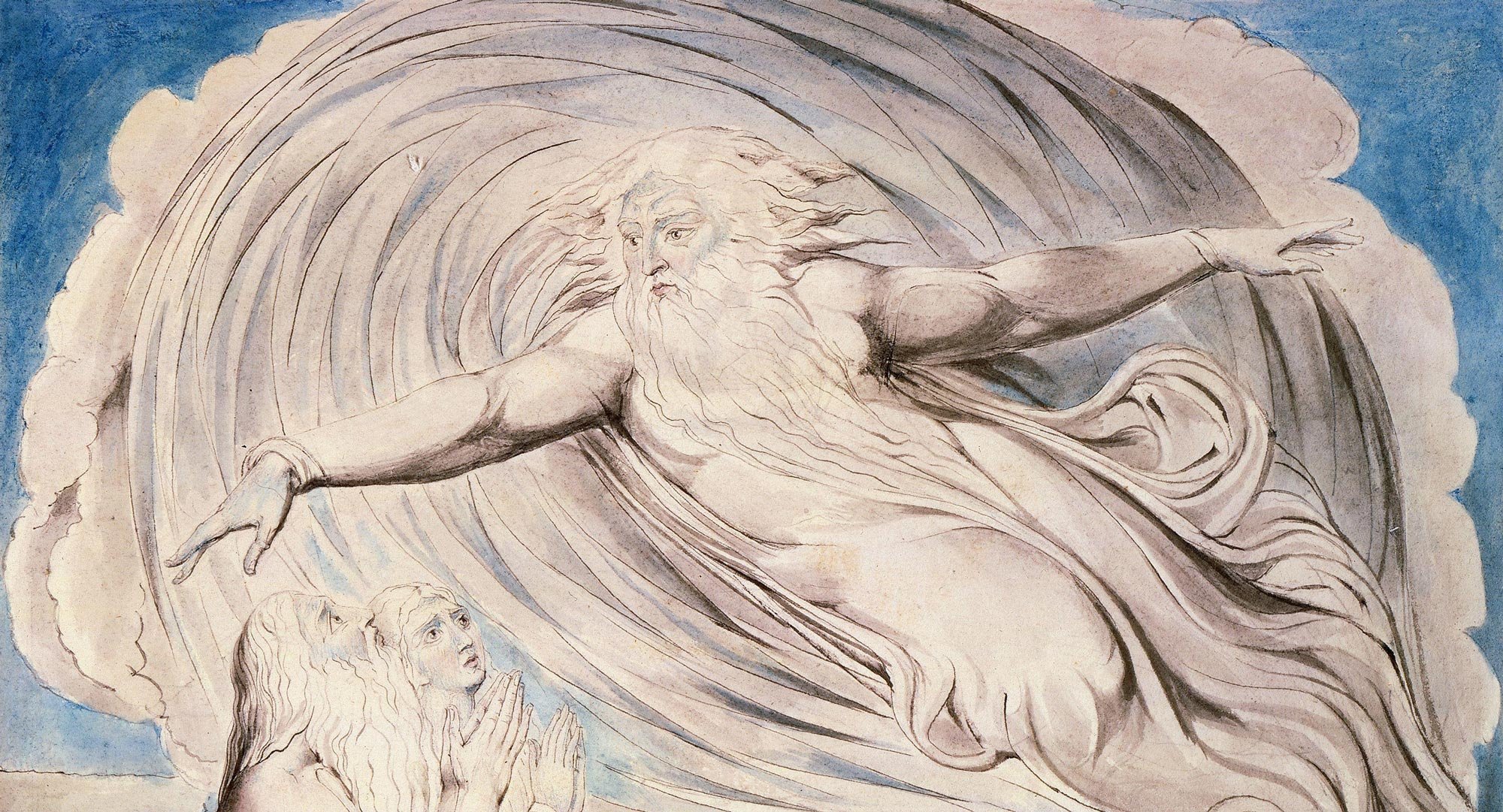
In the Book of Job, God speaks from a whirlwind. (“The Lord Answering Job Out of the Whirlwind,” William Blake, England, 1805, Wikimedia Commons)
The Bible tells the faithful to show respect for the natural world. God orders humankind not to pollute or defile the land. Importantly, the Bible explicitly notes that bloodshed both pollutes and defiles the land.
Numbers 35:33–34
You shall not pollute the land in which you live, for blood pollutes the land, and no expiation can be made for the land for the blood that is shed in it, except by the blood of the one who shed it. You shall not defile the land in which you live, in which I also dwell, for I the LORD dwell among the Israelites.
Leviticus uses the image of the land ‘vomiting out’ defiling human beings, warning that human disobedience carries consequences. This powerful image reminds Christians that our disobedience can damage God’s Earth, a place where the land was entrusted to our care, and failure may lead to expulsion.
God created Adam and placed him in the Garden of Eden to guard and protect the land. This is our God-given duty—to serve the Creator by guarding and protecting all that has been made.
Leviticus 18:25-28
Thus the land became defiled… and the land vomited out its inhabitants. But you shall keep my statutes and my ordinances and commit none of these abominations, either the native-born or the alien who resides among you (for the inhabitants of the land, who were before you, committed all of these abominations, and the land became defiled)…
Leviticus 25:23
…the land is mine; with me you are but aliens and tenants.
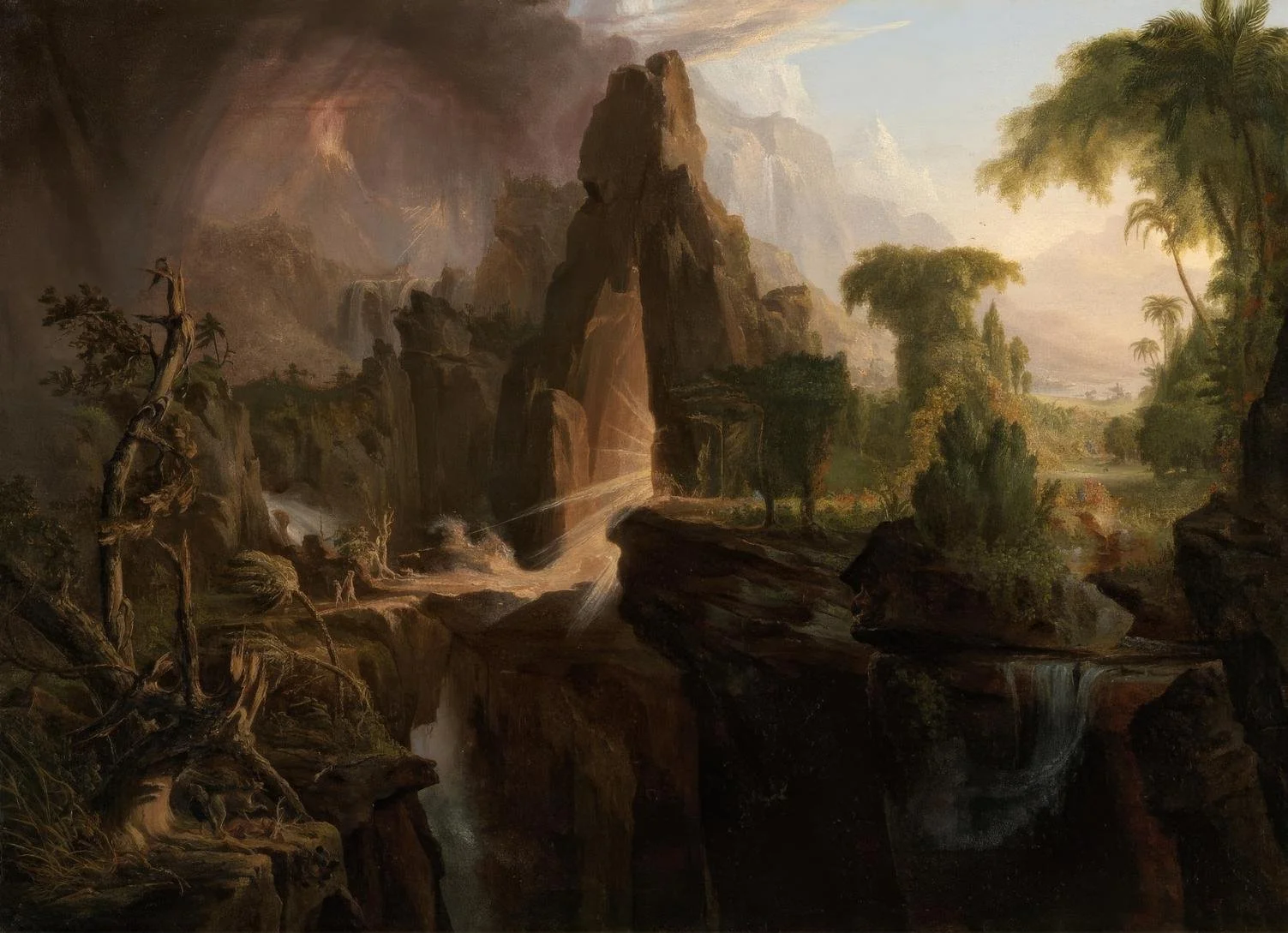
God sent Adam and Eve out of the Garden of Eden. Bloodshed defiles the land and the Bible tells us that the land may expel those who defile the land. (“Expulsion from the Garden of Eden,” Cole Thomas, United States, 1828, Wikimedia Commons)
Sole Proprietor
Psalm 24:1
The earth is the LORD’s and all that is in it, the world, and those who live in it….
Romans 11:36
For from him and through him and to him are all things.
Animals are not ours, but God’s. Human beings are but creatures of God, servants of God, instructed to guard and lovingly tend what God has made (as the Creator would do).
All of creation belongs completely and exclusively to God. God created a world where living beings do not eat one another and ordained a diet without bloodshed. In this perfect creation, humankind and all living creatures are explicitly told that human beings are to eat only plants.
The faithful are invited to walk with Jesus, to serve God by extending our kindness outward. Christians are called to expand our hearts to care for all of God’s creatures.
Psalm 50:10–11
For every wild animal in the forest is mine, the cattle on a thousand hills.
I know all the birds of the air, and all that moves in the field is mine.Psalm 96:1
…sing to the LORD, all the earth.
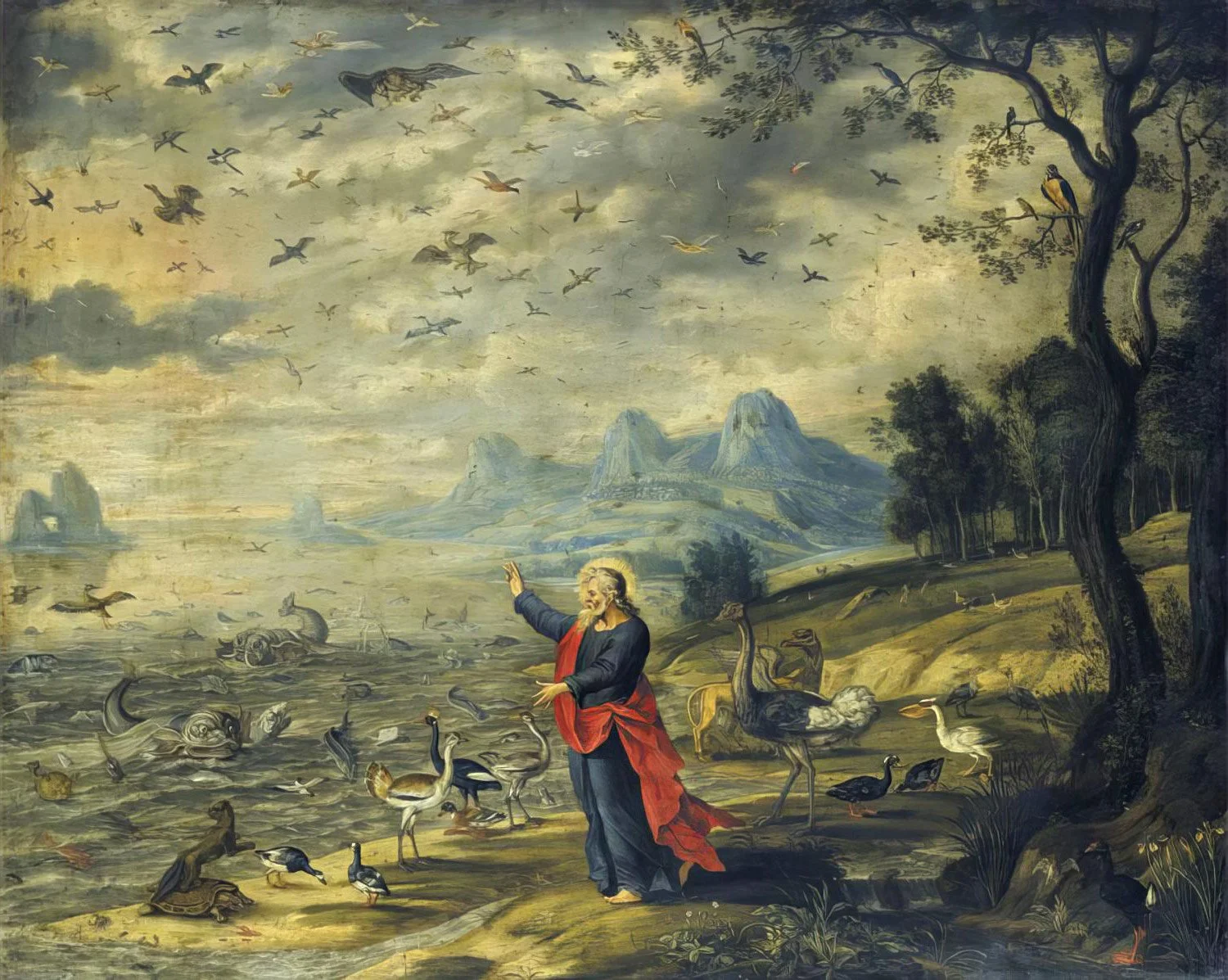
The Creator is sole proprietor of all that exists. (“Creation of Birds and Fish,” Izaak van Oosten, Flanders/Belgium, 17th Century, Wikimedia Commons)
Psalm 145:8 and 15–16
The LORD is gracious and merciful, slow to anger and abounding in steadfast love.
It is important to distinguish changes that occur in creation across the biblical narrative (Genesis 3-6). God remains benevolent, merciful, and attentive throughout Scripture while responding to the advent and growth of human disobedience on a planet that is increasingly “filled with violence” (Genesis 6).
Genesis records God’s initial plan for creation, a plan of peace and kinship between all living beings, a plan for a world where humankind and animals were to share company and humankind was to guard and protect the land that God created.
The Bible conveys our Creator as One who cares for and about every living being. Scriptures (especially Psalms) describe God as benevolent and munificent, as a gentle caretaker, merciful, seeing to the needs of all life. The Bible also tells Christians that animals have a relationship with a protective, nurturing God on whom they depend for sustenance and to whom they call in times of need.
Psalm 145:15–16
The eyes of all look to you, and you give them their food in due season.
You open your hand, satisfying the desire of every living thing.
Compassionate & Attentive
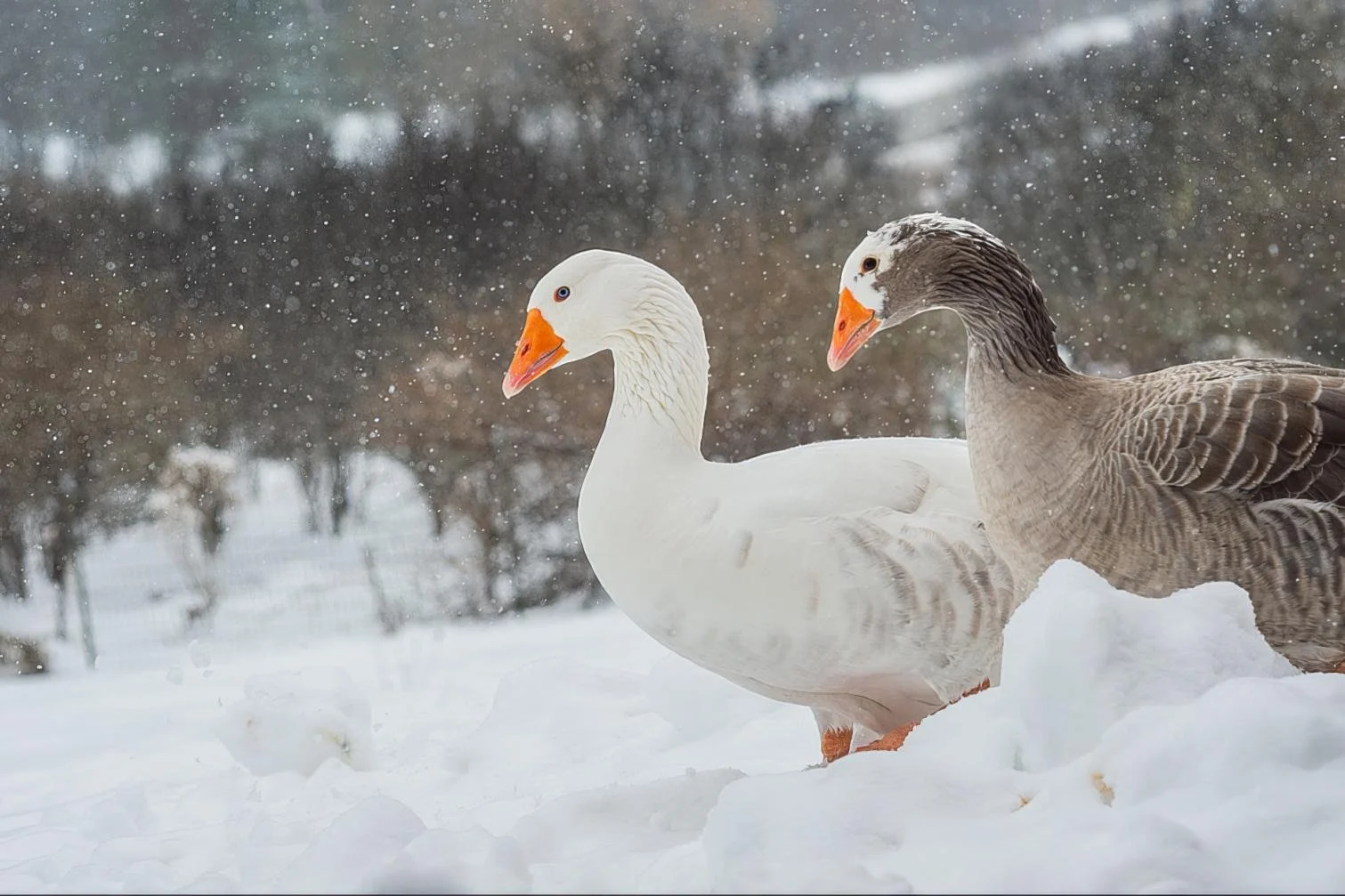
All of creation is from and of God. All that God has made carries something of the purpose and majesty of God. (We Animals Media)
To serve God in the image of God, Christians are invited to guard and protect God’s good and holy creation as the Creator would do (Genesis 1:26). As God’s servants, Christians are to do as our loving Creator would do. Christians are called to hear the cries and tend to the needs of animals in whatever ways are open to us, with whatever gifts and capacities God has placed in our hands.
Faithful practice asks that Christians also explore our lives for any points at which our actions bring harm to God’s creatures, including animals we will never see, though they may be affected by our consumer choices. Walking with Jesus, Christian hearts grow and our lives can change so that we are able to live in love, mercy, peace, and compassion toward all living beings.
Psalm 104:25-29
There is the sea, great and wide;
creeping things innumerable are there,
living things both small and great.
…and Leviathan that you formed to sport in it.These all look to you
to give them their food in due season;
when you give to them, they gather it up;
when you open your hand, they are filled with good things.When you hide your face, they are dismayed;
when you take away their breath, they die
and return to their dust.When you send forth your spirit, they are created,
and you renew the face of the ground.
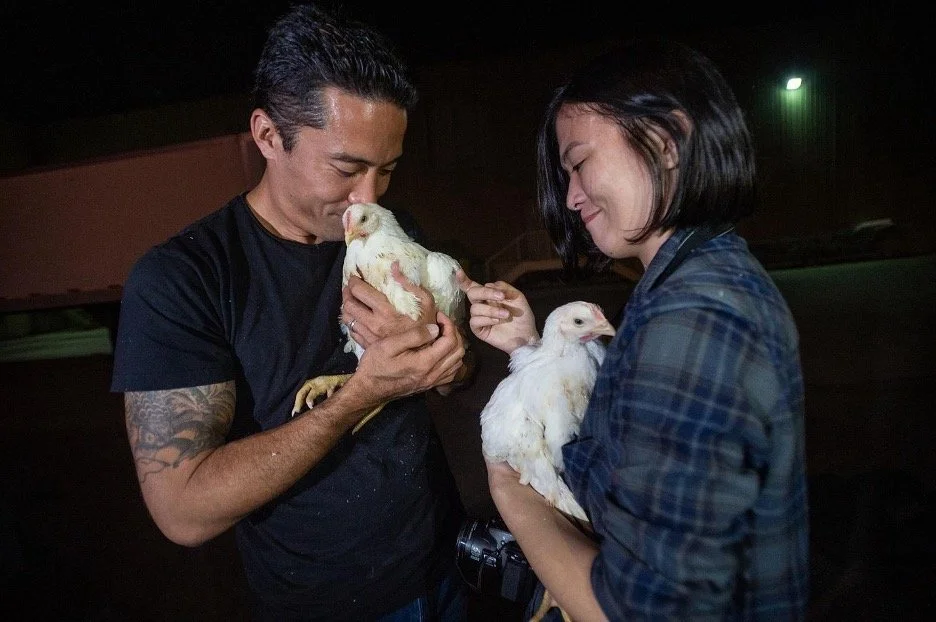
Serving God amid creation, these two adolescent hens have just been rescued from a truck outside a slaughterhouse in Canada. (We Animals Media)
Genesis 9:8-15
Then God said to Noah and to his sons with him, “As for me, I am establishing my covenant with you and your descendants after you and with every living creature that is with you, the birds, the domestic animals, and every animal of the earth with you, as many as came out of the ark. I establish my covenant with you, that never again shall all flesh be cut off by the waters of a flood, and never again shall there be a flood to destroy the earth.” God said, “This is the sign of the covenant that I make between me and you and every living creature that is with you, for all future generations: I have set my bow in the clouds, and it shall be a sign of the covenant between me and the earth. When I bring clouds over the earth and the bow is seen in the clouds, I will remember my covenant that is between me and you and every living creature of all flesh….
God establishes the Rainbow Covenant not only with humankind, but with “every living creature” and with “the Earth” itself (Genesis 9:8–17). These words are repeated numerous times, showing the importance of this point.
The Rainbow Covenant tells us that God is invested in all that has been made, reinforcing the goodness and relevance of all of creation, and the Creator’s ongoing commitment as Sustainer.
The first two chapters of Genesis tell us that humankind is to serve God “in the image of God”—acting as God would do—and that the faithful are to “guard” and “protect” the land and garden that God created (on behalf of the Creator). The Rainbow Covenant reaffirms God’s interest in all that has been made, conveying to Christians that our duty to serve God extends to all animals that God created and the planet on which all of us live.
Colossians 3:23-24
…you serve the Lord Christ.
If the faithful are attentive, we can hear and see God’s creatures crying for mercy. Animals are not ours. Animals are God’s beautiful, sentient creatures. As God’s servants, guarding and protecting creation as our Creator would do, our duty is to care about and for all living beings.
Proverbs 6:16-17
There are six things that the LORD hates, seven that are an abomination to him: haughty eyes, a lying tongue, and hands that shed innocent blood…
Genesis 49:6
May I never come into their council; may I not be joined to their company, for in their anger they killed men, and at their whim they hamstrung oxen.
Informed faith and fidelity invite Christians to explore our own lives, to see where our choices harm God’s creatures—and to make changes as needed. The Bible tells us that animals are fellow land creatures, that human beings are to share company with animals so that we are not alone—that humankind and animals are kin and companions on this journey through life.
The Rainbow Covenant is forever sealed between God and “every living creature” and “the Earth” itself (Genesis 9:8–17). Animals matter to God and Christians are to serve God’s interests while here on earth.
Deuteronomy 10:14
…heaven and the heaven of heavens belong to the LORD your God, the earth with all that is in it….
Our next chapter, Narratives, under the topic “The Donkey and Balaam,” offers more on the nature of God’s relationship with animals. Our second chapter also revisits biblical accounts of animals, and the lives of saints who lived with animals, demonstrating what sacred writings teach about living faithfully with God’s creatures. Chapters 3 and 4 explore gaps between the teachings of the Bible about animals in this first chapter, and what Christians actually do in daily life. Tension explores the gap between Christian humility and human exceptionalism, between the core biblical invitation to engage in good works and the tendency toward apocalypticChristianity, alongside direct consequences of this gap for animals, such as the church’s support of bullfighting. Living examines the gap between core Christian teachings and what humankind chooses to eat.
Covenant with Earth & Animals

Scriptures teach that our loving and attentive God remains invested in the wellbeing of everything that has been made. (“God Creating the Animals of the World,” Izaak van Oosten, Flanders/Belgium, 17th century, Wikimedia Commons)