Animals & the Life of Jesus
What the Gospels Teach Christians about Care for Animals
John 1:14
And the Word became flesh and lived among us, and we have seen his glory. . . full of grace and truth.
1 John 2:6
…whoever says, “I abide in him,” ought to walk in the same way as he walked.
Jesus, humble servant of God, felt the pain of all who suffered. God made flesh, Jesus came to Earth to bring salvation for all. The perfect moral exemplar, Jesus defied cultural norms and social boundaries; he was moved to righteous indignation when faced with corruption. For Christians, Jesus provides the perfect model of how humankind is to live.
Colossians 1:16–17
…for in him all things in heaven and on earth were created… all things have been created through him and for him. He himself is before all things, and in him all things hold together.
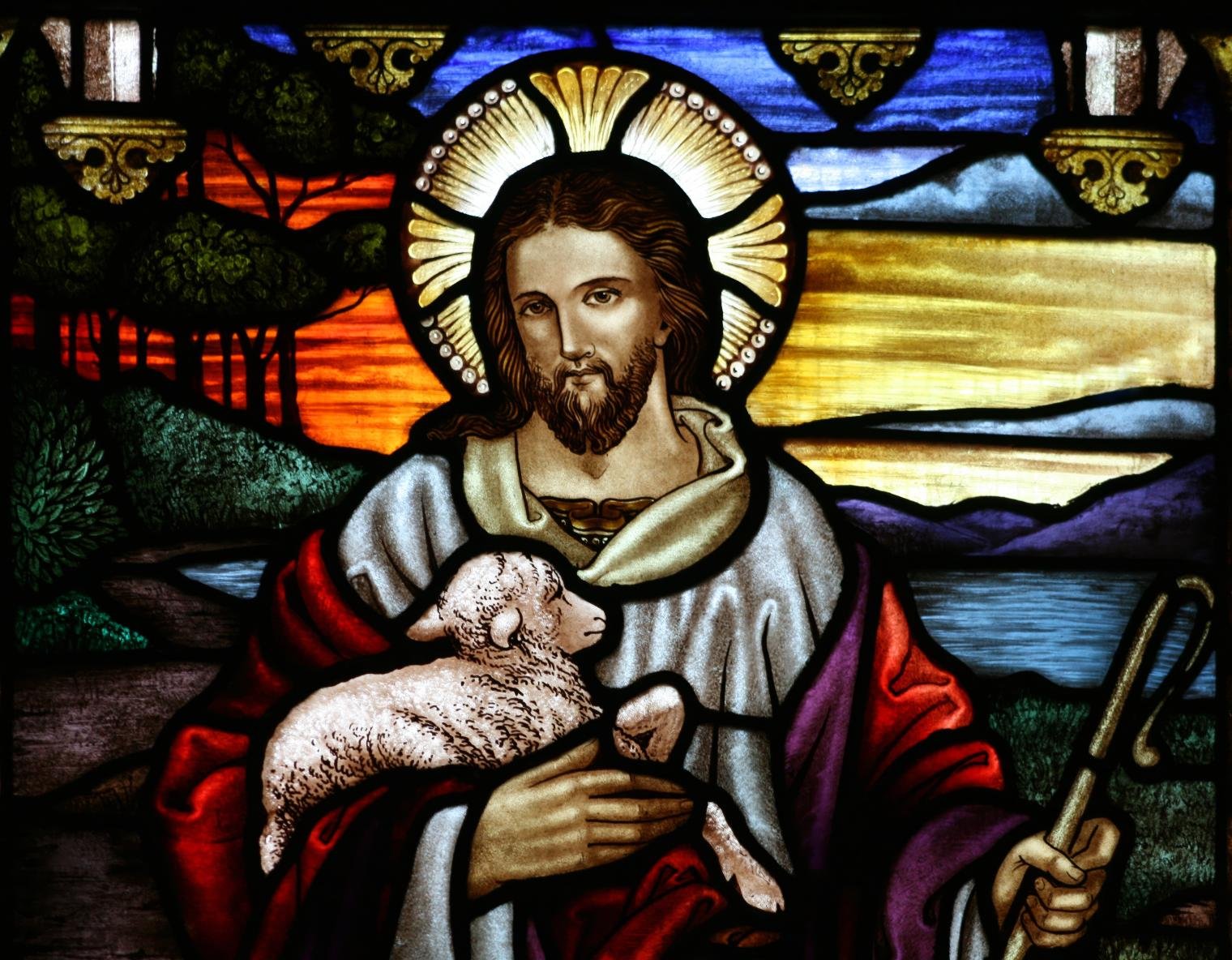
Jesus tended to the needs of those that his community thought unworthy of his attention. (Stained glass of Jesus, Australia, Wikimedia Commons)
Salvation for All
Colossians 1:19–20
For in him all the fullness of God was pleased to dwell, and through him God was pleased to reconcile to himself all things, whether on earth or in heaven, by making peace through the blood of his cross.
Psalm 36:6
Your righteousness is like the mighty mountains; your judgments are like the great deep; you save humans and animals alike, O LORD.
The New Testament teaches Christians that all of creation has eternal significance.
We know that Jesus died for us, but readers may sometimes overlook passages in Scripture that convey this important truth: The saving work of Jesus embraces all of creation, including animals; our Savior died to redeem all that God has made.
The Bible tells us that all of creation will be reconciled, which of course includes animals.
Romans 8:20-21
For the creation waits with eager longing for the revealing of the children of God, for the creation was subjected to futility, not of its own will, but by the will of the one who subjected it, in hope that the creation itself will be set free from its enslavement to decay and will obtain the freedom of the glory of the children of God.
If Christians have been raised with the conventional idea that only human beings will be saved, there seems a stronger question to consider: If there were but one life granted to all of God’s living beings except human beings, with no repose after the sufferings of this life, would it not be yet more important for us to do what is possible to make their lives as easy and pleasant and good as possible?
Ephesians 1:8-10
With all wisdom and insight he has made known to us the mystery of his will… a plan for the fullness of time, to gather up all things in him, things in heaven and things on earth.
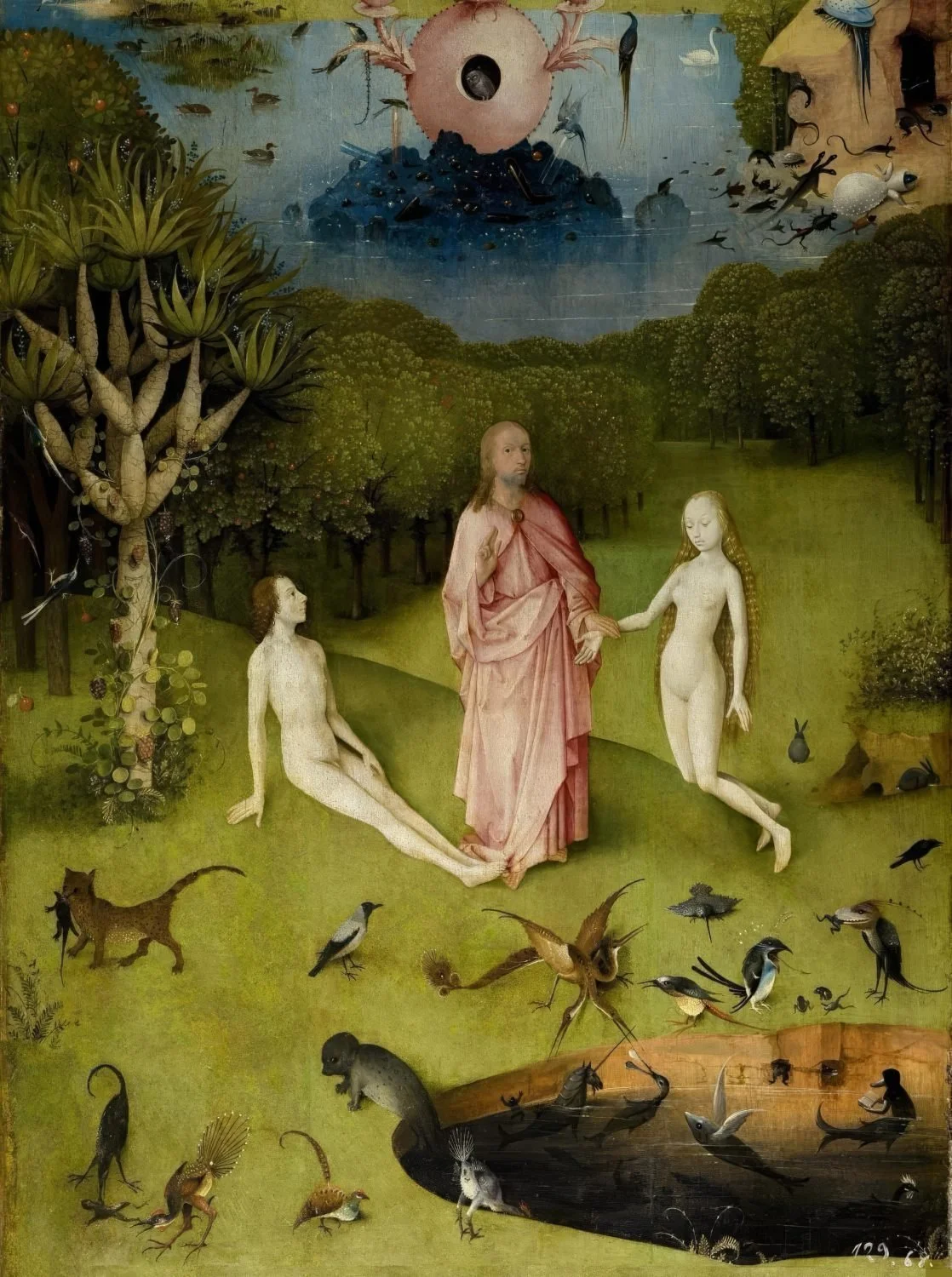
All creatures live in this fallen world filled with suffering and bloodshed. Jesus died for the salvation of all of creation. (“Garden of Earthly Delights,” Hieronymus Bosch, Netherlands, c. 1500, Wikimedia Commons)
God Made Flesh
Luke 2:7
And she gave birth to her firstborn son and wrapped him in bands of cloth and laid him in a manger, because there was no place in the guest room.
Jesus was born among us as a living being, embodied, in the flesh. He suffered, died, and rose from the dead. Though born as a man in Judea, his life, death, and resurrection reach beyond the boundaries of sex, race, place, and time.
In the Christian worldview, the importance of “God made man” generally cannot be underestimated. By becoming flesh, Jesus entered fully into embodied life. Though born as a man in Judea, the birth, suffering, death, and resurrection of Jesus are widely understood to be salvific for all of humankind across race, sex, place, and time. The historical details of Jesus’ incarnation are not generally understood to limit the reach of his salvific work.
The New Testament presents his saving work within a vision that reaches all creation: creation itself will be set free from “enslavement to decay” (Romans 8:21), and through Christ God reconciles “all things” (Colossians 1:20). Theologian Meister Eckhart writes, “God is equally near in all creatures.”
Indeed, teachings of the New Testament invite Christians to understand Christ’s saving work as extending beyond humankind and encompassing the whole created order. Inasmuch as specifics of the incarnation of Jesus are not believed to define or limit the scope of the power of salvation among humankind, and in light of Romans 8:21 and Colossians 1:20, it is not only reasonable but also rational to recognize that our Savior’s liberating and reconciling work extends to the entirety of creation.
John 1:14
And the Word became flesh and lived among us, and we have seen his glory, the glory as of a father’s only son, full of grace and truth.

Jesus, a man of Judea, lived and died for all of creation. (Jesus bearing the Cross, Santi Giovanni e Paolo, Alvise Vivarini, Italy, c. 1474, Wikimedia Commons)
Servant of the Oppressed
Matthew 20:28
…the Son of Man came not to be served but to serve and to give his life a ransom for many.
Jesus, the perfect Christian moral exemplar, shows humankind how to live. Though powerful beyond human comprehension, the Gospels portray Jesus as a force of humble servitude. This, then, is how Christians are to live.
The Gospels teach us, again and again, that Jesus was attentive to the needs of those most marginalized and oppressed—those others viewed as unworthy of love and care. Jesus gave attentive care to lepers, the poor, women, servants, even people who were from “outside” communities. Jesus tended to the needs of those considered unclean, social outcasts, and beneath human civilization. Jesus rejected cultural barriers that placed those who needed his care outside of his moral circle.
The Gospels show Christians that those who are most in need are those whom Christians rightly serve with attentive care. Humankind is not to judge worthiness or appropriateness, only to serve God by loving and caring for those in need, as Jesus did.
The Gospels call Christians to care for those who are ostracized, disregarded, or enslaved, those cast out by social norms. Today, Christians are called to recognize that the life of Jesus invites Christians to care for animals, who are among those most marginalized and oppressed.
John 13:15
For I have set you an example, that you also should do as I have done to you.
John 8:12
I am the light of the world. Whoever follows me will never walk in darkness but will have the light of life.
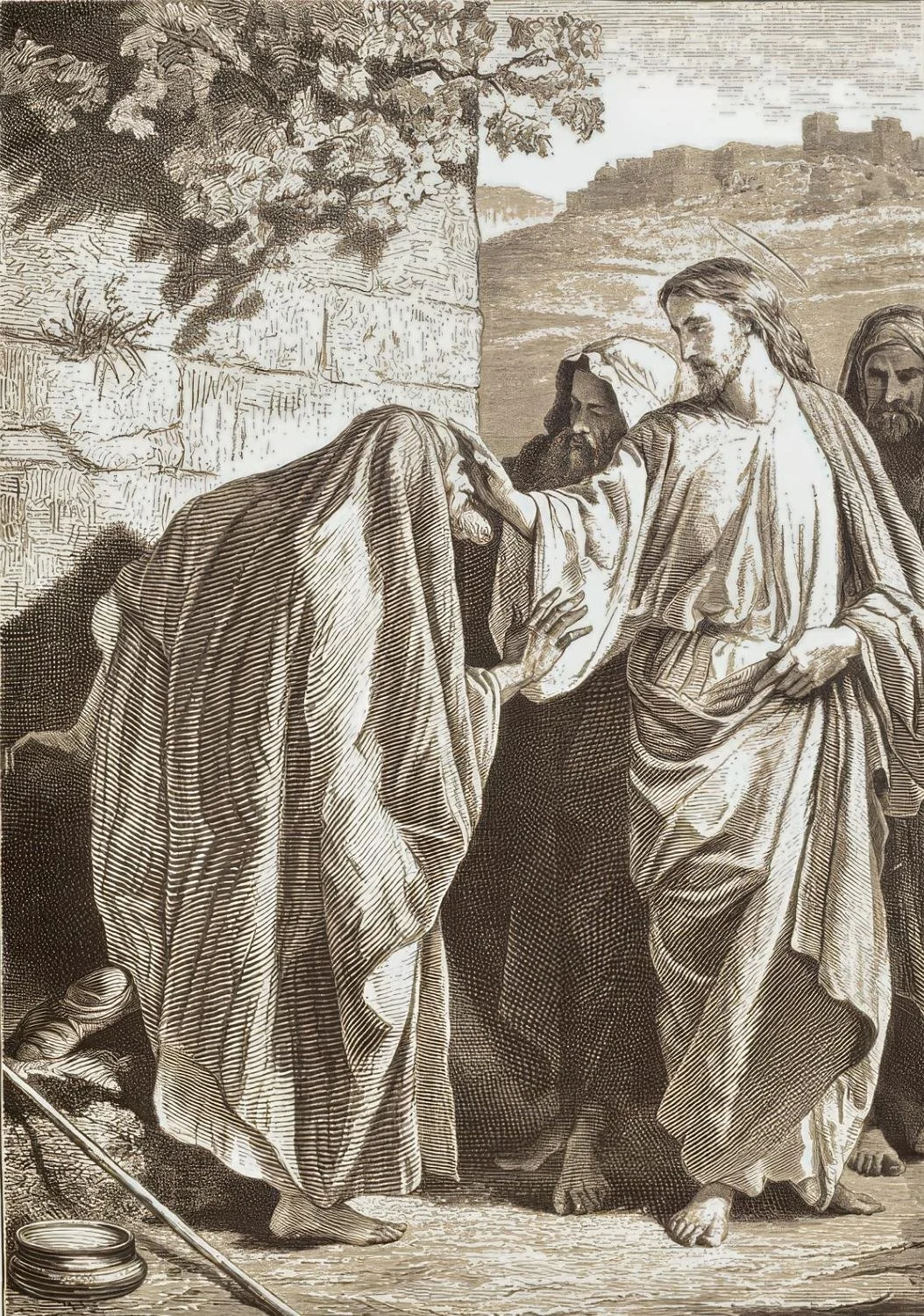
The life of Jesus calls Christians to tend to the needs of those whom others consider unworthy. (“Jesus Heals the Leper,” Alexandre Bida, France, 19th century, Wikimedia Commons)
Expanding the Moral Circle
Mark 7:25-30
…a woman whose little daughter had an unclean spirit immediately heard about him, and she came and bowed down at his feet. Now the woman was a gentile, of Syrophoenician origin. She begged him to cast the demon out of her daughter. He said to her, “Let the children be fed first, for it is not fair to take the children’s food and throw it to the dogs.” But she answered him, “Sir, even the dogs under the table eat the children’s crumbs.” Then he said to her, “For saying that, you may go—the demon has left your daughter.” And when she went home, she found the child lying on the bed and the demon gone.
Christians are invited to follow in the footsteps of Jesus, who healed the daughter of a Syrophoenician.
The Syrophoenician who came to Jesus was from a different community with a different faith. She was also a woman, which would have afforded her a significantly lower status when Jesus walked the Holy Land.
This foreign woman, outside the concerns of Jesus’ community and society, came to Jesus for help: She asked Jesus to heal her daughter.
Jesus initially refused, saying “Let the children be fed first, for it is not fair to take the children’s food and throw it to the dogs” (Mark 7:27).
The Syrophoenician mother, carrying forward Jesus’ food metaphor, noted that even the most lowly find a few scraps under the table where others eat. Moved by her strong but humble faith, Jesus healed her child.
Galatians 3:28
There is no longer Jew or Greek; there is no longer slave or free; there is no longer male and female, for all of you are one in Christ Jesus.
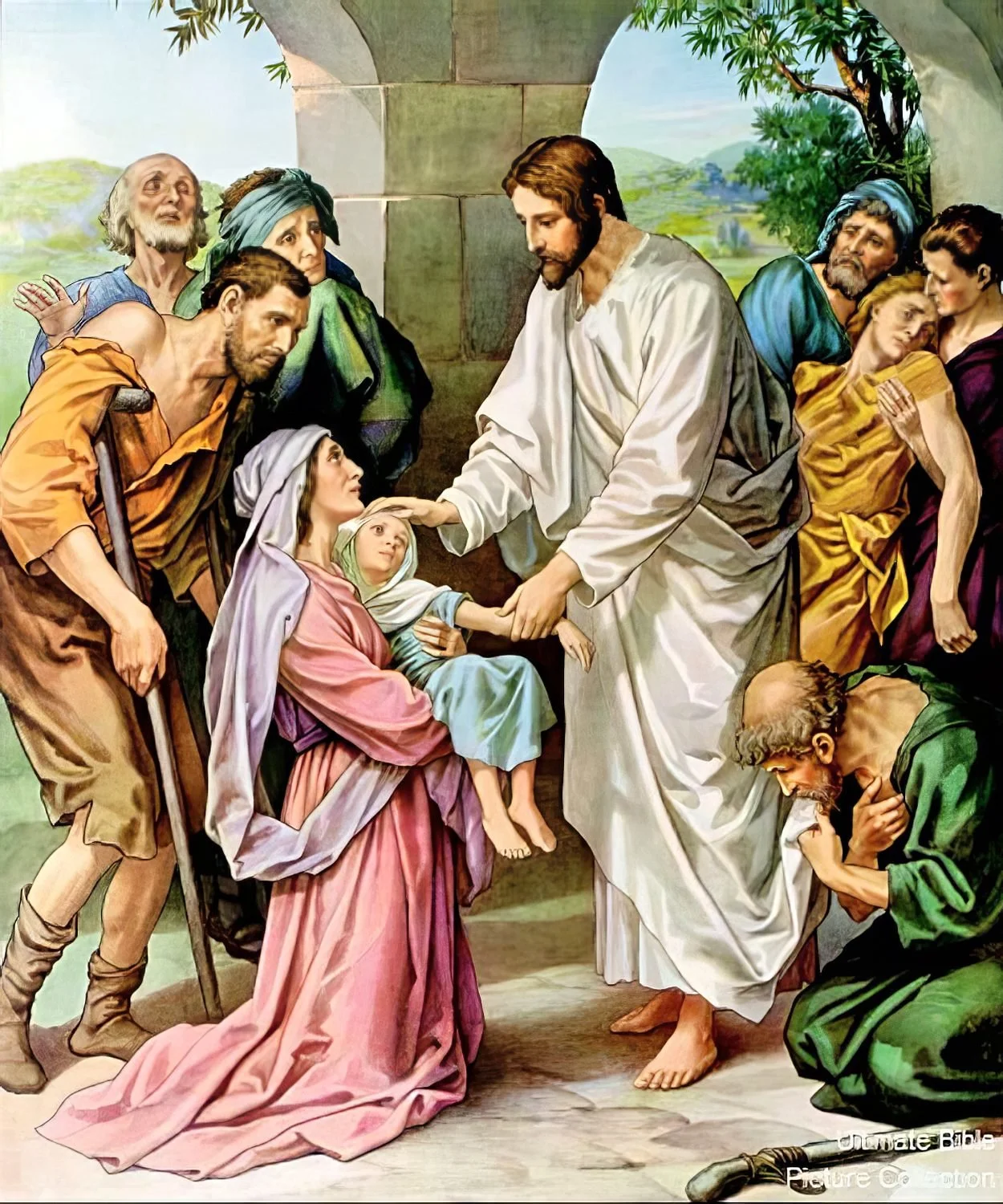
Jesus heals a Syrophoenician woman, someone who was viewed as outside of his moral circle. (womeninthebible.net)
Women from other communities in the Holy Land were often placed outside the community’s moral circle. Responding inside Jesus’ metaphor, the Syrophoenician woman observed that even the dogs find something to eat under the table.
But our Savior rose above the cultural context of his day to heal the Syrophoenician woman, someone that no one else in his community likely would have paid any mind.
Jesus calls into question the narrow and limited moral vision of his community. He shows humankind how to extend our care beyond the limits of our conventional moral circle.
Jesus does for the Syrophoenician woman what most of us today would likely recognize as right and good: He helps someone in need—no matter who they are.
Jesus shows us that our moral compass is not rightly shaped by society or conventions. Jesus shows us how to practice expansive love, love that extends beyond the cultural norms of time and place to help those who are in need, no matter who “those” may be.
Humankind tends to view animals as largely (if not wholly) outside of the human moral circle, outside of our legitimate realm of concern.
The example set by Jesus in the narrative about the Syrophoenician woman reminds people of faith that humankind is called to rise above restrictive cultural norms and expand the human heart to help all who are in need. Jesus has shown Christians that all who suffer, anyone who might benefit from our tender care, stand inside our moral circle.
Romans 12:2
Do not be conformed to this age, but be transformed by the renewing of the mind, so that you may discern what is the will of God—what is good and acceptable and perfect.

Jesus saw to the needs of those whom his culture considered too lowly for consideration—those whom his contemporaries thought unworthy of his time and care. (“Jesús con la Mujer Enferma” or “Jesus with the Sick Woman,” Juan Rodríguez Juárez, Mexico, c. 1700, Wikimedia Commons)
2 Corinthians 1:7
Our hope for you is unshaken, for we know that as you share in our sufferings, so also you share in our consolation.
Jesus suffered much in his life, culminating in betrayal and crucifixion. Paul writes that Christians share in one another’s sufferings and consolation (2 Corinthians 1:7).
If humankind causes suffering for animals, more suffering is brought to creation, more suffering for animals and for those who love and care about animals—more suffering that Christians are called to help alleviate.
Following in the footsteps of Jesus, our ministry is the work of healing, of helping, of doing our part to reduce suffering. Jesus has shown us that the work of healing extends beyond cultural boundaries of time and space, that wherever there is need, Christians extend hearts and helping hands.
Cultural norms often place animals outside of the human circle of care. Christians are invited to follow the example set by Jesus, to extend our moral circle beyond conventional boundaries and include all who suffer, anyone that we have the power to help.
And when Christians expand the moral circle to include animals, our faith reduces suffering for animals and for humankind because some of our brothers and sisters in Christ love and care for God’s creatures and feel their pain deeply.
Christians are invited to help alleviate suffering, to serve God by tending to the needs of the oppressed, including animals.
Psalm 147:3
He heals the brokenhearted and binds up their wounds.
To learn more about God’s relationship with animals and the Creator’s ongoing engagement in their lives, see The Donkey & Balaam in the next chapter, Narratives.
Shared Suffering

Jesus suffers for and with creation. (“Ecce Homo” or “Behold the Man,” Italy, c. 1500, artist unknown, Wikimedia Commons)
John 2:14-15
In the temple he found people selling cattle, sheep, and doves and the money changers seated at their tables. Making a whip of cords, he drove all of them out of the temple, with the sheep and the cattle. He also poured out the coins of the money changers and overturned their tables.
Matthew 21:12
Then Jesus entered the temple and drove out all who were selling and buying in the temple, and he overturned the tables of the money changers and the seats of those who sold doves.
The Gospels tell us that our Savior aggressively disrupted those who defiled God’s temple, those profiteering at the temple. With righteous indignation, the Son of God challenged and disrupted the comfort of normalcy that so often settles over wrongdoing, and drove the wrongdoers from the temple.
Jesus neither participated in nor looked away from injustice and corruption—he responded with righteous determination. Jesus takes action and stops bad actors.
Jesus, the perfect moral exemplar, was an advocate for the marginalized and downtrodden. He worked on behalf of “the least of these” (Matthew 25:40). He showed us how to live lives of healing and mercy. Jesus opens our eyes—and our hearts and minds—to injustice, and Christians sometimes feel righteous indignation regarding animals.
Treating God’s creatures as though they exist only as a means for human ends is disrespectful to their Creator. When animals are harmed in this way, Christians may feel drawn to follow in the footsteps of Jesus, to stand up on behalf of those harmed—God’s creatures.
Ephesians 2:10
For we are what he has made us, created in Christ Jesus for good works…
Jesus’ confrontation with profiteering in the temple, whose profits stemmed from selling animals to be slaughtered, has inspired Christians to speak and act on behalf of justice across cultural contexts and centuries, including justice for animals. Christians do not always take care to follow in the footsteps of Jesus. Our chapters on Tension and Living explore the gap between sacred teachings and Christian practice in contemporary times, while Advocacy traces animal activism from biblical prophets and the life of Jesus to Christian witness in the Modern and Contemporary Eras.
Righteous Indignation
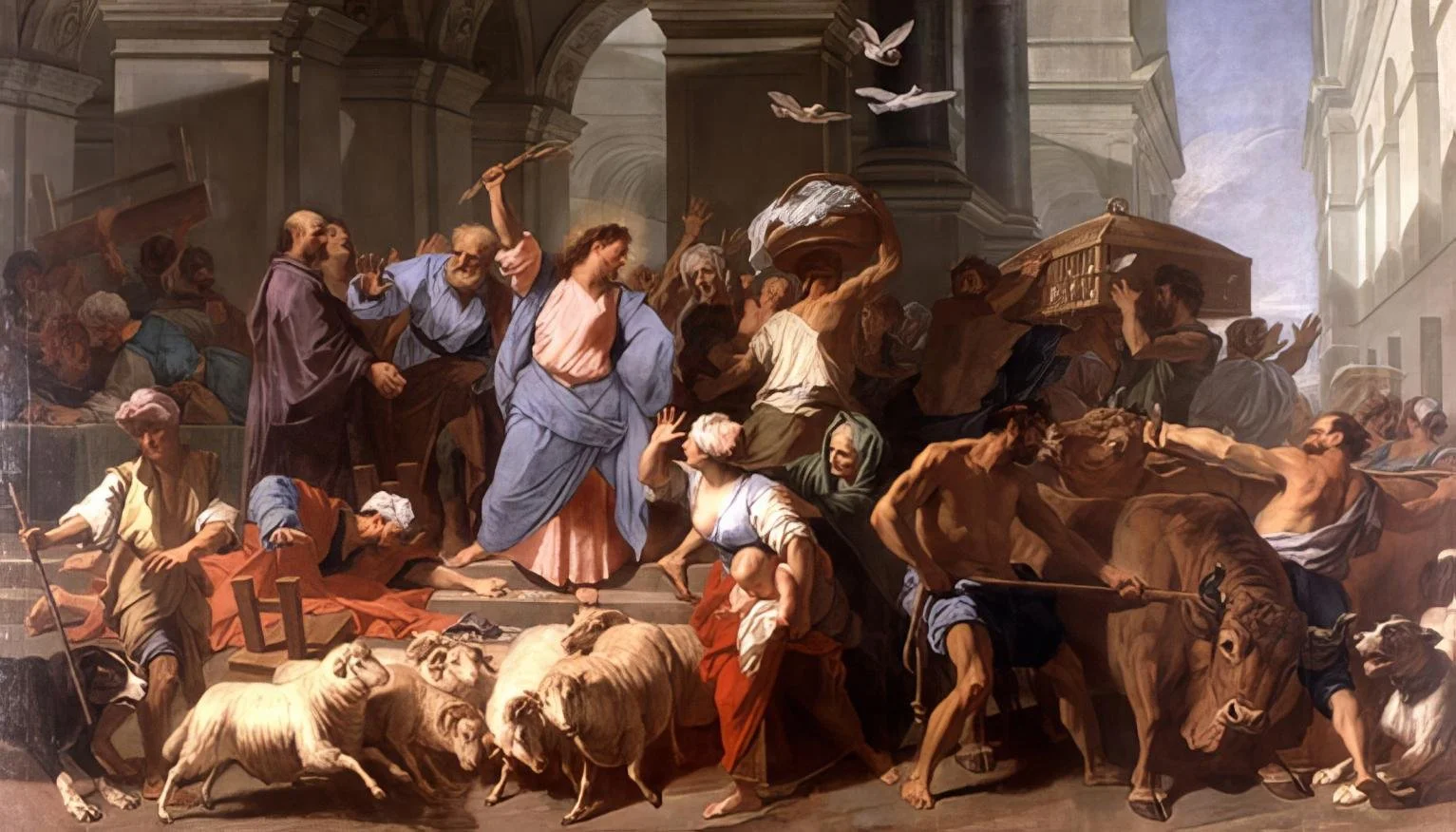
Jesus drove profiteers and their misused animals out of the temple. (“Les Marchands Chassés du Temple,” Jean Jouvenet, France, 1706, Wikimedia Commons)